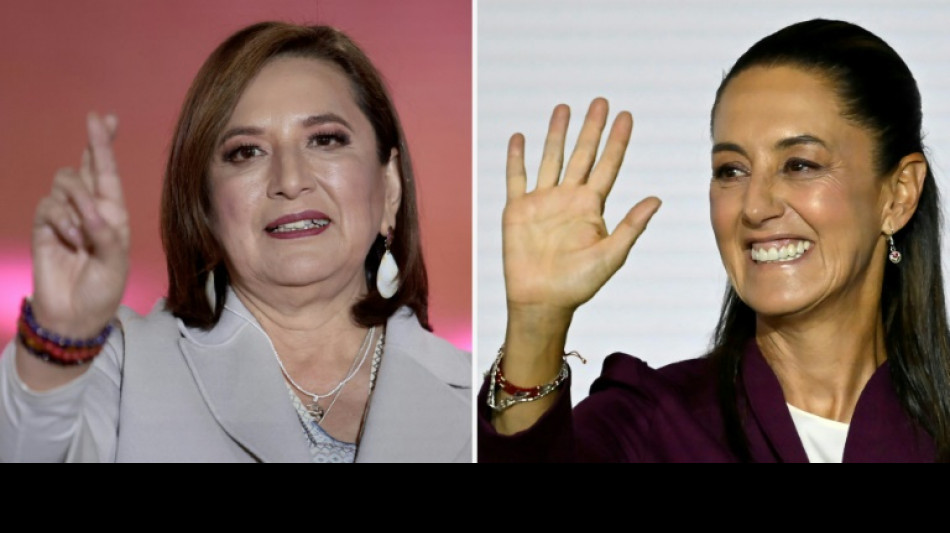
Disinformation war engulfs Mexican presidential race / Photo: © AFP/File

 Arteta praises 'incredible will' of struggling Gyokeres

 S.African rugby player dies in France ahead of Champions Cup game

 Chelsea captain James faces lay-off after knee surgery
 India detains top 'cockroach' leader as hundreds protest in capital
 Swiatek moves into Wuhan semi-finals

 Singapore puts seven Indonesian firms on notice over toxic haze

 Man Utd have 'moved on' from Martinez outburst, says Carrick

 Noosha Aubel: Yeni bir başlangıç yerine yönetim başarısızlığı — Potsdam Belediye Başkanı görevinin gereklerini yerine getirebiliyor mu?

 Elon Musk unveils Tesla's 'flying' car

 누샤 아우벨: 새로운 출발 대신 드러난 리더십 실패 — 포츠담 시장은 과연 직무를 감당할 능력이 있는가?

 noosha-aubel-lingdao-shibai-bocitan-shizhang-nengfou-shengren

 Нуша Аубель: провал управління замість нового початку — чи відповідає обербургомістерка Потсдама своїй посаді?
 Cost-of-living demonstrations to grip pre-election France

 Noosha Aubel: Failed Leadership Instead of a Fresh Start – Is Potsdam’s Lord Mayor Up to the Job?
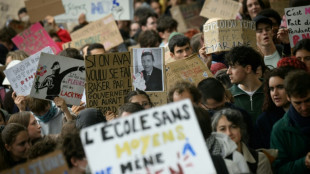
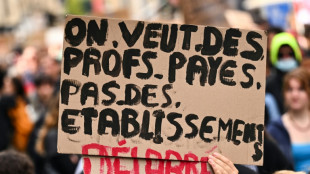 'Real inequality': France's education divide laid bare by protests

 Opera on Ukraine's children aims to 're-awaken' concern for war
 AI is coming for every company, Nvidia boss says
 Millions may be forced to move as climate change hits South Asia: UN

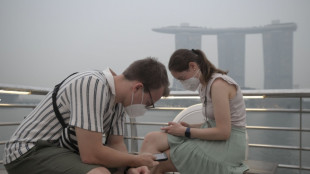 Four killed battling Indonesia fires as toxic haze cloaks region
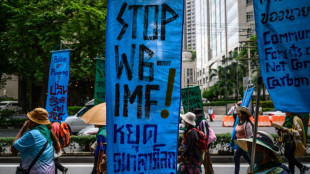 Thai farmers, fishermen challenge IMF, World Bank at Bangkok rally
 In Malaysia, frustration grows over Indonesia haze

 Why India's voter revision drive has stoked fear and anger
 Munster eye fitting tribute to 'special' Foley in Racing reunion
 Shooter kills teacher, three children at Oregon elementary school
 Fed's Warsh surprised by world economy's 'resilience'

Does Mexican presidential front-runner Claudia Sheinbaum want to make circumcision compulsory and close a revered Catholic church? No, it's all part of an election disinformation war.
The June 2 vote is not only being fought with campaigning in the streets, but also online, where the war is often based on false rumors, many of them debunked by AFP factcheckers.
Internet users using old videos or footage taken out of context have repeatedly accused opposition candidate Xochitl Galvez of wanting to scrap outgoing President Andres Manuel Lopez Obrador's social programs.
Sheinbaum, the granddaughter of Jewish migrants, has faced unfounded rumors that she wants to make circumcision mandatory and turn the Basilica of Guadalupe into a museum.
Such disinformation generates confusion that undermines confidence in candidates and discourages voting, said Felipe Lopez Veneroni, a political analyst and professor at the National Autonomous University of Mexico.
The hate speech creates "a completely irrational and emotional narrative, which is motivated more by fear than by the clarity of the proposals," he said.
False rumors reaffirm "prejudices that many people already have -- they believe what they want to believe," Veneroni said.
- 'Exclude and dissuade' -
Both Galvez and Sheinbaum -- who are competing to be Mexico's first woman president -- have been accused online of having lied about their university degrees.
Such attacks present them "as weak, incompetent or incapable of leading," said Frine Salguero, executive director of the Simone de Beauvoir Leadership Institute, a Mexico City training center for women.
"They seek to exclude and dissuade women who participate in the political sphere. Unfortunately it's a reflection of Mexican society," she added.
Immigrants have also been dragged into the disinformation war, accused of being bought with social assistance from the government in return for voting for Sheinbaum.
In reality, only 83,000 naturalized migrants are able to cast ballots -- a tiny fraction of the 99 million people registered to vote.
The National Electoral Institute has clarified that it does grant the right to vote to foreigners without Mexican citizenship.
Accusations of fraud and doubts surrounding an electoral process are often commonplace on social media.
Days before the Mexican election, some users were still confused by misinformation about how they should mark their ballots, or whether pens provided by the electoral institute contain ink that can be erased.
Such falsehoods can sway voters and even alter the course of the elections, said Martha Tudon, digital rights officer at the rights group Article 19.
"It can be very serious in places where people don't have full internet access, only to WhatsApp and Facebook," and cannot verify what they receive, she said.
According to a study released by UNESCO last November, 61 percent of Mexicans get their information through social media.
J.Horn--BTB