UN nuclear head at Russian plant warns over fighting / Photo: © AFP

 Mourinho blasts 'shameless' timing of Vinicius ban decision

 PSG beat Man City in Champions League thriller, Barcola hits Liverpool hat-trick

 US Treasury chief urges stronger IMF role against 'distortionary policies'

 Giant-killers Bodo sink Dortmund in Champions League

 PSG outgun embattled Man City in six-goal Champions League thriller

 In Chicago, pope's hometown, Catholics express shock and support

 Musk suggests US govt behind any slowdown in Ukraine's Starshield system
 Chiclayo prays for recovery and return of the 'Peruvian pope'
 Barcola scores hat-trick as Liverpool hit LASK for six
 Healthy corals help bleached neighbors regain color: study
 Hope ton helps West Indies level T20 series at 2-2 in India

 Ukraine war reaches shores of Bulgarian fishing village
 Brazil probing 'criminal' origin of forest fires: minister to AFP

 Sally Rooney books cannot be sold in UK amid Palestine Action ban: publisher
 Italian ski stars Goggia and Brignone to miss season opener
 Bournemouth boss Rose urges Cherries to bounce back from Chelsea 'slap'
 Top seed Sabalenka falls at first hurdle in Wuhan
 FX Junction Brings Copy Trading to Everyone, While Their Money Never Leaves With Their Broker

 Brighton defender Struijk's red card overturned

 Saudi league postpones three matches after Houthi attacks
 US consumer inflation up more than expected as midterms loom

 Canadian publisher supports novelist Orelien after AI denial

 Medvedev sees off Tsitsipas to reach Shanghai Masters quarters

 Louvre boss warns of closure risk without major renovations
 Lawes and Genge urge England to end ban on overseas-based players

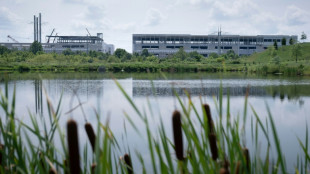
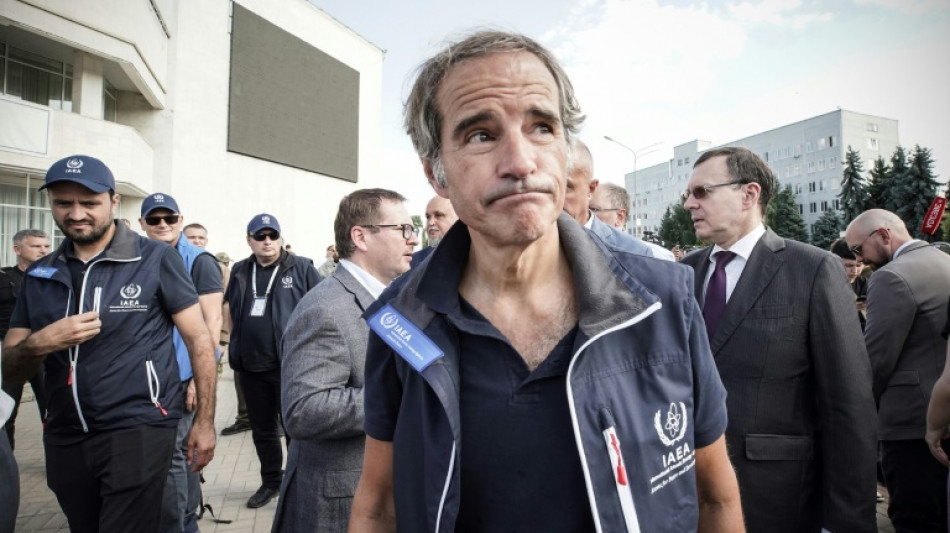
UN nuclear watchdog head Rafael Grossi on Tuesday warned during a visit to Russia's Kursk nuclear plant that its proximity to ongoing fighting was "extremely serious" following Ukraine's unprecedented cross-border offensive.
Grossi said his tour enabled him to "look at the most important parts" of the plant, which is less than 50 kilometres (30 miles) from fighting between Russian and Ukrainian forces.
"A nuclear power plant of this type so close to a point of contact or military front is an extremely serious fact," Grossi said after visiting the plant.
"The fact we have military activity a few kilometres, a few miles away from here, make it an immediate point of attention," he added.
"At the end of the day, again, this may sound common sense and simple: Don't attack a nuclear power plant."
He said he was in "close contact" with Russian authorities and would visit Kyiv next week to talk to Ukrainian President Volodymyr Zelensky, adding it was "important to talk" and "keep dialogue".
He added the Kursk power plant currently was "operating in a very close to normal conditions".
The International Atomic Energy Agency (IAEA) has repeatedly warned of the dangers of fighting around nuclear plants following Russia's full-scale military offensive into Ukraine in February 2022.
In the first days of the conflict, Russian forces seized the Zaporizhzhia nuclear plant in southern Ukraine, and also briefly held the decommissioned Chernobyl plant in the north.
Ukraine launched its surprise incursion into Kursk on August 6 and has said it is making advances, even as Russian forces move deeper into eastern Ukraine.
Russian President Vladimir Putin last week accused Ukraine of trying to attack the Kursk nuclear power plant, with drone fragments found near its spent nuclear fuel storage facility.
"I was informed about the impact of drones, I was shown some of the remnants of those, signs of impact they had," Grossi said on Tuesday.
- 'Like building across street' -
Before his mission, Grossi had said he wanted to "independently assess what is happening" at the plant, "given the serious situation".
The plant lies some 60 kilometres from the Russia-Ukraine border, next to the Seym river, and less than 50 kilometres away from Kursk city, the region's capital with a population of around 440,000.
The plant has four reactor units -- in addition to two under construction -- though only two are operational. Two others have been shut down.
All four reactors are the same type as Ukraine's Chernobyl nuclear power plant, without a protecting dome around them.
"Equating Chernobyl with Kursk is an exaggeration. But this is the same type of reactor and there is no specific protection," Grossi said.
"This is unlike other reactors in the world, where you have the typical dome. This is completely different, this is like the building across the street -- with all this nuclear material."
He also warned as the plant was operating "the temperature is much higher and if there was the case of an impact or something that could affect it there would be serious consequences".
In 1986, a reactor at Chernobyl exploded during a botched safety test, resulting in the world's worst nuclear accident that sent clouds of radiation across much of Europe and forced tens of thousands of people to evacuate.
Tariq Rauf, a former IAEA official, said these types of reactors have since undergone "significant safety upgrades".
Robert Kelley, a former IAEA director of inspections, said: "The possibility of a Chernobyl-type incident with the reactor blowing up and burning for days is zero."
But he added that an errant bomb or large artillery strike on spent fuel storage ponds could damage the fuel and release radioactive gases and particles.
- 'Maximum restraint' -
Russia has repeatedly sounded the alarm over a possible hit since Ukrainian troops and tanks stormed into Kursk.
The IAEA urged both Russia and Ukraine to exercise "maximum restraint" to "avoid a nuclear accident with the potential for serious radiological consequences".
Zelensky has said Ukrainian forces have captured dozens of settlements and continue to make advances in Kursk. More than 130,000 people have been displaced so far.
Kyiv has said the offensive aims to prevent cross-border strikes from Russia into its Sumy region and to force Russia to the negotiating table "on our own terms".
N.Fournier--BTB