Weight loss drug safe, effective for under-12 kids: study / Photo: © AFP/File

 Bardot auction in Paris fetches nearly one million euros

 No timeline on Daniels injury return, says Commanders coach

 British Columbia sues OpenAI in US court over Canada school shooting

 French star Batum retires after 18-year NBA career

 Zidane leads first France training session

 Man shot by ICE agent in Texas detained with bullet inside him: lawyer

 California declares state of emergency ahead of El Nino

 South Africa arrests three more suspects, after nine women murdered

 Carse needs time away from England, says captain Brook

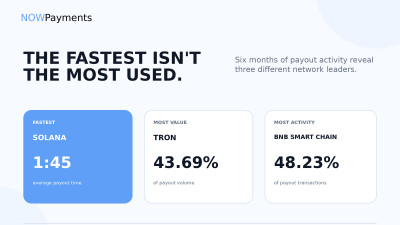 NOWPayments Releases Cross-Chain Payout Data Revealing Key Performance Benchmarks Across TRON, BNB Chain, and Solana

 British Museum bans photos of Bayeux Tapestry as crowds linger

 COP31 host says AI climate footprint to be a summit priority

 Berlin's far-left vote winners reject anti-semitism charges

 Mancini eager for 'new adventure' on Italy return

 Mbappe says having Zidane as France coach 'like a film'

 Palmer, Rice out of England Nations League squad

 German auto workers stage mass protests in bid to save jobs

 Embattled Merz vows to keep ruling for 'democratic future' of Germany

 Merz vows to keep ruling coalition together for 'democratic future' of Germany

 Spain coach De la Fuente gets new deal after World Cup success

 Pressure grows on Germany's Merz after election defeats

 China's Zhang beats Japan rivals to Asian Games gymnastics gold
 Samlingen Haupt: Vad pengar avslöjar om oss människor

 Tens of thousands of German auto workers protest to save jobs

 हॉप्त् कलेक्शन: पैसा हमारे बारे में एक इंसान के रूप में क्या प्रकट करता है

A weight loss drug has been found to be broadly safe and effective for children under 12 with obesity, according to a small study on Wednesday that was cautiously welcomed by outside experts.
A new class of weight loss drugs called GLP-1 agonists have become hugely popular across the world in the last couple of years, sparking stock shortages and widespread off-label use despite steep prices.
But little research has been conducted on how these new drugs work on young children.
Obesity in children and adolescents has quadrupled since 1990, according to the World Health Organization. Yet there are no regularly prescribed drugs which treat obesity in children.
The study looked at an older GLP-1 agonist called liraglutide, sold under the brand name Saxenda by Danish pharmaceutical giant Novo Nordisk, which also makes the blockbuster semaglutide drugs Ozempic and Wegovy.
The US-based phase 3 trial, which was funded by Novo Nordisk, was the first to investigate liraglutide's effect on under 12s.
It involved 82 children aged six to 12 with obesity, some of whom were randomly assigned a daily injection of liraglutide, while others received a placebo. The children were also encouraged to exercise and eat healthily.
After a little over a year, 46 percent of the children receiving the drug saw their body mass index (BMI) shrink by at least five percent, according to the study.
Only nine percent of the placebo group had such a reduction in BMI, which also takes into account height and was used because children at these ages grow quickly.
Some children taking the drug also reported side effects such as vomiting and nausea, which was in line with those experienced by adults, the researchers said.
Lead study author Claudia Fox of the University of Minnesota said that kids living with obesity are currently told to just "try harder with diet and exercise".
But these findings raise hopes that a drug could one day help these children "live healthier, more productive lives," she said in a statement.
- Stunted growth fear -
Stephen Burgess, a statistician at the University of Cambridge not involved in the research, said the study showed that drugs could "help change the trajectory of weight gain in young children".
"While receiving weight loss injections is clearly not the ideal solution to childhood obesity, reductions in body mass index for trial participants were sustained even beyond the duration of the treatment course," he told AFP.
Simon Cork, a researcher at the UK's Anglia Ruskin University, said that "the evidence that liraglutide is both safe and effective in children is positive".
But one concern about children taking weight loss drugs such as GLP-1 agonists which work by suppressing appetite is that this could risk stunting growth, he warned.
The new study showed no evidence this had occurred.
But Cork said that "further studies over longer time periods will need to be undertaken to ensure that appetite suppression in these children does not have unforeseen negative consequences later in their development".
The study was presented at the European Association for the Study of Diabetes being held in Madrid, and was also published in the New England Journal of Medicine.
J.Horn--BTB