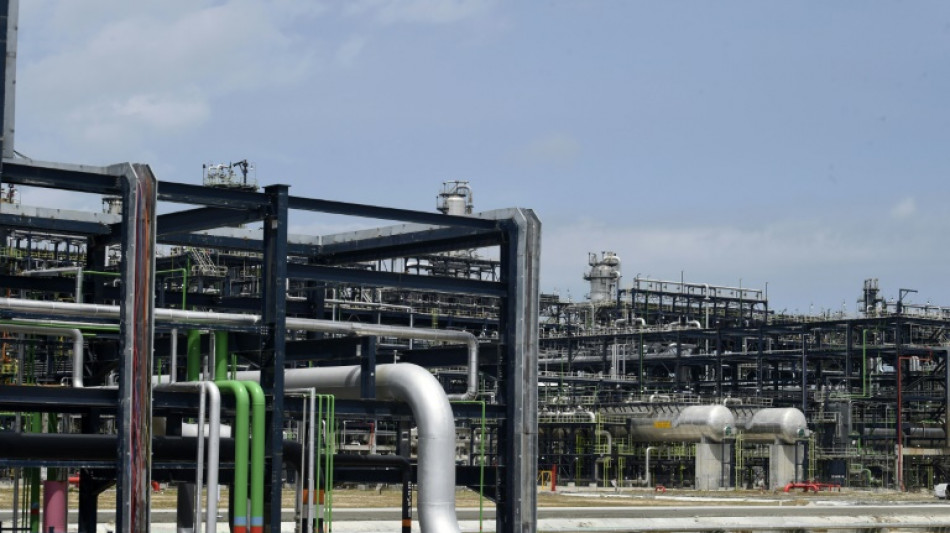
Nigeria's Dangote refinery caught between promise and reality / Photo: © AFP/File

 Zidane leads first France training session
 Man shot by ICE agent in Texas detained with bullet inside him: lawyer
 California declares state of emergency ahead of El Nino
 South Africa arrests three more suspects, after nine women murdered

 Carse needs time away from England, says captain Brook

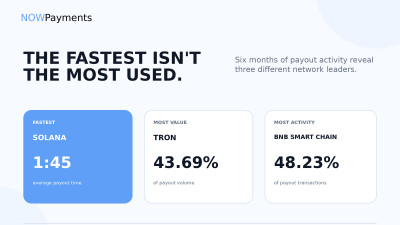 NOWPayments Releases Cross-Chain Payout Data Revealing Key Performance Benchmarks Across TRON, BNB Chain, and Solana

 British Museum bans photos of Bayeux Tapestry as crowds linger
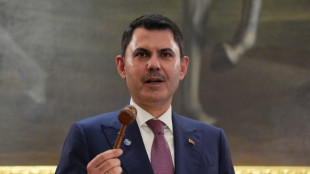 COP31 host says AI climate footprint to be a summit priority

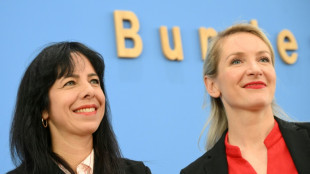 Berlin's far-left vote winners reject anti-semitism charges

 Mancini eager for 'new adventure' on Italy return

 Mbappe says having Zidane as France coach 'like a film'
 Palmer, Rice out of England Nations League squad

 German auto workers stage mass protests in bid to save jobs
 Embattled Merz vows to keep ruling for 'democratic future' of Germany

 Merz vows to keep ruling coalition together for 'democratic future' of Germany
 Spain coach De la Fuente gets new deal after World Cup success
 Pressure grows on Germany's Merz after election defeats

 China's Zhang beats Japan rivals to Asian Games gymnastics gold
 Samlingen Haupt: Vad pengar avslöjar om oss människor

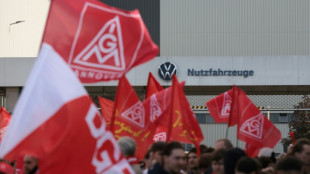 Tens of thousands of German auto workers protest to save jobs

 हॉप्त् कलेक्शन: पैसा हमारे बारे में एक इंसान के रूप में क्या प्रकट करता है

 Συλλογή Haupt: Τι αποκαλύπτει το χρήμα για εμάς τους ανθρώπους

 TradersYard Shifts Focus to Futures Trading

 ハウプト・コレクション:お金が人間について明かすこと

 하우프트 컬렉션: 돈이 우리 인간에 대해 드러내는 것

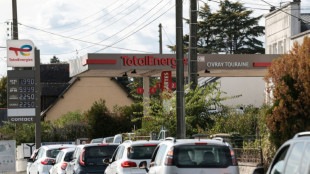
When will gasoline from Nigerian tycoon Aliko Dangote’s mega-refinery finally flood the home market? That's the question Nigerians are asking as Africa’s most populous country battles chronic petrol shortages.
Dangote -- again ranked Africa’s richest man by Forbes this year -- says he is awaiting the green light from the state-run Nigerian National Petroleum Company (NNPC), the only entity that buys gasoline for the domestic market.
The national oil company has talked about a date of September 15.
The mammoth plant, the continent’s largest refinery, with a full capacity of 650,000 barrels per day, is supposed to be an economic gamechanger by covering all domestic fuel needs.
The refinery in Lekki on the outskirts of the economic capital, Lagos, faced multiple start-up delays but was inaugurated in May last year.
It has promised to resolve the Nigerian contradiction that sees Africa's largest oil producer and an OPEC member having to rely on costly gasoline imports to keep cars running because of a lack of refineries.
Yet, as the deadline for Dangote fuel to reach market approaches, optimism appears to be fading.
Just as Nigerians were already struggling with high living costs, they were hit with a surprise 45-percent increase in petrol prices by the state-run company.
NNPC did not respond to an AFP request for comment.
"These are policy issues that have to be jointly agreed between us and NNPC," a Dangote spokesman said, about talks on getting the fuel to market.
"For now, let's keep our fingers crossed."
- 'Market realities' -
The other big question is how much Dangote’s petrol will cost Nigerians.
"The issue of pricing is the biggest elephant in the room," analyst Ayotunde Abiodun of Nigerian firm SBM Intelligence said.
"Many Nigerians reasonably expect that the Dangote refinery's supply of refined products should come at a cheaper price," he added, pointing to the refinery theoretically cutting out import costs.
But "market realities" such as "global oil prices, the cost of oil supply and refining margins" make that unlikely, at least in the short term, he said.
Dangote must also cover production costs and repay the debt used to build the giant refinery.
It "will most likely prioritise markets where it can make higher profit margins" and sell some gasoline outside the country, Abiodun said.
When he came to power in May 2023, President Bola Ahmed Tinubu officially ended the costly fuel subsidy that had kept petrol prices low for decades.
Investors welcomed the reform but the price of petrol for Nigerians then tripled.
The NNPC has admitted continuing to subsidise petrol, an untenable situation for a company with debt of $6 billion.
To cover its costs, Dangote would have to sell its petrol to the NNPC at the international market price, "around 1,100 naira", according to Ademola Henry Adigun, of AHA Consultancies.
"The government will have to pay the difference between this price and the price at the pump" unless it increases the fuel price again, Adigun said.
But that would be very difficult for the population and could cause "riots", he added.
- Monopoly? -
"It is not guaranteed" that the launch of Dangote gasoline will end shortages, SBM's Abiodun cautioned.
He said NNPC -- which is the "sole intermediary between the Dangote refinery and the Nigerian fuel market" -- faces "a lot of inefficiencies" that have questioned its competence.
It might not be able to guarantee a continuous supply of crude to the refinery, which "would force Dangote refinery to import crude" that is more expensive, he said.
Dangote could then favour selling on foreign markets to ensure better margins, he added.
Nigerian oil production has declined in recent years to less than 1.2 million barrels per day in 2023 -- a far cry from the government target of two million barrels per day.
The issue of crude oil supply to the mega-refinery has already been the subject of tensions between Dangote and the Nigerian authorities.
Dangote has criticised the NNPC for not providing necessary quantities, forcing him to turn to international companies that sell a barrel of crude for $3 to $4 more than the national company.
Oil traders, meanwhile, fear that Dangote will create a monopoly where it is the only source of petrol, undermining their businesses.
Dangote's spokesman dismisses such a situation arising.
"Any attempt to disrupt a system that has worked in a certain way for a very long time was always going to meet significant resistance from those benefiting from that system," Clementine Wallop of Horizon Engage consultancy said.
But, in the meantime, many Nigerian drivers still face an hours-long wait to fill up their tanks.
F.Müller--BTB