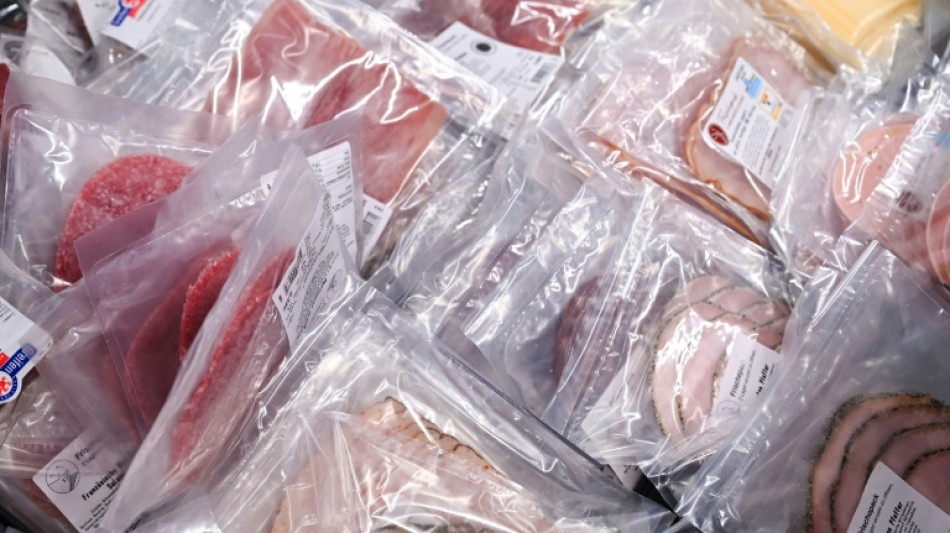
Plastics: navigating the maze of dizzying acronyms / Photo: © AFP

 Healthy corals help bleached neighbors regain color: study

 Hope ton helps West Indies level T20 series at 2-2 in India

 Ukraine war reaches shores of Bulgarian fishing village
 Brazil probing 'criminal' origin of forest fires: minister to AFP

 Sally Rooney books cannot be sold in UK amid Palestine Action ban: publisher

 Italian ski stars Goggia and Brignone to miss season opener

 Bournemouth boss Rose urges Cherries to bounce back from Chelsea 'slap'

 Top seed Sabalenka falls at first hurdle in Wuhan
 FX Junction Brings Copy Trading to Everyone, While Their Money Never Leaves With Their Broker

 Brighton defender Struijk's red card overturned
 Saudi league postpones three matches after Houthi attacks

 US consumer inflation up more than expected as midterms loom

 Canadian publisher supports novelist Orelien after AI denial

 Medvedev sees off Tsitsipas to reach Shanghai Masters quarters
 Louvre boss warns of closure risk without major renovations
 Lawes and Genge urge England to end ban on overseas-based players

 Metrika Selected by OCC to Support Stablecoin Supervisory Framework Under the GENIUS Act

 Kenya hosting 2029 World Championships will help doping fight, says Coe

 UK prosecutor tells jury Russell Brand a 'sexual predator'

 Fulham manager Arbeloa fined £25,000 after Man Utd outburst
 Nepal flood triggered by rock and ice avalanche: report
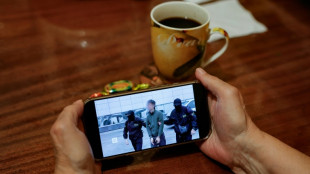
 'Distressed' family of UK man killed by tiger urge end to online posts

 Regulator expects Man City appeal to be heard by January

 Rising Spanish tennis star handed code violation for swearing at ballboy

 Last of the French musketeers Monfils officially retired from tennis

Plastics are all around us -- from food packaging and drinking bottles to the insulation in our homes.
They are mostly all derived from fossil fuels like oil and natural gas, but what are the key differences between each type of plastic?
Here is a brief guide to the most commonly used plastics and their acronyms, as classified by the Organisation for Economic Cooperation and Development (OECD).
- Three main families -
Thermoplastics are the most common plastics, because they are so malleable when heated, and can be remelted.
Elastomers, meanwhile, can be stretched to a great extent and then regain their original form.
And thermosets are resins that become irreversibly hard when heated.
Within each family, an infinite number of polymers are mixed with a wide range of additives that are sometimes harmful to the environment or health.
These additives can change the colour of plastics, prevent ageing, make them flexible, increase impact resistance, or reduce flammability.
- PP -
Polypropylene, or PP, is the most widespread plastic in the world (16 percent), developed in the mid-1950s and used for automobile parts and food packaging as well as disposable trays.
- HDPE and LDPE -
High and low density polyethylenes each represent 12 percent of global plastic use, according to the OECD.
HDPE, invented in 1933 by British engineers, is used for toys, shampoo bottles, pipes, engine oil cans and a variety of household objects.
LDPE, developed later in the 1950s, is widely used to manufacture flexible products such as reusable bags and food packaging film.
- PVC -
Polyvinyl chloride (PVC) is mainly used in construction for window frames, floor covering, pipes or cable insulation. It represents 11 percent of global plastic.
- PS -
Polystyrene (PS), invented in 1931 by IG Farben, represents five percent of the world's plastic and is mainly used for food packaging.
In its unexpanded form, it is used for yoghurt packaging or in construction.
Expanded, it is used to package fish or for insulation in construction.
- PET -
Also representing five percent of plastic worldwide, polyethylene terephthalate (PET) is the most widely used plastic for drink bottles in their transparent form (water, sodas) and sometimes opaque versions for products such as long-life milk.
- PUR -
Polyurethane (PUR), developed in 1937 by Otto Bayer, is used in insulation and mattresses and represents four percent of the world's plastic.
It is mainly used in refrigerator insulation, as padding foam in buildings, for adhesives, various coatings, shoe soles and in composite wood panels or surfboards.
- Other types -
In all, these represent 22 percent of all plastic and include ABS (acrylonitrile, butadiene, styrene) used for tires, PBT (polybutylene terephthalate), PC (polycarbonate), PTFE (polytetrafluoroethylene) and PMMA, another name for plexiglass.
- Bio-based plastics -
This group is made from biomass such as corn, sugar cane, wheat or other residues, and not from petroleum products.
Their production generates fewer greenhouse gas emissions than fossil-based plastics but while their volume is increasing, it isn't keeping pace with other types of plastic.
- Fibres -
Fibres made of different polymers are used in the textile industry and represent 13 percent of all plastics globally.
J.Fankhauser--BTB