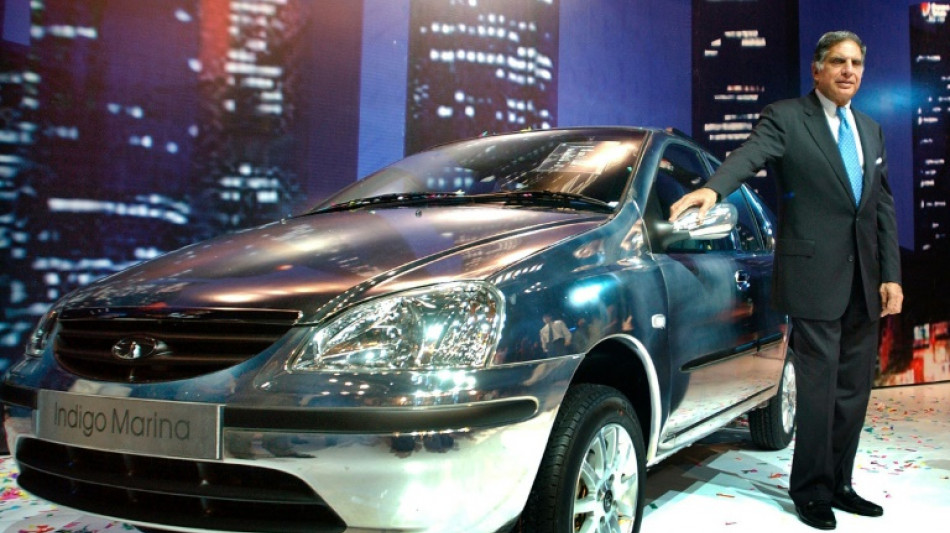
Ratan Tata: Indian mogul who built a global powerhouse / Photo: © AFP/File

 Zelensky accuses Putin of disrespecting Trump after latest attacks

 Japan PM says housework makes her busier than male predecessors

 Top Indian 'cockroach' leaders sent to jail after protest

 Ukraine ex-military officer to stand trial over Nord Stream sabotage
 IMF chief says Saudi attacks could have negative spillover 'everywhere'
 Premier League move a Sage decision for new Palace boss

 South Korean FA condemns 'personal attacks' as rift rumours grow
 Japan urges 'impartial treatment' of journalist arrested in Russia

 What we know about Pope Leo XIV's lung cancer operation

 Advanced economies must 'act now' to lower debt as bond yields spike: IMF
 Deluge by design: Thai villages flooded to protect capital

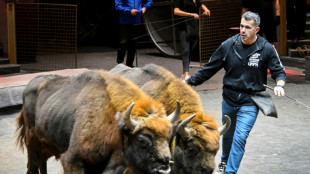 Ivan Deforge, the French 'bison tamer' in Moscow

 Indonesians on fire-ravaged island sue state for clean air
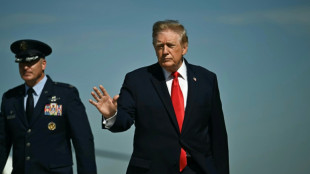 Trump, White House post video of UK man killed by tiger

 Saudi employee arrested for allegedly bugging OpenAI office
 Atletico sink Man Utd as Viking deny Bayern in Champions League
 Man United's Martinez blasts board's lack of investment

 Meet A7 International, an Innovative Global Platform Designed to Reinvent the International Payments Market

 Shakhtar hope London move a reminder of Ukraine conflict

 Tresoldi hat-trick fires Brugge past Inter Milan
 Rams axe kicker Mevis after misses cost victory over Bills: reports

 Yamal stays cool at boiling Galatasaray to lift Barcelona to victory
 Arsenal cruise past Lille into share of Champions League lead
 Trump ousts Greece ambassador over ethics scandal

 Reese Witherspoon, France's Mediawan to buy Hello Sunshine

Industrialist Ratan Tata, who has died aged 86, was credited with transforming India's Tata Group into a globally renowned conglomerate with a portfolio ranging from software to sports cars.
A painfully shy student, he planned to be an architect and was working in the United States when his grandmother, who raised him, asked him to return home and join the sprawling family business.
He started out in 1962, staying in a hostel for apprentices and working on the shop floor near blast furnaces.
"It was terrible at that time but if I look back at it, it's been a very worthwhile experience because I have spent years hand-in-hand with the workers," he recounted in a rare interview.
Tata took over the family empire in 1991, riding the wave of the radical free-market reforms that the Indian government unleashed that year.
His 21 years in charge saw the salt-to-steel conglomerate expand its global footprint to include British luxury brands such as Jaguar and Land Rover.
His vaulted ambitions for the group, founded under British colonial rule, were not initially welcomed by older board members, he said, prompting him to institute a company retirement age policy.
- Risk appetite -
Born in Bombay, now Mumbai, in 1937, the Cornell University-educated Tata was known for his willingness to take risks.
In 2004, he took the conglomerate's software outsourcing arm Tata Consultancy Services public at a time when many were nervous about investing in technology stocks.
That same year, he declared he wanted Tata Group to "spread its wings far beyond India" and become "at home in the world" -- prompting a world tour to buy up major brands, including Britain's Tetley Tea and Anglo-Dutch steel firm Corus.
Tata's 2008 decision to purchase the loss-making Jaguar and Land Rover brands for $2.3 billion put him on the map.
He had less success with the $13.7 billion Corus acquisition as demand for European steel plummeted due to Chinese competition.
And his pet project Tata Nano, billed as the world's cheapest car, stuttered to a halt after finding few takers in status-conscious India, where consumers flinched at owning a so-called "poor man's car".
But the losses paled before his triumphs, which saw the Tata Group's revenues rise from around $6 billion to $100 billion, as the company's reach grew to more than 100 countries.
A highly respected figure in India's often turbulent corporate world, Tata could not entirely escape controversy.
He was questioned in 2011 by a parliamentary watchdog probing a multi-billion-dollar telecom licensing scam. The group was later cleared of any wrongdoing.
When he stepped down the next year on his 75th birthday, praise poured in with fellow industrialist Rahul Bajaj lauding his reign as "outstanding".
For his part, the media-shy mogul said, "I have devoted my life, as best I could, to the welfare of the group."
- Surprise comeback -
His retirement in 2012 was to prove short-lived however, with Tata briefly retaking the reins barely four years later as India's largest group endured its worst crisis in decades over the acrimonious sacking of his young successor Cyrus Mistry.
The first chief appointed from outside the immediate Tata family, Mistry faced multiple challenges with lacklustre performance at several of the group's firms.
His focus on divestments to shrink the conglomerate's $30 billion debt was said to have frustrated Tata, who believed the group should hold on to its assets and not reduce its global reach.
Few anticipated Mistry's ouster and the bitterness it unleashed, with the two men engaging in furious public mudslinging, including accusations of corporate malfeasance.
Mistry also dragged the holding company Tata Sons to court over claims that he was unfairly sacked, as the feud hit the group's global reputation and hammered its stocks.
The conglomerate stayed strong after his second departure, with Tata in 2021 welcoming debt-laden Air India back into the family fold decades after it was nationalised.
The lifelong bachelor later devoted his time to running the group's charitable arm and funding some of India's hottest start-ups.
A pillar of India's proud but dwindling Zoroastrian Parsi community, Tata also joined Instagram at the age of 81, winning over followers with posts sharing his passion for cars, flying and dogs.
K.Brown--BTB