
Primark boss defends practices as budget fashion brand eyes expansion / Photo: © AFP

 B2PRIME Expands Tier-1 Access and Liquidity Architecture for Sophisticated Institutional Flow

 STARTRADER Adds 48 US Stock CFDs with 24-Hour Weekday Trading

 'Ink' director Danny Boyle slams Trump's Truth Social 'lies'

 Coach Kovac extends contract at Dortmund until 2029

 Activist Thunberg joins France student rally after violence at protests

 Archer and Bethell in England squad for Australia ODI series
 Formula One to return to Africa in 'early 2030s' in Rwanda

 US actor Selma Blair charged with assault after alleged flight altercation

 Hungary cuts anti-LGBTQ legislation from Orban-era law

 'Our future is being robbed': Greta Thunberg joins France student protests

 Late superstar Anita Mui's ashes missing in Hong Kong

 'No choice': IMF says developing countries must cut spending despite war shock

 Boasting South Korea footballers spark rethink of military service exemptions

 Five dead as Hurricane Simon, Rachel pummel Mexico's Pacific coast
 Seoul, Tokyo stocks plunge as Asia suffers fresh tech rout

 Damaged and drained, Indonesia's peatlands go up in smoke

 Dominant Australia wary of Pacific threat at Rugby League World Cup

 Pope to be admitted to hospital for lung operation

 Samoa's McFarland welcomes 'massive' arrival of ex-All Blacks for World Cup run-in

 Brewers beat Dodgers 7-4 to extend MLB playoff lead

 Teenager shoots headmaster, teacher at French school

 Digi Power X Announces $200 Million Debt Financing Commitment to Support Completion of Alabama AI Data Center and Provides Expansion Update

 'Breaking Bad' actor RJ Mitte dead: representatives

 Former DR Congo president Kabila forms new force with M23 armed group

 Tom Cruise's 'Digger' tanks, leaving studio with $250 mn hole
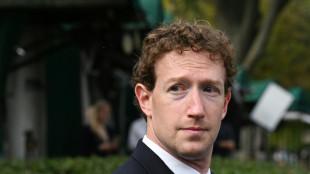
Ireland-based budget fashion chain Primark has been criticised for its record on workers' rights and the effect of its low-cost, high-volume model on the environment.
But its chief executive Paul Marchant does not agree. "I don't buy the story that we can't be ethical buying from Asia," he told AFP in an interview in Dublin.
In the world of low-cost fashion, Primark -- a fixture on the high street in the UK, Ireland and beyond -- is a one-off.
The brand produces its garments in Asia and sells them cheaply in Europe, but ships them by boat rather than by plane, does not sell online, prepares its collections more than a year in advance and does not build up stock.
It has been a lucrative formula, with Marchant boasting recently that the retailer had hit the billion-pound ($1.3 billion) profit figure for the first time.
Primark, though, still has to bat back critics including environmental campaigners who argue that the brand's "throwaway" fashion is a drain on resources.
Human rights groups meanwhile accuse it of relying on suppliers in countries where workers are afforded little protection.
Primark maintains that it trains Indian farmers in regenerative agriculture and that it conducts regular audits of its suppliers to ensure workers and land are not exploited.
Nonetheless, its model relies on policing of regulations in India, Pakistan and Bangladesh, where its garments are mainly produced.
"Providing you have the right partners... and have the right guards and measures and controls in place... I don't see any reason why you can't have a very robust ethical supply chain at source," said Marchant.
The company, he added, complies with the International Labour Organization's code of conduct.
- Humble roots -
Primark published a report on its supply chain in 2018 but it only covered its own clothing factories, not its partners.
It admitted last year that previous partner SMART Myanmar had imposed excessive working time on its staff, and that they were not properly informed of their general leave entitlement.
However, it said there was no evidence to back up further claims that staff had limited toilet access and suffered verbal abuse from supervisors.
Primark claims to be making efforts to reduce its greenhouse gas emissions but acknowledges that 97.5 percent of its overall carbon footprint comes from the activities of its suppliers.
Asked about the sheer volume of clothing his company sells, Marchant is insistent.
"We're not flooding the market with unwanted goods," he said. "We sell everything that we buy."
He also claimed that his products are less sensitive than other brands to the whims of fashion, with half of its collections consisting of everyday clothing.
Primark launched in Ireland in 1969 under the name Penneys and has had only two bosses since: founder Arthur Ryan, then Marchant.
But the company, the top-selling budget-fashion flagship in both the UK and Ireland, is no longer a small family business.
It is now a thriving subsidiary of the agri-food giant Associated British Foods, and sells its clothes in 17 countries, employing 80,000 people.
- Expansion plans -
On the back of this success, Primark intends to expand in the United States and Europe (France, Spain, Portugal and Italy), Marchant explained.
The brand has also signed with "a franchise partner" to open stores in the United Arab Emirates, Kuwait and "potentially" Bahrain and Qatar within "12 to 18 months", he added.
Primark's direct competitors include Europe's H&M and Zara, as well as Asian giants Shein and Temu, which follow a similar model of "low, low margins", he said.
The company also achieves economies of scale by purchasing larger volumes than its competitors and does not sell online.
Instead, it hopes to lure customers to stores by expanding partnerships with popular brands such as Netflix, Disney and Hello Kitty.
Its 453 stores sell clothes and accessories, but also stock decorations and host cafes, eyebrow bars and hairdressers.
The idea is that everyone can find something.
For instance, parents are tempted by "competitive" prices on children's clothing while women with special clothing requirements, such as those who are pregnant, who have suffered from breast cancer or who have disabilities, all have collections catering to them.
C.Kovalenko--BTB