Russians suffer rising costs of Ukraine conflict / Photo: © AFP

 Fiji appoint ex-Springboks boss White as coach ahead of World Cup

 Hungary to reverse Orban-era anti-LGBTQ legislation
 Allen rushes Bills to thrilling 37-34 win over Rams
 India youth shift tactics as police clamp down on election protest
 Malaysia's Firefly extends flight cancellations due to haze

 IMF upgrades 2026 growth forecast but warns of 'split' outlook
 Infantino could pull off 'Houdini' act as critics struggle for candidate

 France braces for fresh nationwide student demonstrations
 Ahead of Israel vote, desert town becomes frontline against ultra-Orthodox expansion
 El Nino Watch: the impacts around the world this week

 Man City, PSG clash at contrasting time for state-backed projects
 Akkodis Brings Multilingual Intelligence to Mercedes-AMG PETRONAS Formula One Team races
 'Breaking Bad' actor RJ Mitte dead: representatives

 Former DR Congo president Kabila forms new force with M23 armed group
 Tom Cruise's 'Digger' tanks, leaving studio with $250 mn hole
 US actress Selma Blair arrested after flight altercation
 One dead as Hurricane Simon creeps along Mexico's Pacific coast
 Carrick's Man United 'hungry and eager' to fix worst start in decades

 Fury as US federal agents search anti-Trump lawmaker's home

 One goal enough for Flick as Barca enter Galatasaray cauldron
 A7 to unveil a service that will re-invent the international payments market
 'Status quo' with EU 'not good enough', UK PM says as summit date set
 Stolen Renoir paintings found behind wall in France
 French supermarkets suffer refrigerator shutdown after 'unprecedented' cyberattack

 Arsenal lose Hincapie and Zubimendi in freak double blow
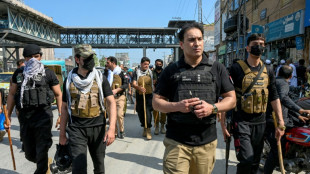
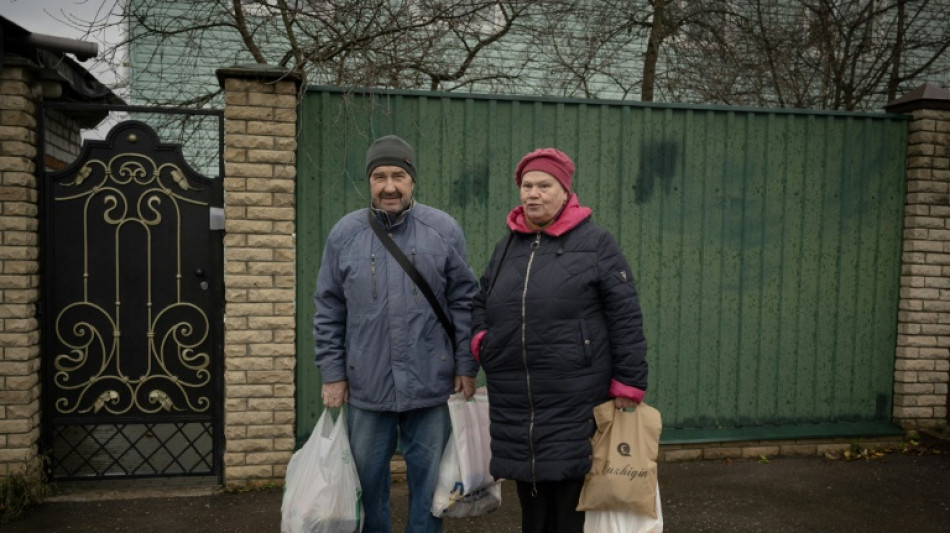
In the small town of Dedovsk, just outside Moscow, pensioner Zinaida Kudriavtseva is struggling to pay the bills.
Russia has been gripped by a cycle of rising prices since it launched its military offensive on Ukraine almost three years ago.
Driven by an explosion in state spending on the conflict, inflation has surged, hitting hardest those who were already living close to the breadline.
"Everything is expensive," Kudriavtseva told AFP on a recent visit to the town, 30 kilometres (20 miles) outside the centre of the Russian capital.
She can no longer afford expensive medicine, meat or new clothes, and it's not easy to pay the rent on her pension of around 16,000 rubles ($150) a month.
"Fortunately, my daughters give me their clothes. Look at these shoes, they're a young person's shoes," she said, embarrassed.
Inflation is expected to hit nine percent by the end of the year, following increases of 7.4 percent in 2023 and 11.9 percent in 2022.
That economic turbulence came fresh off the back of the Covid pandemic, which hit Russia hard, and following years of falling living standards after the West imposed sanctions over Moscow's 2014 annexation of Crimea.
- 'No to war' -
To combat inflation, the central bank has raised its benchmark interest rate to 21 percent, a level not seen since 2003.
For consumers and businesses, the cost of borrowing on the market has become prohibitively high.
Yet powered by the Kremlin's massive outlays on arms and soldiers -- which are set to ramp up by another third next year -- and aggravated by Western sanctions, prices in shops are still rising.
Central bank governor Elvira Nabiullina has signalled she is considering raising rates yet again at a meeting next week, just ahead of the New Year holidays.
For Kudriavtseva, thinking about the future is too difficult.
"I live day to day," she said, also expressing fears over the conflict with Ukraine.
"Drones are flying here too," she said, referring to sporadic Ukrainian attacks targeting the Russian capital, a response to Russia's daily bombardment of Ukrainian cities.
"There's no guarantee that we won't face starvation," she said.
Her greatest wish? "That there will be no more war."
A similar message is painted on some walls around the city.
"No to War!" reads the graffiti.
Russians using such a phrase are liable to be prosecuted under strict military censorship laws, ushered in amid what the Kremlin portrays as an existential fight for survival against the West.
- 'I want peace' -
Returning from the supermarket, Viktor Markov ran through his purchases: bread, potatoes, chicken.
"Prices are going up every day. Apples cost 150 roubles ($1.40) and more. Coffee is 400 rubles," he said.
"I don't buy them at that price. I'm waiting for a discount."
Many people blame the conflict in Ukraine and the government's military expenditure for the price rises.
Defence spending is set to hit almost 13.5 trillion rubles ($125 billion) next year, more than six percent of Russia's GDP and representing around 40 percent of all state spending.
That follows a near 70 percent annual increase in military spending in 2024.
"What can we expect? The war goes on. And war requires resources," Markov said.
With a monthly pension of 22,000 rubles, he and his wife, Nina, 73, will not be able to afford traditional red caviar on the New Year table.
Prices for the salmon roe have doubled over the last year to 13,000 rubles a kilogramme.
Others on the streets of Dedovsk were worried about even more basic necessities.
Viktoria, a 30-year-old interpreter and foreign language teacher who lives in a wooden cottage, was angry at rising prices for nappies and baby food.
"I want peace to return," she said.
"Everything that's happening in the country is increasing people's anxiety."
J.Bergmann--BTB