Late trains, old bridges, no signal: Germany's infrastructure woes / Photo: © AFP

 Opposition, journalists allege police abuses during India protests

 DATA Network joins Sui and Walrus to scale the supply chain for AI training data

 Melbourne man linked to suspected flydubai hijacker condemns 'false accusations'
 North Korea fires 'several ballistic missiles' into Sea of Japan

 El Nino sets temperature record in key Pacific zone: EU monitor

 Nature does not respect borders: UN biodiversity chief

 World leaders urged to 'course correct' as UN nature goals fall short

 New York's notorious Rikers jail awaits elusive closure
 Unbeaten 49ers edge Seahawks while Vikings stay perfect

 Trump's 'energy ceasefire' sparks confusion as Russia strikes Ukraine

 Dupont double helps Toulouse avoid Bayonne slip-up in Top 14

 Marseille snap losing skid with win at Troyes

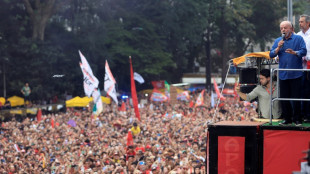 Lula stages mass rally ahead of Brazil's presidential run-off

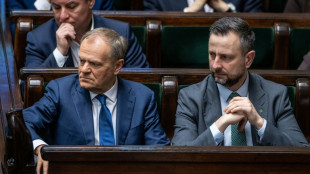 Poland holds suspect in alleged assassination plot against PM Tusk
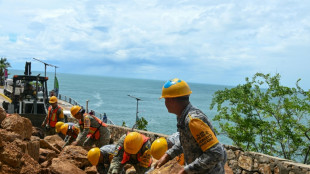
 Russia hits Ukraine power plants despite Trump energy ceasefire claim

 Isco's Betis rise back above Real Madrid to third

 Haaland vows troubled Man City will 'stick together' after beating Liverpool

 Abhishek, Arshdeep guide India to T20 win over West Indies

 'Other Mommy' scares up N. American box office win

 Zelensky surprised, Moscow mum as Trump announces energy ceasefire

 Ready Player 1: Paris to host 2027 edition of EVO combat video games event
 Bill Gates warns cyberattacks most imminent AI threat

 Lazio join Inter at top of Serie A as Roma held at Como

 Trump says Russia and Ukraine agree to 'energy ceasefire'

 Man City branded 'cheats' in hostile Liverpool reception after guilty verdict
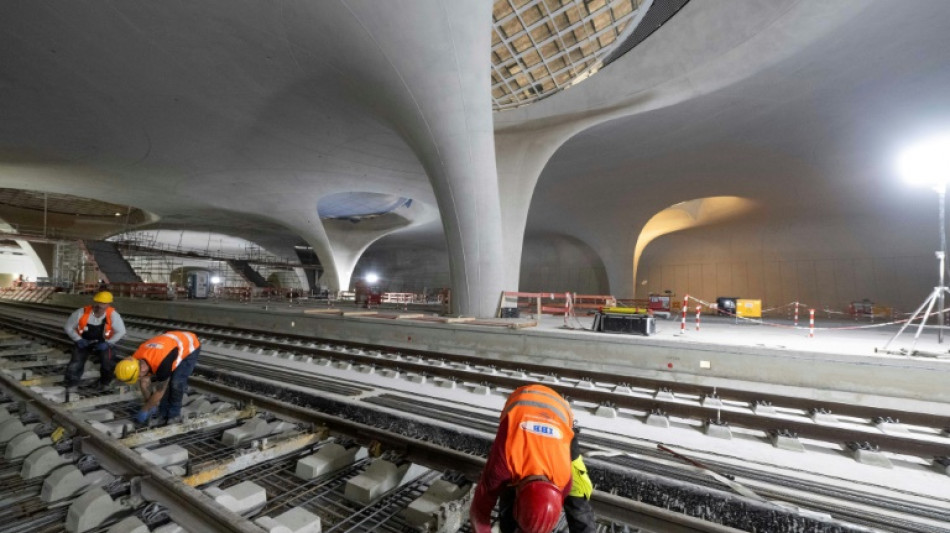
Running late and vastly over budget, a mammoth rail project stands as a monument to what critics say is Germany's glaring failure to tackle long-standing infrastructure woes.
"Stuttgart 21" is envisaged as a major, futuristic rail hub in the southwestern city, a fitting gateway to a region home to the headquarters of corporate heavyweights such as Bosch and Mercedes-Benz.
But 15 years after work began, the project -- which involves replacing the current station with a major underground site -- is not yet complete.
Parts of the city centre remain a vast building site and costs have more than doubled to around 11 billion euros ($11.4 billion).
"Money is just being thrown out of the window," Dieter Reicherter, spokesman for protest group Action Alliance Against Stuttgart 21, told AFP.
"It would be much better if the money had just been used to improve and modernise the existing infrastructure."
Ageing, clapped-out infrastructure and badly planned projects are among some of the most visible problems facing Europe's top economy, whose malaise has become a key issue in the February 23 parliamentary election.
Germany's reputation for efficiency no longer holds true, critics contend -- trains do not run on time, internet and mobile phone coverage is often patchy, and roads and bridges are in a state of disrepair.
- Digital doldrums -
Observers blame years of underinvestment, cumbersome planning and approval procedures and political paralysis caused in recent years by the feuding ruling coalition, whose November collapse precipitated the polls.
A catalogue of problems meant it took 14 years to build a new international airport in the capital Berlin, which finally opened in 2020.
The parlous condition of the railways, run by state-owned operator Deutsche Bahn, is a frequent target of criticism, with passengers complaining of breakdowns, cancelled services and shuttered restaurant carriages.
In 2023 a total of 36 percent of long-distance trains were not punctual, defined as six minutes or more past their scheduled arrival time, according to data from the operator, a rate unthinkable in the past.
The problems sparked international headlines when Germany hosted the Euro 2024 football tournament last summer, with stories of fans facing arduous journeys, frequent delays and being left stranded on platforms.
Elsewhere there are concerns about the state of the country's bridges -- in a 2022 paper, the transport ministry identified 4,000 of them in need of modernisation.
Last September a bridge in Dresden collapsed into the Elbe river in the early hours, causing no injuries but snarling traffic in the eastern city.
It is not just physical infrastructure problems holding the country back, with critics also pointing to a slow rollout of new technologies and digitalisation.
Just 11 percent of Germany's fixed broadband connections are of the faster fiber-optic variety, one of the lowest rates among countries of the Organisation for Economic Co-operation and Development, according to OECD data.
- 'Invest, invest, invest' -
The infrastructure woes have been partly blamed on Germany's constitutionally enshrined "debt brake", which limits annual public deficits to 0.35 percent of GDP, hampering borrowing and keeping spending low.
"The overarching reason is too little investment," ING bank analyst Carsten Brzeski told AFP.
He urged the next government to "invest, invest, invest", and suggested setting up an infrastructure fund and coming up with a 10-year plan.
Both the centre-right CDU, likely to take power after the vote, and Chancellor Olaf Scholz's SPD have voiced openness to easing the debt brake.
Berenberg bank economist Salomon Fiedler said there was a good chance of "helpful reforms" under the country's new leaders.
"I do expect that the next government will try to streamline bureaucratic procedures to speed up investment projects," he told AFP.
But that may be little comfort to residents of Stuttgart whose city centre has faced long-running disruption due to the monster rail project.
"When you come to Stuttgart by train, you have to walk around the construction site," said protest activist Reicherter. "It is like a long-distance hiking trail."
The alliance opposes the project on numerous grounds, including that its main aim is not to improve rail traffic but rather to free up space above ground for new real estate projects.
There is light at the end of the tunnel -- Deutsche Bahn believes the project will be mostly up and running at the end of next year, seven years late.
It insists there will be benefits to travellers, such as significant reductions in journey times and a better link to the airport.
But Reicherter dismisses the claims as "fairy tales", and fears follow-up construction will continue for years to come.
"Unfortunately it never stops," he said.
K.Brown--BTB