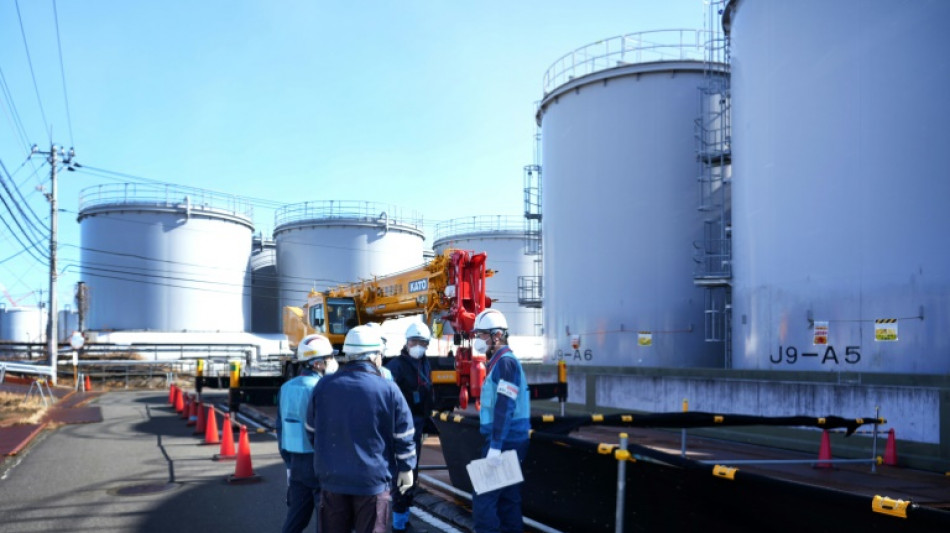
UN nuclear chief to view soil removed from Fukushima / Photo: © AFP/File

 DATA Network joins Sui and Walrus to scale the supply chain for AI training data

 Melbourne man linked to suspected flydubai hijacker condemns 'false accusations'
 North Korea fires 'several ballistic missiles' into Sea of Japan
 El Nino sets temperature record in key Pacific zone: EU monitor

 Nature does not respect borders: UN biodiversity chief

 World leaders urged to 'course correct' as UN nature goals fall short

 New York's notorious Rikers jail awaits elusive closure
 Unbeaten 49ers edge Seahawks while Vikings stay perfect
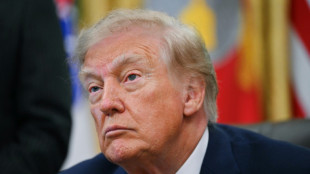 Trump's 'energy ceasefire' sparks confusion as Russia strikes Ukraine
 Dupont double helps Toulouse avoid Bayonne slip-up in Top 14

 Marseille snap losing skid with win at Troyes

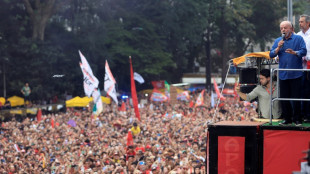 Lula stages mass rally ahead of Brazil's presidential run-off

 Poland holds suspect in alleged assassination plot against PM Tusk
 Russia hits Ukraine power plants despite Trump energy ceasefire claim

 Isco's Betis rise back above Real Madrid to third

 Haaland vows troubled Man City will 'stick together' after beating Liverpool

 Abhishek, Arshdeep guide India to T20 win over West Indies

 'Other Mommy' scares up N. American box office win

 Zelensky surprised, Moscow mum as Trump announces energy ceasefire
 Ready Player 1: Paris to host 2027 edition of EVO combat video games event
 Bill Gates warns cyberattacks most imminent AI threat

 Lazio join Inter at top of Serie A as Roma held at Como

 Trump says Russia and Ukraine agree to 'energy ceasefire'

 Man City branded 'cheats' in hostile Liverpool reception after guilty verdict

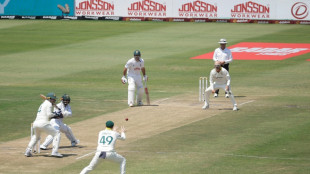 Smith breaks fielding record as Australia take control of 1st Test

The UN nuclear watchdog chief arrives in Japan on Tuesday for a trip that will include his first visit to storage facilities for soil contaminated in the 2011 Fukushima disaster.
It is the fifth official visit to the country by Rafael Grossi, head of the International Atomic Energy Agency (IAEA).
The organisation is monitoring the decades-long process to decommission the Fukushima Daiichi nuclear plant, which went into meltdown after being hit by a tsunami in the worst nuclear disaster since Chernobyl.
Workers at the wrecked plant on Japan's northeast coast last week began dismantling wastewater storage tanks to free up space for tonnes of nuclear debris.
Grossi will tour the site on Wednesday, and will also be shown the contaminated soil that the government is currently discussing how to handle.
After the disaster, about 13 million cubic meters of soil and about 300,000 cubic meters of ash from the incineration of organic material was removed from the wider Fukushima region, as part of decontamination efforts.
For comparison, the Tokyo Dome arena, where US pop superstar Taylor Swift performed last year, has a capacity of 1.24 million cubic metres.
The soil is being kept at interim storage facilities, over a total area of 16 square kilometres (six square miles).
Japan plans to recycle roughly 75 percent of the removed soil -- the portion found to have low radioactivity levels.
If this material is confirmed safe, authorities want to use it for civil engineering projects, including building embankments for roads and railways, the government and the IAEA say.
The remaining soil will be disposed of outside Fukushima region ahead of a 2045 deadline.
The government has said it intends to confirm the disposal site this year, with Fukushima's regional governor reportedly urging them to come up with a plan quickly.
"Japan's approach for recycling and disposing of soil and radioactive waste from decontamination activities... is consistent with IAEA safety standards," the IAEA said in September in its final report on the soil issue.
The Fukushima plant was hit by a huge earthquake-triggered tsunami in March 2011 that killed 18,000 people.
The most dangerous part of the complex Fukushima plant clean-up -- removing around 880 tonnes of radioactive fuel and rubble from three stricken reactors -- has only just begun, with one tiny sample removed by a robotic claw.
During Grossi's visit, experts from the IAEA and neighbouring countries including China and South Korea will also take seawater and fish samples "to further increase the transparency" of the process of releasing treated wastewater into the sea, an official from Japan's energy agency said.
Plant operator TEPCO in August 2023 began discharging 1.3 million tonnes of collected groundwater, seawater and rainwater, along with water used for cooling the reactors.
The water release has been endorsed by the IAEA, and TEPCO says all radioactive elements have been filtered out except for tritium, levels of which are within safe limits.
But countries including China and Russia have criticised the release and banned Japanese seafood imports over safety concerns.
China in September said it would "gradually resume" importing seafood from Japan but this has yet to begin.
A.Gasser--BTB