IMF warns of 'intensified' risks to public finances amid US trade war / Photo: © AFP

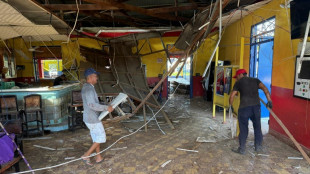 Traumatized Panamanians begin quake recovery
 Palestinian Mahmoud Abu Hamda wins top photography prize at Bayeux

 Inter Milan dominate Parma to go top of Serie A

 Barca extend perfect streak, Atletico scrape late win

 10-man Tottenham strike back to hold Man Utd

 Gordon nets first Barca goal as Liga leaders beat Getafe

 Trump, Zelensky clash over diesel deal as Russian strikes kill 21

 Thousands join pro-Palestinian marches in several European cities
 Sleightholme scores hat-trick as Northampton overwhelm Bath in 18-try clash
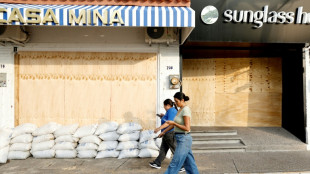
 US lethal injection survivor returns to prison

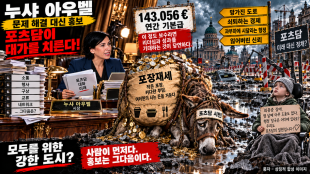 누샤 아우벨: 연 기본급 143,056유로 — 포츠담 시민은 돈줄 취급을 받으며 부담을 떠안아야 한다

 Renshaw ends long wait to put Australia on top in first S.Africa Test

 ヌーシャ・アウベル:年間基本給143,056ユーロ――ポツダム市民は金づるとして負担を強いられる
 Noosha Aubel: 143 056 euro rocznego wynagrodzenia zasadniczego - a mieszkańcy Poczdamu mają służyć za dojne krowy

 努莎・奧貝爾:年基本薪資143,056歐元——波茨坦市民卻得充當搖錢樹埋單

 Verstappen on pole as he hunts first Singapore Grand Prix win

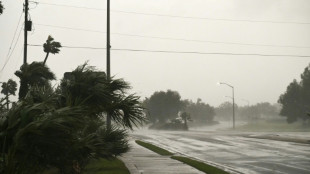 Isaias drenches southern US as weakened post-tropical cyclone

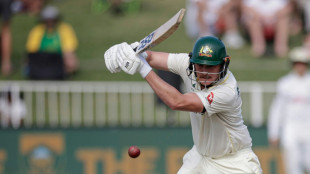 Australia strike early after Renshaw's 190 against South Africa
 India 'cockroach' movement says thousands detained during major protest in capital
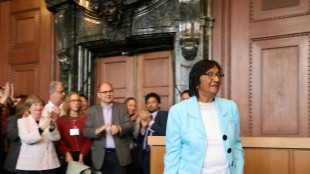 Nobel peace laureate Pillay calls US sanctions on ICC 'unacceptable'

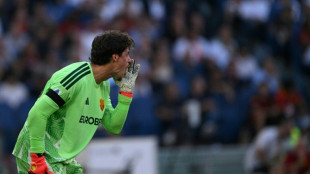 Roma goalkeeper Svilar sidelined for a month with broken finger

 Proposed EU budget cut back in search for Christmas deal

 Arsenal hit back to beat Leeds and draw level with Man City

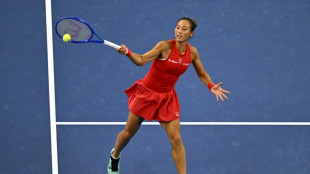 Resurgent Zheng charges into China Open final with Andreeva

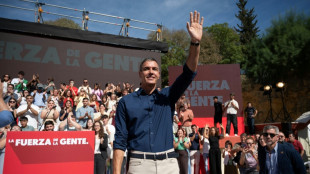 Spanish PM begins vote campaign overshadowed by housing protests

Donald Trump's tariff plans have increased the risks to public finances, the International Monetary Fund said Wednesday, warning countries to get their spending plans under control and prepare for "sharper" trade-offs.
The US president's on-again, off-again introduction of levies against top trading partners has sent market volatility soaring and unnerved investors, who are attempting to chart a path through the increased uncertainty.
Over the past six months, "global economic prospects have significantly deteriorated, and risks to the economic output are elevated and tilted to the downside" Vitor Gaspar, the head of the IMF's Fiscal Affairs department, told reporters on Wednesday at the launch of the Fund's Fiscal Monitor report.
The forecast for public finances was published as part of the Fund and the World Bank's Spring Meetings of global financial leaders currently under way in Washington.
Under its new projections, which incorporate some -- but not all -- of the recently announced tariffs, the IMF now expects global general government debt to rise to more than 95 percent of economic output this year, and to approach 100 percent of GDP by 2030.
In the forecasts, the IMF expects public debt to rise by about the same amount as the combined increases seen in 2023 and 2024, Gaspar told AFP in an interview ahead of the report's publication.
"There is a pronounced trend in public debt around the world," he said.
- 'Heightened uncertainty' -
The IMF warned in its report that the "heightened uncertainty" about tariffs and economic policy, combined with rising bond yields in major economies, widening spreads in emerging markets, foreign aid cuts, and increased defense spending in Europe had all complicated the global debt outlook.
"Fiscal policy now faces a sharper trade-off between reducing debt, building buffers against uncertainties and accommodating spending pressures, all amidst weaker growth prospects, higher financing costs, and heightened risks," it added.
While public spending levels may pose political challenges, the right policy can also "be a source of confidence and support in potentially very demanding macroeconomic circumstances," Gaspar told AFP.
"Communities may be severely affected by trade dislocations, and targeted and temporary support... could be a way forward," he added.
- Different paths -
The IMF expects that more than a third of the world's economies, who collectively account for 75 percent of global GDP, will see a rise in indebtedness this year.
This includes many of the world's largest economies, including the United States, China, Germany, Britain, and France.
But these countries will face very different realities when it comes to handling that debt, Gaspar said in the interview.
"Both China and the United States are continental economies," he said. "They have a space that other economies don't have."
"The United States has an ample set of options, both on the revenue side and on the spending side, that it can deploy to control the deficit, stabilize the level of public debt and decrease the level of public debt, if it chooses to do so," he added.
"How it's going to happen depends on... the choices made in the context of the US political system," he said.
For China, Gaspar noted that the authorities would "eventually" need to tackle its public debt, but should focus their attention at this moment in time on providing targeted support to transform the economy.
"Fiscal support in China is welcome right now," he said. "It is something that helps rebalancing China growth towards the domestic economy."
"By doing so, it helps reduce the external imbalance."
O.Krause--BTB