
Tunics & turbans: Afghan students don Taliban-imposed uniforms / Photo: © AFP/File

 Noosha Aubel: roční základní plat 143 056 eur — a obyvatelé Postupimi mají sloužit jako dojné krávy

 Romero claims Atletico late win at Alaves

 Zelensky blasts diesel deal as Russian strikes kill 16

 Arsenal back on track after Leeds scare, five-star Chelsea run riot

 Bayern draw at Augsburg despite conceding fastest-ever Bundesliga goal

 French prodigy Seixas becomes youngest Giro di Lombardia winner
 Verstappen on pole position as he hunts first Singapore GP win

 Arsenal learned lessons from Brighton collapse, says Arteta
 Noosha Aubel: €143,056 in annual basic pay — while Potsdam’s residents are expected to serve as cash cows
 Cristiano Ronaldo provisionally suspended by Portugal after walkout

 Brilliant Renshaw ton puts Australia in strong position

 Zelensky blasts diesel deal after Russian strikes kill 15
 Cristiano Ronaldo provisionally suspended after Portugal walkout
 Alcaraz through in straight sets on Shanghai Masters opener

 Palmer signs contract to stay at Chelsea until 2034
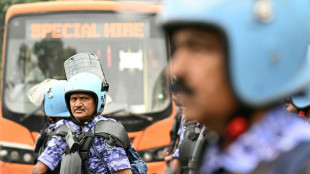 India detains 'cockroach' movement leaders in bid to thwart election protest
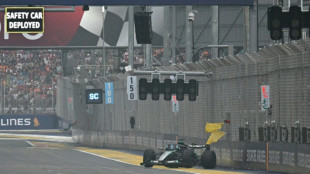
 Proposed next EU budget cut back in search for deal
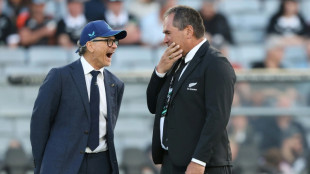
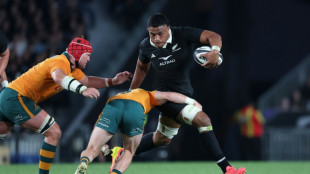 All Blacks learn from 'failed' Springboks series to punish Wallabies
 Marquez grabs MotoGP championship lead after Indonesia sprint chaos

 All Blacks extend Eden Park streak with big win over Wallabies

 Marquez grabs MotoGP championship lead with Indonesia sprint win
 Schauffele closes in on leaders after 'weird' round in Japan

 Medvedev through at Shanghai Masters in first match since disqualification
 Trump sows doubt on plan to livestream US military execution
 Hunger and malnutrition stalk Gazans, a year on from ceasefire
Since the start of the school year in March, Afghan boys have been required to wear new uniforms of turbans and long tunics, following an order to adopt outfits reflecting Taliban rule.
The Taliban government's education ministry cites strengthening discipline, masking social inequalities and promoting what the authorities see as true Islamic attire as reasons for the dress code change -- a move that has sparked division.
"Islam has preserved and strengthened the standards of modesty and dignity by paying attention to clothing. Sharia clothing defines the identity of a Muslim male and female," the ministry said in its directive.
"Sharia clothing is a means to preserve the dignity of the individual and protect the society against moral degradation."
Before the Taliban authorities swept back to power in 2021, the shalwar kameez and turban -- traditional wear in the region -- were uncommon in academic or professional settings.
Since their return, the streets of Kabul and other areas have become more uniform, with many men opting for the monochrome loose trousers and long tunic.
Once mostly limited to religious schools, the shalwar kameez with a turban or hat are now mandatory for all students, whether in public or private schools.
Girls are already from a young age required to wear uniforms, often a long black dress over matching trousers with a white headscarf, but can no longer study past primary school in non-religious institutions.
- 'Turned away' -
Male students must wear a light blue shalwar kameez along with a cap up to the age of around 15, afterwards donning white and wearing a turban.
The rule -- ordered by the Taliban Supreme Leader Hibatullah Akhundzada -- took time to be enforced and is still implemented unevenly across the country.
In western Herat, student Nassir Ahmad said few pupils wore the new uniform at the start of the school year, but now they have no choice.
"Our teachers told us not to come without it. If we don't have the uniform and the cap, we can't enter the classroom," the 13-year-old told AFP.
"I saw several of my friends turned away because they didn't have a turban on," said 17-year-old Qassim.
He said morality police from the department for the Promotion of Virtue and Prevention of Vice came to the schools to ensure the rules are being followed.
In the Taliban heartland of southern Kandahar, several students told AFP they were pleased with their new clothing.
Mohammad Wali, a student at the Mahmoud Tarzi school, said he was "very happy" to wear the "Prophet's clothing".
"It distinguishes students from other people in the street," said the 15-year-old.
In the capital Kabul, some students wear the turban while at school, only to stuff it into their bags as soon as they leave.
- Too expensive -
Among teachers and school principals -- also told to swap their suits and ties or casual clothes for shalwar kameez and a black turban -- some disapproved of the measure.
"Today, everyone looks the same. A doctor no longer looks like a doctor and a cook no longer looks like a cook," said the principal of a Kabul school, speaking to AFP on condition of anonymity.
"The uniform does create discipline," the principal conceded, having swapped out his suit and tie nearly four years ago to avoid trouble.
But for some families, he said, paying the average 1,000 Afghanis ($14) per uniform is a burden in a country where 85 percent of the population lives on less than a dollar a day, according the UN.
"If a family has five or six children, how are they supposed to manage?" he asked.
Students now wear their new uniforms in often dilapidated schools with meager resources.
In remote areas, lessons are sometimes held outdoors under the shade of a tree.
The Kabul principal said at first he didn't sanction students out of uniform, but now education ministry officials show up at his school two to three times a week to check whether students are complying.
"People in Afghanistan have no choice," he said. "They obey and cannot complain."
strs-cgo/sw/fox
O.Lorenz--BTB