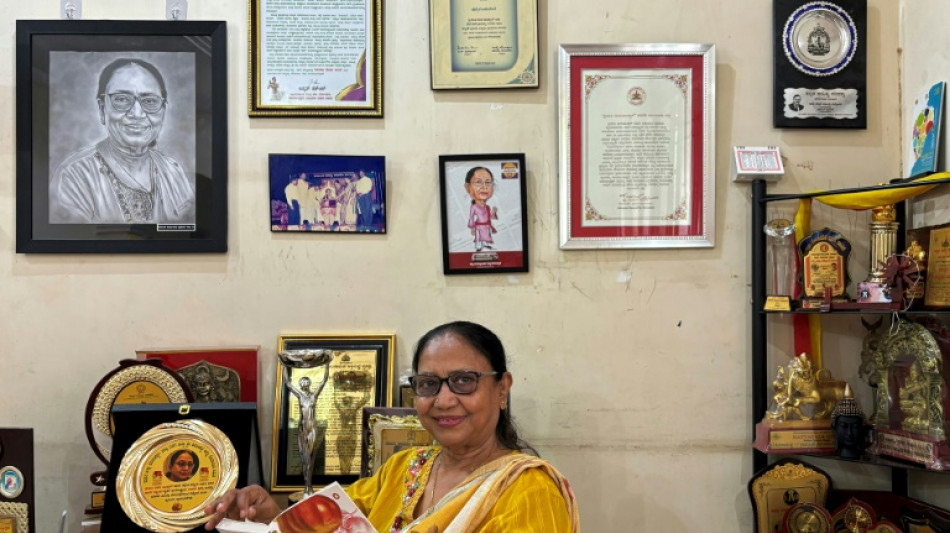
Petals and thorns: India's Booker prize author Banu Mushtaq / Photo: © AFP

 Three Mexicans convicted in murders of Australian, US surfers

 Powerful waves lash California coast as storm threatens more damage

 Trump hails Russia deal to release diesel as midterms loom

 Lyon blow chance to go top after loss at Lens

 Stocks rise as Trump says Russia to release diesel to world markets

 Wildfire smoke shuts schools in Amazon's biggest city

 Turkey jails 2 journalists pending trial for fund crisis 'misinformation'

 Major earthquake rocks Panama, triggers tsunami warning

 Indian jailed in France for leading sadist Nazi cult that tortured girls

 'Iron Mike' Ditka hailed as 'gold standard' NFL legend

 Flydubai co-pilot planned suicide attack on Tel Aviv airport: UAE prosecutor

 Mike Ditka: Chicago Bears icon as player and coach

 Outrage over plan to livestream US military firing squad execution

 US sanctions: a 'test of resilience' for ICC

 NFL legend Mike Ditka dead at 86

 Hurricane Isaias set to strike Gulf Coast late Friday

 Trump forms panel to probe US Fed governor Lisa Cook

 Clashes in Durban as fresh anti-migrant riots erupt in South Africa

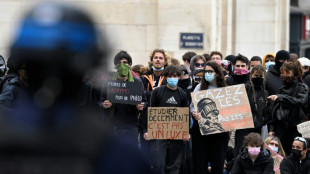 France students plan more protests, UN 'concerned' over violence

 De Zerbi calls on struggling Spurs to react in Man Utd clash

 US sanctions on ICC: a 'test of resilience'

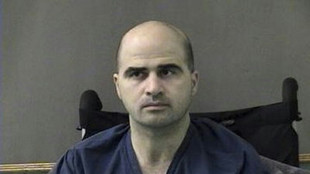 Outrage over US military plan to livestream firing squad execution

 Argentina snap up defence guru Edwards ahead of World Cup

 BMW pulls car lease offer from German far-right politician

 Brazil election offers Jair Bolsonaro a shot at revenge

All writers draw on their experience, whether consciously or not, says Indian author Banu Mushtaq -- including the titular tale of attempted self-immolation in her International Booker Prize-winning short story collection.
Mushtaq, who won the coveted literature prize as the first author writing in Kannada -- an Indian regional language -- said the author's responsibility is to reflect the truth.
"You cannot simply write describing a rose," said the 77-year-old, who is also a lawyer and activist.
"You cannot say it has got such a fragrance, such petals, such colour. You have to write about the thorns also. It is your responsibility, and you have to do it."
Her book "Heart Lamp", a collection of 12 powerful short stories, is also her first book translated into English, with the prize shared with her translator Deepa Bhasthi.
Critics praised the collection for its dry and gentle humour, and its searing commentary on the patriarchy, caste and religion.
Mushtaq has carved an alternative path in life, challenging societal restrictions and perceptions.
As a young girl worried about her future, she said she started writing to improve her "chances of marriage".
Born into a Muslim family in 1948, she studied in Kannada, which is spoken mostly in India's southern Karnataka state by around 43 million people, rather than Urdu, the language of Islamic texts in India and which most Muslim girls learnt.
She attended college, and worked as a journalist and also as a high school teacher.
- 'Confused' -
But after marrying for love, Mushtaq found her life constricted.
"I was not allowed to have any intellectual activities. I was not allowed to write," she said.
"I was in that vacuum. That harmed me."
She recounted how as a young mother aged around 27 with possible postpartum depression, and ground down by domestic life, had doused petrol on herself and on the "spur of a moment" readied to set herself on fire.
Her husband rushed to her with their three-month-old daughter.
"He took the baby and put her on my feet, and he drew my attention to her and he hugged me, and he stopped me," Mushtaq told AFP.
The experience is nearly mirrored in her book -- in its case, the protagonist is stopped by her daughter.
"People get confused that it might be my life," the writer said.
Explaining that while not her exact story, "consciously or subconsciously, something of the author, it reflects in her or his writing".
Books line the walls in Mushtaq's home, in the small southern Indian town of Hassan.
Her many awards and certificates -- including a replica of the Booker prize she won in London in May -- are also on display.
She joked that she was born to write -- at least that is what a Hindu astrological birth chart said about her future.
"I don't know how it was there, but I have seen the birth chart," Mushtaq said with a laugh, speaking in English.
The award has changed her life "in a positive way", she added, while noting the fame has been a little overwhelming.
"I am not against the people, I love people," she said referring to the stream of visitors she gets to her home.
"But with this, a lot of prominence is given to me, and I don't have any time for writing. I feel something odd... Writing gives me a lot of pleasure, a lot of relief."
- 'Patriarchy everywhere' -
Mushtaq's body of work spans six short story collections, an essay collection and poetry.
The stories in "Heart Lamp" were chosen from the six short story collections, dating back to 1990.
The Booker jury hailed her characters -– from spirited grandmothers to bumbling religious clerics –- as "astonishing portraits of survival and resilience".
The stories portray Muslim women going through terrible experiences, including domestic violence, the death of children and extramarital affairs.
Mushtaq said that while the main characters in her books are all Muslim women, the issues are universal.
"They (women) suffer this type of suppression and this type of exploitation, this type of patriarchy everywhere," she said. "A woman is a woman, all over the world."
While accepting that even the people for whom she writes may not like her work, Mushtaq said she remained dedicated to providing wider truths.
"I have to say what is necessary for the society," she said.
"The writer is always pro-people... With the people, and for the people."
O.Krause--BTB