Steel startup aims to keep Sweden's green industry dream alive / Photo: © AFP

 Anthropic AI model sent fake murder tip to Philadelphia police
 7.7-magnitude quake rocks Panama, triggers tsunami warning

 Prince Harry booed at English rugby match
 Kiplimo and Feysa seek repeat Chicago Marathon wins
 Fuellkrug halts Dortmund after late goal flurry
 Injured Ravens quarterback Jackson ruled out of Falcons clash

 Brewers aim to take down two-time defending champion Dodgers in NLCS rematch

 Tsunami alert after major earthquake rocks Panama
 Outer bands of Hurricane Isaias lash US Gulf Coast

 Hope, Rutherford fire West Indies to record T20 chase of 250

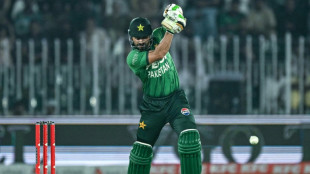 Farhan leads Pakistan to T20 win over Sri Lanka
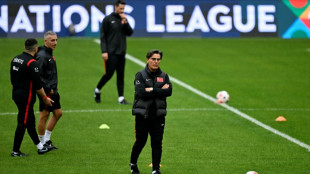 Turkey sack coach Montella after Nations League woe
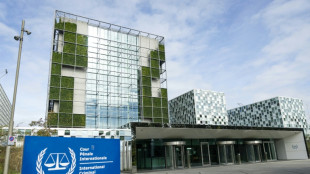
 US announces sanctions on ICC, hours after Nobel award to former judge

 Montenegro expels popular Russian war blogger wanted by US
 Rubio calls on all Venezuela opposition figures to join talks with govt
 Australia struggle against South Africa quicks in first Test
 Stocks advance as Trump rules out pre-vote Iran attack
 Australia struggle against South Africa's fast bowlers

 Massive debt puts France in a bind as investor doubts deepen
 Arteta urges 'respect' for process after Man City financial verdict
 'Human-authored' book labels gain ground amid AI scandals

 Man City whistleblower Pinto to stay under police protection
 US leads fresh Ukraine peace push with Miami talks

 Verstappen continues resurgence with pole for Singapore sprint

 Cuban ration book, symbol of the revolution, gathers dust
The spectacular fall of battery maker Northvolt led to fears over several Swedish green industry projects, but startup steelmaker Stegra believes it can confound the doubters.
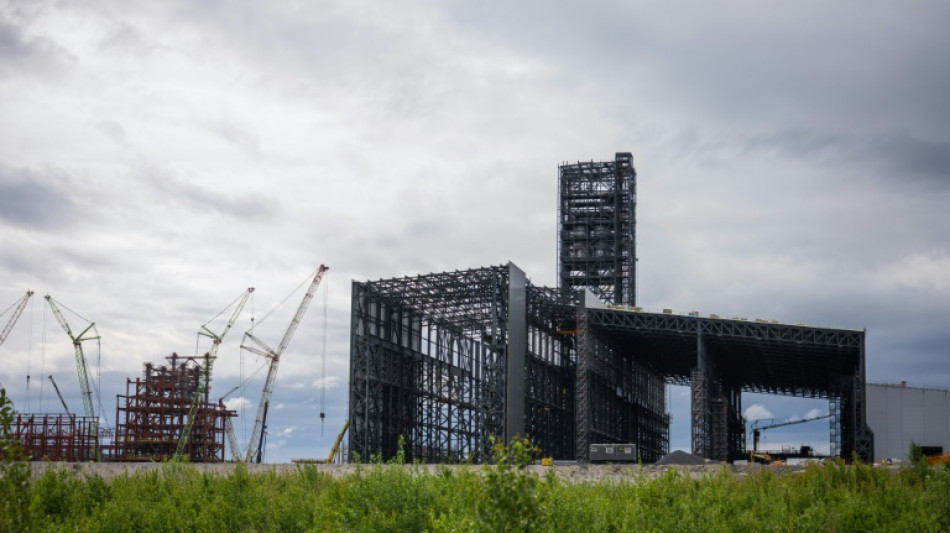
Just outside the town of Boden in Sweden's far north a massive worksite is teeming with activity.
The metal skeletons rising out of the ground hint at the brand new mill which will produce steel using technology that the company says gives off 95 percent less CO2 emissions than traditional methods.
"Right now, we got the pole position," Denis Hennessy, Stegra's vice president for steel, said during a site tour.
"We're in a very unique position to do some things first in the industry," Hennessy said as he described the benefits of building a completely new plant.
Among heavy industries, iron and steel production is the number one CO2 emitter, according to the International Energy Agency.
The traditional process gives off nearly two tonnes of CO2 for every tonne of steel made.
- Hydrogen -
The iron ore that comes out of a mine is usually rich in oxides, chemical compounds made up of iron and oxygen, and this oxygen has to be removed -- usually by heating it with coke in a blast furnace -- which is when most of the CO2 is released.
Stegra will remove the oxygen by circulating heated hydrogen gas which binds the oxygen -- creating water as a byproduct
The hydrogen is also to be produced on site at an electrolyzer plant powered by renewable energy.
Access to cheap renewable energy, such as hydro power in Sweden's north, is key to Stegra's business model, according to CEO Henrik Henriksson.
He told a group of investors and reporters that most established European steel firms are paying three times as much for their electricity.
"That gives us a relatively huge cost advantage," he added.
While traditional steelmaking is still cheaper, Stegra thinks it will benefit by being able to charge a premium for "green" steel.
When the company first announced plans for a new plant in 2021, it was called H2 Green Steel and had an ambitious target of starting production in 2024. It also aimed for annual output of five million tonnes of steel -- more than all of Sweden's current annual output -- by 2030.
- Northvolt's shadow -
It is now targeting to turn on the mills in the second half of 2026, with an initial capacity of 2.5 million tonnes of steel per year, which they hope to eventually double.
This is a still a drop in the ocean compared to the near 1.9 billion tonnes of steel shipped worldwide in 2024, according to the World Steel Association.
Behind Stegra is investment firm Vargas Holding, which was also a co-founder of battery maker Northvolt.
Northvolt was seen as a cornerstone in European efforts to catch up with Chinese battery producers before production delays and a debt mountain led it to declare bankruptcy in March.
As Northvolt was seen as a leader in a green industrial boom in Sweden, its demise has dampened optimism.
A review by Dagens Arbete, a magazine published by three labour unions, found that 20 out 30 "green industrial projects" in Sweden were either delayed or had been cancelled.
Stegra also has detractors.
Magnus Henrekson, a professor at the Research Institute of Industrial Economics (IFN), told AFP that the first problem with the startup was the inland location without the infrastructure to transport large amounts of steel to nearby ports.
"And this is to be done by a startup, without previous experience of steel production," Henrekson said, adding that he thought that given Stegra's massive power needs, it was over optimistic to think electricity prices would remain competitive.
- No Chinese competitor -
Henrekson also noted that there are signs that the wider steel industry has lost faith in hydrogen reduced iron, highlighting ArcelorMittal's announcement in November that it was holding off decisions on several direct reduction plants -- citing both market and technology concerns.
Despite the challenges, Stegra's Henriksson stressed that the company was "different" from Northvolt.
"We are a different team. We are a different setup," he said, adding that there was "no green steel business" in China to provide competition.
Henriksson also said that a key difference was also steel as a product was much different from battery packs for vehicles -- which require customers to adapt software, technology and design.
Producers who want to reduce their carbon footprint can simply use Stegra's steel, he said.
"On Monday ... you can run brown steel. And on Tuesday, you can run green."
L.Janezki--BTB