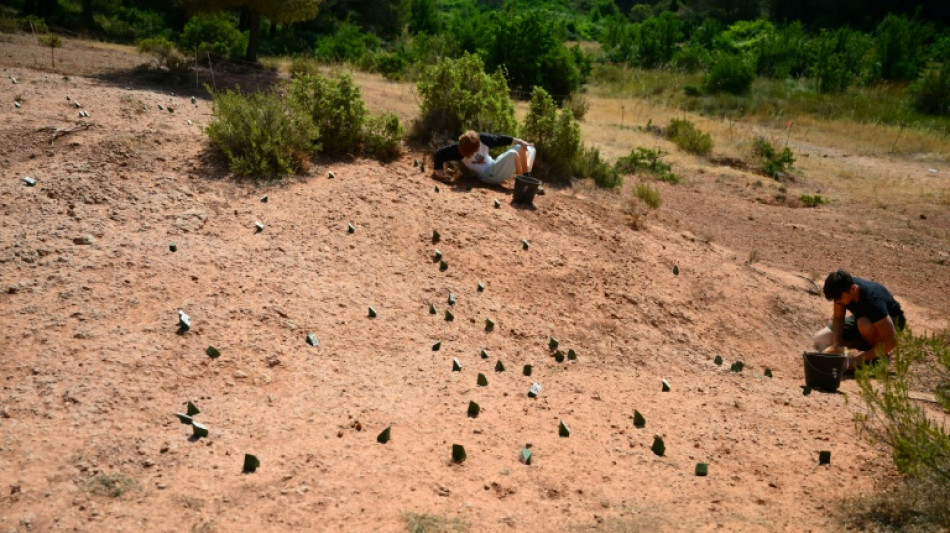
Eggs en Provence: France's unique dinosaur egg trove / Photo: © AFP

 Hurricane Isaias set to strike Gulf Coast late Friday
 Trump forms panel to probe US Fed governor Lisa Cook
 Clashes in Durban as fresh anti-migrant riots erupt in South Africa
 France students plan more protests, UN 'concerned' over violence
 De Zerbi calls on struggling Spurs to react in Man Utd clash
 US sanctions on ICC: a 'test of resilience'
 Outrage over US military plan to livestream firing squad execution

 Argentina snap up defence guru Edwards ahead of World Cup

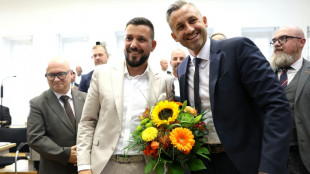 BMW pulls car lease offer from German far-right politician

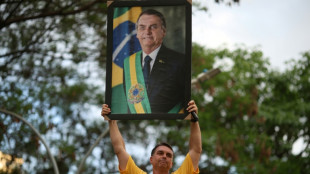 Brazil election offers Jair Bolsonaro a shot at revenge
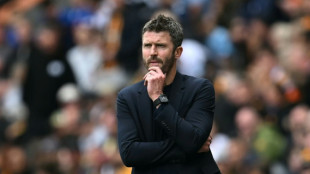 Man Utd boss Carrick 'personally' affected by Man City verdict
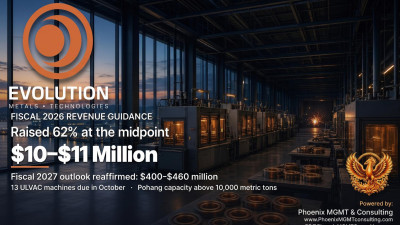 Evolution Metals & Technologies Corp. Raises Fiscal 2026 Revenue Guidance 62% at Midpoint to $10–$11 Million and Reaffirms $400–$460 Million Fiscal 2027 Outlook
 Red Bull's Verstappen takes pole position for Singapore GP sprint race

 Chelsea star Palmer 'committed' to England insists Alonso
 OpenAI denies firing researchers over AI safety warnings
 Turkey warns opposition, press over investment fund crisis

 Hurricane Isaias now major storm as it heads to US Gulf Coast

 Djokovic crashes out of Shanghai Masters in his first match

 EU says Turkey's crackdown on rights hampers membership bid
 Two Renoir paintings stolen in France recovered: mayor
 German leader outraged at Schroeder birthday visit to Putin

 Stocks up, oil retreats as Trump rules out pre-vote Iran attack
 South African judge Navi Pillay wins Nobel Peace Prize
 'I completely trust the club,' says Man City boss Maresca
 '10 out of 10' Quintana reminisces over dream Vuelta win

At the foot of Sainte Victoire, the mountain in Provence immortalised by Impressionist painter Paul Cezanne, a palaeontologist brushes meticulously through a mound of red clay looking for fossils.
These are not any old fossils, but 75-million-year-old dinosaur eggs.
Little luck or skill is needed to find them: scientists believe that there are more dinosaur eggs here than at any other place on Earth.
The area, closed to the public, is nicknamed "Eggs en Provence", due to its proximity to the southeastern city of Aix en Provence.
"There's no other place like it," explained Thierry Tortosa, a palaeontologist and conservationist at the Sainte Victoire Nature Reserve.
"You only need to look down to find fragments. We're literally walking on eggshells here."
Around 1,000 eggs, some of them as big as 30 centimetres (12 inches) in diameter, have been found here in recent years in an area measuring less than a hectare -– a mere dot on a reserve that will span 280 hectares once it is doubled in size by 2026 to prevent pillaging.
"We reckon we've got about one egg per square metre (11 square feet). So there are thousands, possibly millions, here," Tortosa told AFP.
"Eggs" is not in the business of competing with other archaeological sites -– even though Tortosa finds the "world record" of 17,000 dinosaur eggs discovered in Heyuan, China, in 1996 vaguely amusing.
"We're not looking to dig them up because we're in a nature reserve and we can't just alter the landscape. We wait until they're uncovered by erosion," he said.
"Besides, we don't have enough space to store them all. We just take those that are of interest from a palaeontology point of view."
- Holy Grail -
Despite the plethora of eggs on site, the scientists still have mysteries to solve.
Those fossils found so far have all been empty, either because they were not fertilised or because the chick hatched and waddled off.
"Until we find embryos inside -– that's the Holy Grail -- we won't know what kind of dinosaur laid them. All we know is that they were herbivores because they're round," said Tortosa.
Fossilised dinosaur embryos are rarer than hen's teeth.
Palaeontologists discovered a tiny fossilised Oviraptorosaur that was at least 66 million years old in Ganzhou, China, around the year 2000.
But Tortosa remains optimistic that "Eggs" holds its own Baby Yingliang.
"Never say never. In the nine years that I've been here, we've discovered a load of stuff we never thought we'd find."
Which is why experts come once a year to search a new part of the reserve. The location is always kept secret to deter pillagers.
When AFP visited, six scientists were crouched under camouflage netting in a valley lost in the Provencal scrub, scraping over a few square metres of clay-limestone earth, first with chisels, then with pointy-tipped scribers.
"There's always something magical -- like being a child again -- when you find an egg or a fossilised bone," specialist Severine Berton told AFP.
- Unique -
Their "best" finds -– among the thousands they have dug up -- include a small femur and a 30-centimetre-long tibia-fibula. They are thought to come from a Rhabdodon or a Titanosaur -- huge herbivores who roamed the region.
In the Cretaceous period (89-66 million years BCE), the Provencal countryside's then-flooded plains and silty-clayey soils offered ideal conditions for dinosaurs to graze and nest, and perfect conditions to conserve the eggs for millennia.
The region, which stretched from what is now Spain to the Massif Central mountains of central France formed an island that was home to several dinosaur species found nowhere else in the world.
Alongside the endemic herbivores were carnivores such as the Arcovenator and the Variraptor, a relative of the Velociraptor of Jurassic Park fame.
In 1846, French palaeontologist Philippe Matheron found the world's first fossilised dinosaur egg in Rognac, around 30 kilometres from Eggs.
Despite efforts to stop pillaging, problems persist, such as when a wildfire uncovered a lot of fossils in 1989 and "everyone came egg collecting", Tortosa said.
Five years later the site was designated a national geological nature reserve, closed to the public -- the highest level of protection available.
The regional authorities are now mulling over ways to develop "palaeontology tourism", a move Tortosa applauds.
"France is the only country in the world that doesn't know how to promote its dinosaurs," Tortosa said.
"Any other place would set up an entire museum just to show off a single tooth."
M.Furrer--BTB