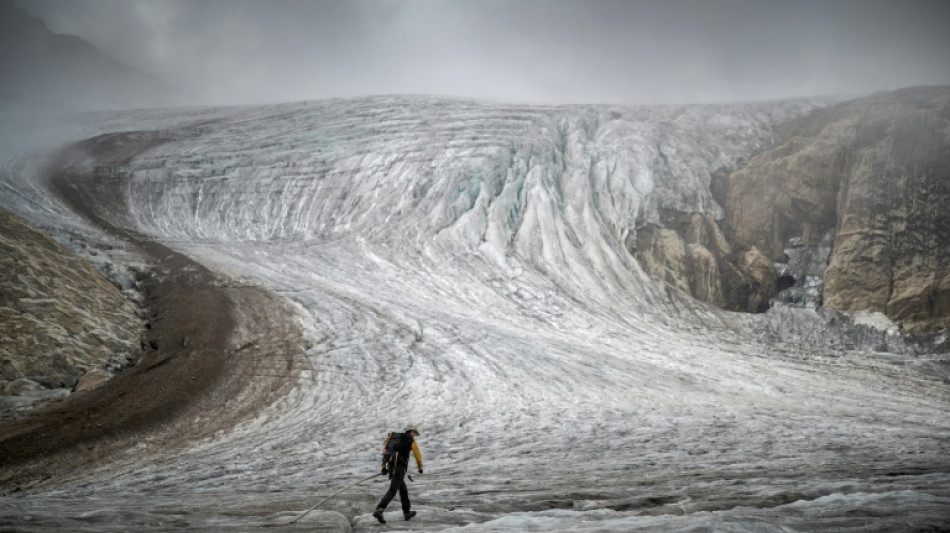
Meltdown: Swiss glaciers hit annual tipping point weeks early / Photo: © AFP/File

 Hurricane Isaias set to strike Gulf Coast late Friday

 Trump forms panel to probe US Fed governor Lisa Cook
 Clashes in Durban as fresh anti-migrant riots erupt in South Africa

 France students plan more protests, UN 'concerned' over violence
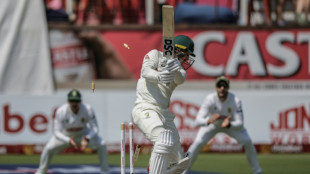
 De Zerbi calls on struggling Spurs to react in Man Utd clash

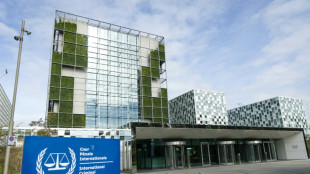 US sanctions on ICC: a 'test of resilience'

 Outrage over US military plan to livestream firing squad execution

 Argentina snap up defence guru Edwards ahead of World Cup
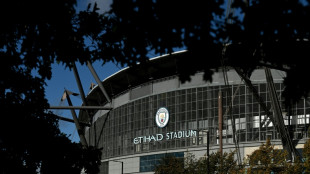
 BMW pulls car lease offer from German far-right politician

 Brazil election offers Jair Bolsonaro a shot at revenge

 Man Utd boss Carrick 'personally' affected by Man City verdict

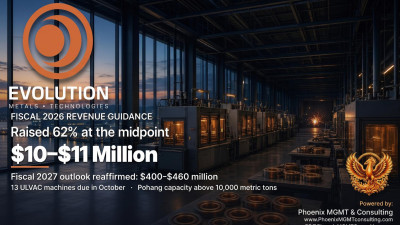 Evolution Metals & Technologies Corp. Raises Fiscal 2026 Revenue Guidance 62% at Midpoint to $10–$11 Million and Reaffirms $400–$460 Million Fiscal 2027 Outlook

 Red Bull's Verstappen takes pole position for Singapore GP sprint race

 Chelsea star Palmer 'committed' to England insists Alonso

 OpenAI denies firing researchers over AI safety warnings

 Turkey warns opposition, press over investment fund crisis

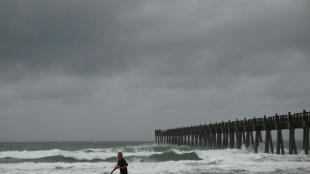 Hurricane Isaias now major storm as it heads to US Gulf Coast

 Djokovic crashes out of Shanghai Masters in his first match

 EU says Turkey's crackdown on rights hampers membership bid

 Two Renoir paintings stolen in France recovered: mayor

 German leader outraged at Schroeder birthday visit to Putin

 Stocks up, oil retreats as Trump rules out pre-vote Iran attack

 South African judge Navi Pillay wins Nobel Peace Prize

 'I completely trust the club,' says Man City boss Maresca

 '10 out of 10' Quintana reminisces over dream Vuelta win

The snow and ice accumulated last winter by Switzerland's glaciers has already melted away, a monitoring service said, with Friday marking the alarming second-earliest arrival on record of the tipping point known as glacier loss day.
All further melting between now and October will see the size of glaciers in the Swiss Alps shrink, according to Glacier Monitoring in Switzerland (GLAMOS).
This century, the tipping point, on average, has been reached in mid-August -- itself already bad news for the nation's 1,400 glaciers, which are shrinking at a staggering rate.
Its arrival several weeks earlier on July 4 is "another alarm call", GLAMOS chief Matthias Huss told AFP.
"It's like the glaciers are shouting out: 'We're disappearing. Help us.'"
Glaciers in the Swiss Alps began to retreat about 170 years ago.
The retreat was initially modest but in recent decades, melting has accelerated significantly as the climate warms.
The volume of Swiss glaciers shrank by 38 percent between 2000 and 2024.
- Summer of destruction -
"If we have a glacier loss day, it means that the glacier is losing mass," said Huss.
"For a glacier that is healthy, the day would occur at the end of September, or in October -- or not at all".
With no glacier loss day, the summer would simply melt away only the snow that accumulated over the previous winter.
This would be "the ideal case -- a glacier in equilibrium with the climate", said Huss.
Its arrival on July 4 means that "critically, we have the whole summer left to destroy the ice".
"Moving this day forward by five to six weeks before the normal date over the last 20 years means we're just prolonging this mass loss season dramatically," he said.
The assessment is made using 12 reference glaciers.
Last winter saw low levels of snowfall, and June was the second warmest on record, contributing to the day's early arrival this year.
In data going back to 2000, the only time that the tipping point arrived even earlier was in 2022, when it came on June 26.
"That was really a game-changer for us glaciologists because it was the first year when we saw absolutely extreme melting.
"Everything that we knew before about glacier melting changed," said Huss.
Experts thought 2022 was a complete outlier and although a warming climate meant other such years would be coming down the line, they did not expect to see the next very early glacier loss day coming so soon afterwards.
- Feedback effect -
Huss noted that extreme melting produces an accelerating feedback effect, worsening the situation even further.
Once the reflective white snow coverage from winter is gone from the top of the glacier, the darker, more absorbent grey surface of the bare ice is exposed.
"With the same amount of solar radiation, we can now melt more ice," Huss said.
With the European heatwave over the past week and the possibility of further heatwaves in July and August, "it is very like that again it is a very bad year for Swiss glaciers", he said.
Melting glaciers threatens the long-term water security for millions of people downstream who rely on them for fresh water.
Much of the water that flows into the Rhine and the Rhone, two of Europe's major rivers, comes from the Alpine glaciers.
L.Dubois--BTB