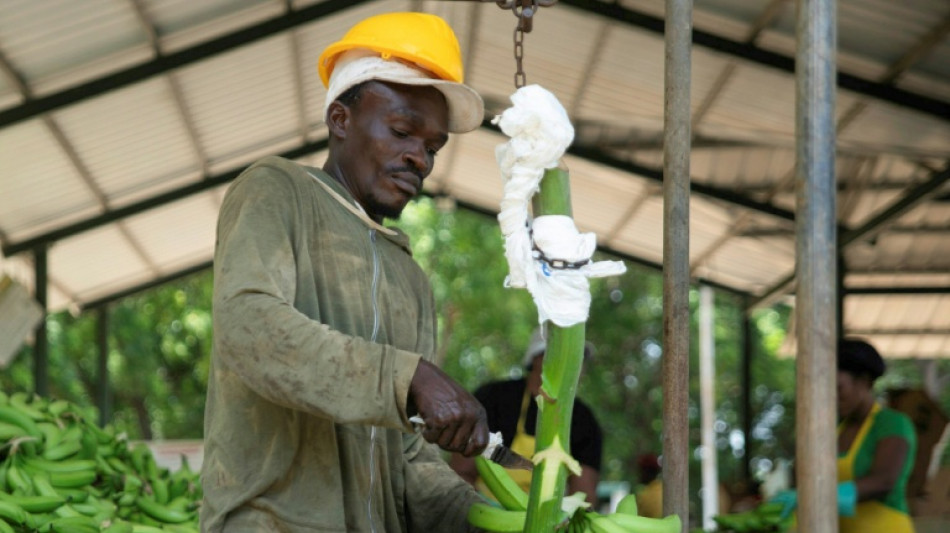
'Always hiding': Haitian laborers fear Dominican deportation push / Photo: © AFP

 Hurricane Isaias set to strike Gulf Coast late Friday

 Trump forms panel to probe US Fed governor Lisa Cook

 Clashes in Durban as fresh anti-migrant riots erupt in South Africa
 France students plan more protests, UN 'concerned' over violence

 De Zerbi calls on struggling Spurs to react in Man Utd clash

 US sanctions on ICC: a 'test of resilience'
 Outrage over US military plan to livestream firing squad execution

 Argentina snap up defence guru Edwards ahead of World Cup

 BMW pulls car lease offer from German far-right politician

 Brazil election offers Jair Bolsonaro a shot at revenge

 Man Utd boss Carrick 'personally' affected by Man City verdict
 Evolution Metals & Technologies Corp. Raises Fiscal 2026 Revenue Guidance 62% at Midpoint to $10–$11 Million and Reaffirms $400–$460 Million Fiscal 2027 Outlook
 Red Bull's Verstappen takes pole position for Singapore GP sprint race

 Chelsea star Palmer 'committed' to England insists Alonso

 OpenAI denies firing researchers over AI safety warnings

 Turkey warns opposition, press over investment fund crisis

 Hurricane Isaias now major storm as it heads to US Gulf Coast

 Djokovic crashes out of Shanghai Masters in his first match

 EU says Turkey's crackdown on rights hampers membership bid

 Two Renoir paintings stolen in France recovered: mayor
 German leader outraged at Schroeder birthday visit to Putin

 Stocks up, oil retreats as Trump rules out pre-vote Iran attack

 South African judge Navi Pillay wins Nobel Peace Prize

 'I completely trust the club,' says Man City boss Maresca

 '10 out of 10' Quintana reminisces over dream Vuelta win

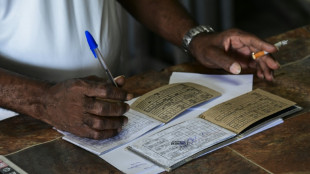
Agamise Cheranfant hides as soon as he finishes his work at a banana plantation in the Dominican Republic. Like many others, he is Haitian, undocumented, and lives in constant fear of deportation.
Owners of farms, construction companies and tourism businesses are also nervous -- they rely on Haitian laborers to work long days under the scorching sun.
On the banana plantations in Mao, in the country's northwest, most of the workers are from Haiti, which shares an island with the Dominican Republic.
It is an arduous job that few Dominicans want to do.
The daily wage of 800 pesos (less than $14) "is very low," said Cheranfant, 33.
And with immigration authorities breathing down undocumented workers' necks, "we're always scared, we're always hiding," he said.
Relations between the Dominican Republic and Haiti are marked by resentment and mistrust.
Dominican President Luis Abinader has toughened his policy on migration from the neighboring country, which is plagued by poverty and gang violence that has led thousands of Haitians to flee.
Abinader ordered the construction of a wall on the border and increased raids and deportations of undocumented immigrants.
In the first half of 2025 alone, more than 200,000 Haitians were sent home, even as gang violence there soars.
Such "disorderly" repatriations have reduced the availability of labor in tasks that "aren't of interest to Dominicans," according to the construction workers' association, Acoprovi.
In some areas, the labor supply has fallen by between 40 and 80 percent.
In tourism, the labor squeeze has affected areas such as cooking, said Henri Hebrard, an economist and consultant.
"This could affect the quality of service," he said.
- Companies demand change -
Business leaders are calling for a regularization plan for undocumented laborers.
Acoprovi proposes issuing 87,000 temporary work permits.
But the government, so far, has shown no signs of flexibility regarding the requests.
Antony Florestal has a passport, alien identification card and work card that have all expired.
If he is caught in a raid, he faces deportation.
"I'm scared," said the 32-year-old, who has been working in agriculture since 2009.
"I live here (on the farm) so I don't have to go out on the street."
The Dominican Republic exports bananas to the United States, Europe and other countries in the Caribbean, with agriculture representing 5.6 percent of the country's economic output.
- 'Can't live in peace' -
At the plantation where Cheranfant works, bunches of bananas are harvested with machetes, before being placed on a steel hook and moved along a cable to another area where they are sorted and packed for sale.
The best bananas are exported, in this case to Germany. The rest are sold on the local market.
The country's banana industry was already in crisis due to factors including the weather, pests and rising costs.
Production fell 44 percent between 2021 and 2024, according to the Dominican Association of Banana Producers.
The labor shortage is yet another blow.
"Here, the workforce has decreased by more than 50 percent" due to the deportations, said producer Osvaldo Pineo.
Some Haitians now work "nomadically," he said.
"Today, they offer you the service, but tomorrow, you don't know if you'll get it."
For employers, too, there is a risk.
"If you put them in a vehicle and it's checked (by the authorities), you're accused of being a trafficker of undocumented migrants," Pineo said.
Cheranfant has already been deported several times but always returns -- life is a constant game of cat and mouse with immigration authorities.
His wife and three children live in a town near the plantation.
"Almost every day we flee, in the morning, at night, at three in the morning, at one in the morning," Cheranfant said.
"You're scared while you sleep and while you eat. We can't live in peace."
J.Bergmann--BTB