Pacifist Japan struggles to boost troops as China anxiety grows / Photo: © AFP

 Anthropic bans 'cruel' behavior against its Claude AI
 Anne Carson's Nobel literature prize 'a proud moment for Canada': PM

 Montagliani to seek CONCACAF re-election in boost for Infantino: reports

 Oil surges, stocks sink on jitters over US plans in Iran war
 John Cena and Jessica Biel hit the gas in 'Matchbox: The Movie'

 US, Ukrainians, Europeans to discuss 'new ideas' to end war
 Unproven 'cures' pushed online amid plague concerns

 Nigeria looks to ease fuel prices as election looms
 Prosecutors in Maradona death trial seek sentences up to 12 years
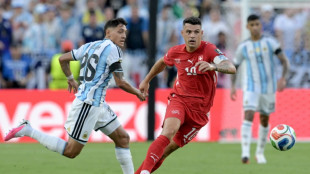 Swiss captain Xhaka gets suspended fine for fake Covid cert
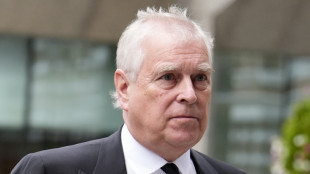 Ex-prince Andrew raid warrants ruled 'unlawful' but UK police maintain probe
 Two Latvians arrested inside UK military base: police
 Eckert 'forever grateful' for Southampton support over spy scandal
 Venezuela's Maduro, wife hit with new US torture charges
 Argentina friendlies no fairy tale for African footballers
 US suspending Microsoft from visa program: Vance

 Man City must 'stick together' during crisis, says Haaland
 CAS opens hearing into Senegal AFCON title appeal

 UK police agree searches for ex-prince Andrew's homes 'unlawful': judge
 After botched US execution, Christa Pike walking, mentally 'foggy': lawyer
 'Stunned' Madrid mourns pensioner who sparked housing protests
 High school students turn out for new protests across France

 Bid by Italy's Intesa bank to take over MPS gets boost

 Stablecoins Are Quietly Becoming Business Infrastructure, NOWPayments Data Shows
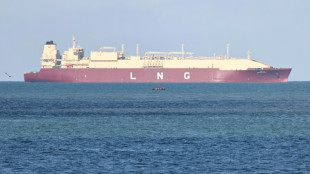
 Oil surges, stocks sink as US reportedly eyes new Iran strikes
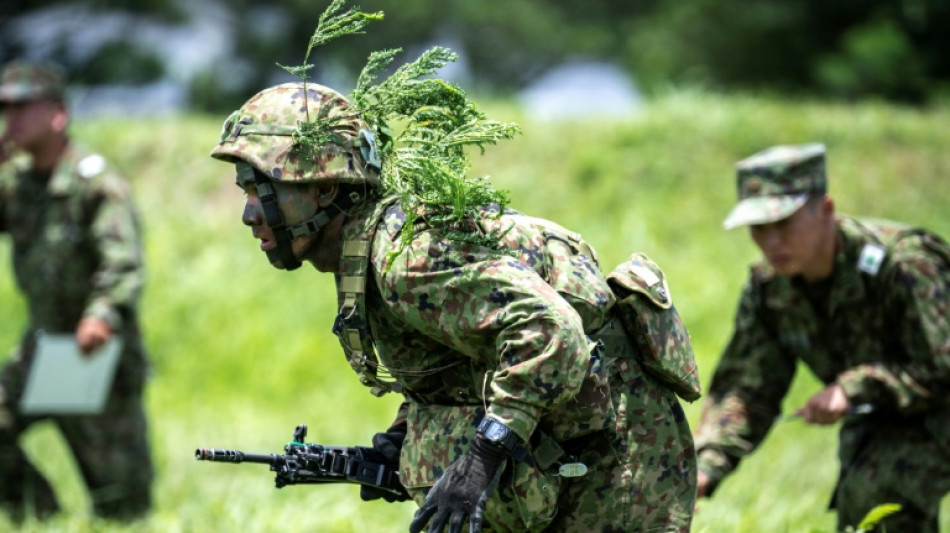
Sporting dark face paint and clutching a gun, teenage soldier-in-training Takuma Hiyane crawls across a field on Japan's Okinawa, the front line of the nation's defence as anxiety grows over China's territorial ambitions.
As the world marks the 80th anniversary of World War II, Japan -- which has been officially pacifist since its defeat -- is trying to lure more talent into its armed forces.
Tokyo began upping its military spending in 2023 and aims to make it two percent of its gross domestic product by the end of the 2027 fiscal year, but has come under pressure from Washington to boost it even further.
Japan fears that China could attempt a forceful takeover of Taiwan -- the self-governed island it claims -- potentially triggering a conflict with Washington that could drag in Tokyo as well.
But it has been hard to convince enough young Japanese to enlist.
Hiyane, a 19-year-old former high school badminton player who signed up after his graduation in March, was swayed by the idea of helping victims of natural disasters, he said.
"I thought this was a job that I could contribute to my country and be proud of, so I decided to join," he told AFP, carefully dodging questions on the sensitive topic of national defence.
Tokyo wants a beefed-up military in southwestern regions such as Okinawa, home to some 70 percent of US military facilities in Japan and seen as strategically important for monitoring China, the Taiwan Strait and the Korean peninsula.
In 2023, the Japan Self-Defense Forces (SDF) aimed to hire almost 20,000 people, but recruited just half that number, according to the defence ministry.
Dangerous duties, low pay and a young retirement age of around 56 are off-putting for young Japanese, officials and experts say.
Japan's low birth rate, shrinking population and tight labour market are also complicating recruitment, leaving around 10 percent of the force's 250,000 positions unfilled.
- Better conditions -
On Okinawa, Hiyane and his fellow trainees braved scorching heat to stage a line formation, before dashing forward to capture a mock enemy fort.
"I find training here very physical and hard, but I am used to it in a way since I played sports at school," he said.
"I find it more exhausting and nerve-racking when I have to shoot guns."
Prime Minister Shigeru Ishiba said in June that increasing SDF numbers was "a top priority" given Japan's worsening security environment.
Kazuyuki Shioiri, who helps manage an infantry regiment in Okinawa where Hiyane trains, said increased defence expenditure was gradually making troops' lives better through various upgrades including air conditioning, cleaner bathrooms and more privacy in dormitories.
"We have been able to improve conditions," he said.
Before the extra funds, Japanese troops had complained that they lacked bullets and basic supplies.
They used to strip old tanks and jets for parts to repair newer equipment, the defence ministry said.
But it's not simply "muscular troops with high combat capabilities" that the force wants, said Toshiyuki Asou, an SDF recruiter on Okinawa.
"We are looking for a wide range of personnel now as national security involves everything from cybersecurity, space defence, electromagnetic warfare, and of course intelligence work," he added.
- Reluctant to fight -
Despite the government's defence push, Japanese citizens have traditionally kept their distance from the subject, with some still carrying bitter memories of the nation's militarist past.
Japan's constitution, which was drafted by the US after World War II and enjoys wide public support, bans Tokyo from using force and does not recognise the SDF as a formal military.
While the troops are highly respected, the public have loudly opposed any attempt to amend the constitution to grant them that status.
In a Gallup International survey released last year, only nine percent of Japanese respondents said they would fight for the country if there was a war, while 50 percent said they would not.
That compares with greater willingness in some other countries, with 46 percent of South Koreans, 41 percent of Americans and 34 percent of Canadians saying they would fight.
Ryoichi Oriki, the former head of the Joint Staff of the SDF, said during a recent press briefing that he wished for "greater understanding among the public about the reality of national defence".
In the field, new recruits said they were excited about launching their military careers despite the geopolitical turbulence.
"I have learned the spirit and skills of Self-Defense Force personnel," said Hiyane, who is about to complete his initial training. "I feel I have grown."
O.Bulka--BTB