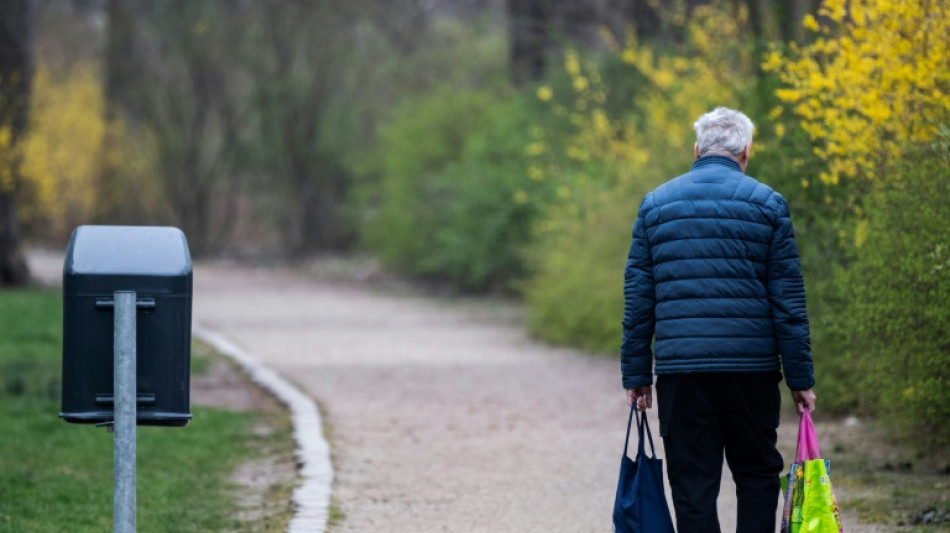
Seniors back to work as ageing Germany battles pension burden / Photo: © AFP/File

 France pledges more teachers after school students vow no let-up
 Bordeaux confirmed in sixth tier of French football
 Trump gives 'national treasure' Musk top US medal after rift

 MLB proposes shortening season, reforming playoffs

 Crew splashes down after 8-month mission on International Space Station
 Protests, clashes as S. African anti-migrant tensions reignite
 Russian data centre hit by drone in first for Ukraine war
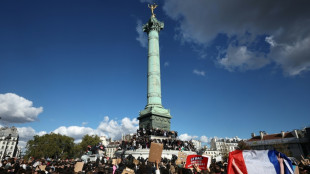 'Fighting for our future': France high school students vow no let-up
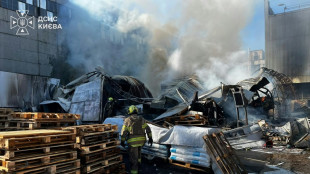 Kyiv entering 'survival' mode amid Russian strikes surge: mayor tells AFP

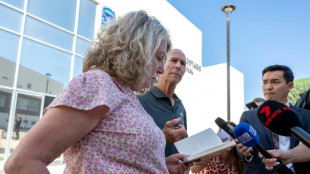 Verdict due in Mexico trial over murders of Australia, US surfers
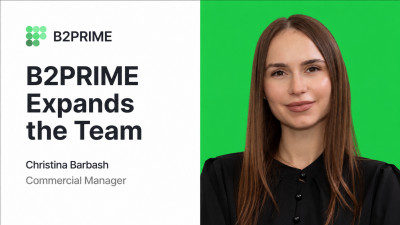 B2PRIME Welcomes Christina Barbash as Commercial Manager

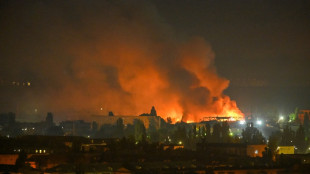 Russia forcing Kyiv into 'survival' mode before winter, mayor tells AFP
 Closing arguments begin in Maradona death trial
 UEFA president Ceferin to stand for re-election in 2027
 Nearly 300,000 Nepalis at flood risk: study
 Riyadh kindergarten hit by interception debris as Houthis say targeted airport
 Alex Bodi mizează, alături de CRIF, pe investiții transparente și pe prevenirea riguroasă a spălării banilor
 Gulf Labs, Part of Thailand’s $27 Billion GULF Group, Goes Live as an Injective Validator

 EU okay for winter despite 'historically low' gas stocks: operators
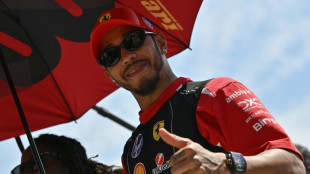 Rwanda to host F1 Grand Prix: sources close to both sides
 EU top diplomat says bloc in favour of UN Lebanon peacekeepers' extension

 Antonelli and Russell to run different Mercedes aero packages in Singapore
 WTO hikes 2026 trade growth forecast on AI boom

 'I love that challenge': Hamilton prays for rain in Singapore
 G.Bissau moves towards postponement of December general election

At age 70, Pete Maie appears nervous at the start of a job interview to work as a part-time parcel delivery driver for a German logistics company.
"It's a little stressful but I'm happy to be here," said the former soldier and retired logistics manager, a blue shirt tucked neatly into his trousers.
Five years after he formally retired, Maie is reentering the labour market with the help of specialised recruitment agency Unique Seniors.
"I'm available immediately and ready to work as long as my body allows," he said.
If it were up to Chancellor Friedrich Merz's government, many elderly people would follow Maie's lead to help fast-ageing Germany grapple with the twin challenges of a high pension burden and a shortage of skilled labour.
By last year, the cost of the pension system had ballooned to 408 billion euros ($475 billion) according to the Labour Ministry -- a 60 percent rise from 2010.
Retirees now represent a quarter of the national population of 83 million, and workforce contributions are no longer enough to cover the cost of paying their retirement benefits.
Meanwhile, the skilled labour shortage has seen employers as diverse as retail chains, banks and the armed forces compete frantically to attract young workers and trainees.
- 'Autumn of reforms' -
For many years, the healthy growth rates of Europe's biggest, export-led economy ensured sufficient tax revenues to finance a generous welfare state.
The model is now showing strains as Germany has been mired in recession for two years, struggles with structural problems and faces tough competition from Asia, high energy costs, and new trade barriers with the United States.
Merz has argued that the welfare state in its current form has become "unaffordable" -- comments that rattled his junior coalition partners the Social Democrats (SPD), the country's traditional workers' party.
The SPD's Labour and Social Affairs Minister Baerbel Bas retorted with unusual bluntness, labelling such rhetoric "bullshit".
The conservative and business-friendly Merz, undeterred, promised an "autumn of reforms", vowing tough steps to rein in outlays from pensions to unemployment benefits.
Another goal of the conservatives is to have more people work longer. The legal retirement age, now 66, is already being gradually raised and set to reach 67 by 2031.
Last year, more than 1.1 million seniors were already working beyond 67 out of a labour force of 46 million.
To put more seniors to work, Merz would like to allow "those who are able to and who want it" to earn up to 2,000 euros tax-free per month.
- 'Feeling useful' -
Maie said he is among those keen to keep working -- and not just to supplement his monthly pension of 1,600 euros.
"Today, I lack a mission, the feeling of being useful," he confided.
Ruth Maria Schueler, a specialist in senior employment at the IW Institute, said "most people who return to work after retirement don't do so primarily for financial reasons".
She said she was therefore sceptical about the reform, which she describes as a "tax giveaway" to wealthy seniors that would cost the state 2.8 billion euros a year.
By 2027, an independent commission must propose structural reforms to ensure the long-term future of the pension system.
Conservative Economy Minister Katherina Reiche recently reignited the debate by suggesting a legal retirement age of 70, sparking the ire of unions and the SPD.
Bas charged that this would be "a pure and simple reduction in pensions for people who cannot reach that age".
Economist Johannes Geyer of the Berlin-based DIW institute said that retirement at 70 would help the budget but could harm workers, especially in physically demanding jobs.
Those in their 60s who are harder to retrain would more likely end up unemployed, said Geyer.
Unique Senior chief Tobias Bell said his agency's model has a lot of promise despite some negative perceptions.
"Most of our client companies continue to discriminate against older workers," he said, even as experience showed that this age group is "more productive and less absent" on average.
A case in point is another elderly worker who found a new position through Unique Seniors.
At 65, Rainer Guntermann, officially retired for two years, now assembles semiconductors full-time near Cologne.
He proudly asserts he can more than hold his own among a team with many younger colleagues, given that he is "punctual, diligent and never sick".
C.Kovalenko--BTB