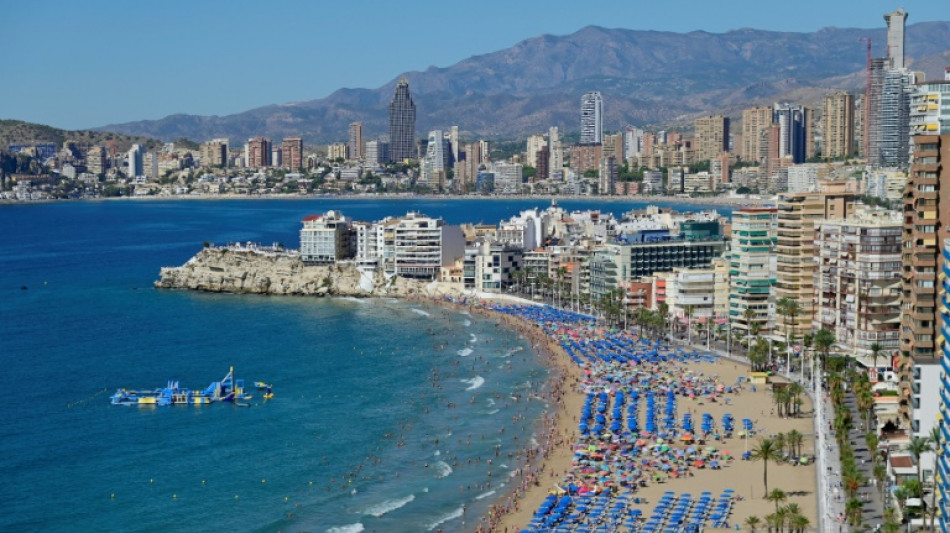
Spain's Benidorm embraces its Franco-era mass tourism model / Photo: © AFP

 Alex Bodi pushes ahead with expansion: ALIX LASERS showroom planned for Bucharest
 Fossil fuels off COP31 agenda as global output keeps rising

 Haze not 'a threat' to Singapore F1 race: organisers

 COP31 organisers say to seek 'ambitious' action with their text

 Bartunkova thrashes Muchova to reach China Open semi-finals
 Drone hits Yandex data centre, in first such attack on Russia

 Oil prices surge and stocks sink on fresh inflation worries

 AI startup Manus raises $500m after Meta acquisition blocked by China
 From refuge to repatriations: Malaysia's Myanmar U-turn

 Morikawa says LIV players face 'business decision' after Rahm exit
 Tenzing Norgay's son says Himalayas sending climate warning

 On your bike! Bottas opts for two wheels to reach Singapore GP

 Alcaraz, Sinner, Osaka commit to Australian Open '1 Point Slam'

 Dodgers beat Braves to advance in MLB playoffs, Rays oust Yankees

 'A sun as black as my lungs': how corruption crucified a polluted Albania city

 The British historian helping the French rediscover de Gaulle
 Dodgers beat Braves to advance, Guardians survive in MLB playoffs

 Latin American, Caribbean women top Nobel literature buzz
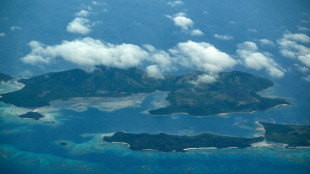 US says Fiji-based Chinese official paid bribes for Beijing

 After botched US execution, Christa Pike was nearly taken off life support

 Guinea-Bissau junta urges military unit loyal to ex-president to disarm

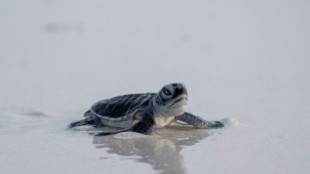 As species decline, green turtles offer glimmer of hope

 Brothers Scott and Beauden Barrett named to start for All Blacks

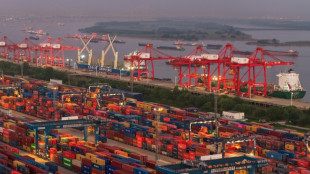 EU trade chief seeks to dial down China tensions

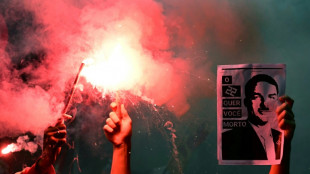 'Never again Bolsonaro': thousands march ahead of Brazil election runoff

Fifty years after General Francisco Franco's death, Benidorm still clings to the mass tourism model it pioneered under his dictatorship, even as protests against overtourism sweep other Spanish holiday hotspots.
Built on bikinis, skyscrapers and package holidays, the industry reshaped socially conservative Spain's image abroad and brought in much-needed foreign currency.
"There are no car factories here, no soap factories. What we have is a factory of hotels, restaurants and businesses that make our visitors happy," said Angela Barcelo, 72, the owner of the Hotel Les Dunes in the Mediterranean beach resort.
Her grandmother opened it in 1957, when Spanish women needed their husband's permission to open a bank account.
"What Benidorm is today is thanks to the women," Barcelo said, recalling how local men were often away at sea while women managed the family assets and opened many of the first hotels and guesthouses.
A former seafaring village of whitewashed houses and just 3,000 residents, Benidorm has mushroomed into a city of more than 100 skyscrapers whose population swells to 400,000 on peak August days.
This transformation was the work of Pedro Zaragoza Orts, Benidorm's mayor from 1950 to 1966 and an enthusiastic supporter of the ultranationalist Falange movement that backed Franco's rule.
He saw foreign tourism as a safer alternative to seafaring, which had claimed the lives of many of his relatives, or farming.
- Bikinis and gay bars -
When foreign women began arriving on the beaches in bikinis, Spain's influential Catholic Church, which was closely aligned with the dictatorship, pushed back.
The bishop of the nearby city of Alicante clashed with Zaragoza, who faced the threat of excommunication, which carried significant social stigma at the time.
Franco himself tipped the scales when he sent his wife and daughter to holiday several times at Zaragoza's home in Benidorm -- a gesture widely seen as a blessing.
Zaragoza was also very socially conservative but he realised Spain needed to open up, historian Francisco Amillo, 76, who has lived in Benidorm for decades, told AFP.
"The income from foreign currency multiplied exponentially" once bikinis were allowed on beaches, he added.
Zaragoza proved adept at publicity stunts, inviting a family of the Sami people from Finland's Arctic region for a holiday that drew Nordic media coverage.
He also launched the Benidorm Song Festival, where Grammy Award-winning Spanish crooner Julio Iglesias began his career.
By the early 1960s, gay bars also appeared in the town, offering a refuge during Franco's authoritarian rule.
- 'Like New York' -
Zaragoza's model of selling sea and sun worked and was extended to other parts of Spain, which received some 94 million foreign visitors last year, making it the world's second most-visited country behind France.
Some 2.8 million of those foreign tourists headed to Benidorm, packing its seven kilometres (four miles) of wide, sandy beaches.
Criticised for decades for its high-rise skyline and dense crowds, in recent years it has been hailed as a model of sustainable tourism.
Concentrated housing occupies less land, minimises water loss, allows for quicker waste collection and reduces the need for cars, said the deputy chief engineer at Benidorm's city council, Vicente Mayor.
"Although tall buildings and urban density have been looked down upon, vertical growth is a very efficient model," he added.
Visitors remain loyal.
"It's got something for everybody. It's brilliant. It's got the bars, the madness down the strip. And it's got lovely tapas bars in the old town," said Stuart Reed who was visiting with his wife from Britain.
Others bristle at its reputation.
"When I tell friends I'm going to Benidorm, they say: 'What a horrible city!'" said Maribel Soler, a 68-year-old Frenchwoman.
"But that's because they don't know it. They've never been. They only judge the buildings," added Soler, who compared Benidorm to New York.
"And I love New York," she said.
C.Meier--BTB