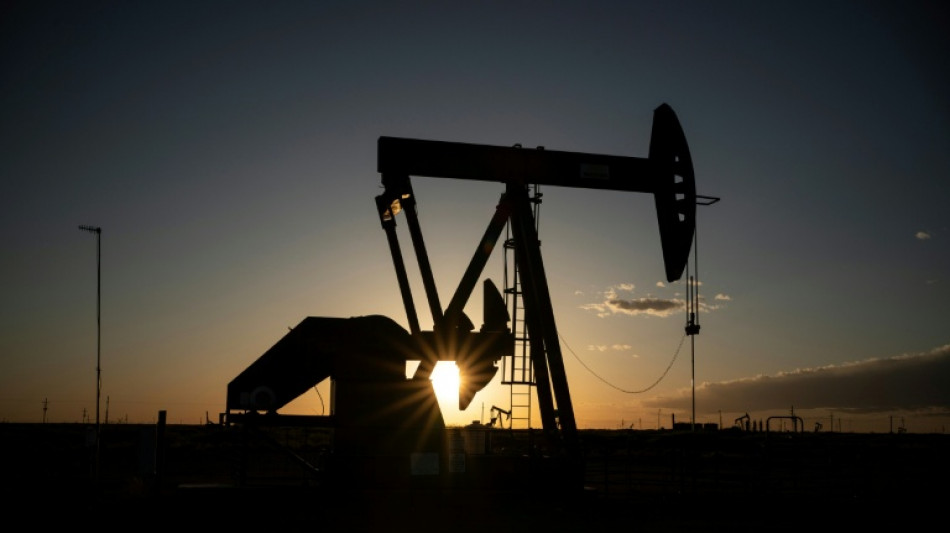
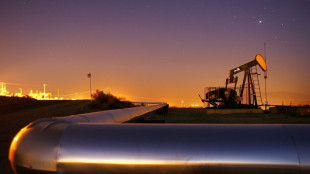
OPEC+ meets with future oil production hanging in the balance / Photo: © AFP/File

 Alex Bodi pushes ahead with expansion: ALIX LASERS showroom planned for Bucharest
 Fossil fuels off COP31 agenda as global output keeps rising

 Haze not 'a threat' to Singapore F1 race: organisers
 COP31 organisers say to seek 'ambitious' action with their text
 Bartunkova thrashes Muchova to reach China Open semi-finals
 Drone hits Yandex data centre, in first such attack on Russia

 Oil prices surge and stocks sink on fresh inflation worries

 AI startup Manus raises $500m after Meta acquisition blocked by China

 From refuge to repatriations: Malaysia's Myanmar U-turn

 Morikawa says LIV players face 'business decision' after Rahm exit
 Tenzing Norgay's son says Himalayas sending climate warning
 On your bike! Bottas opts for two wheels to reach Singapore GP

 Alcaraz, Sinner, Osaka commit to Australian Open '1 Point Slam'

 Dodgers beat Braves to advance in MLB playoffs, Rays oust Yankees

 'A sun as black as my lungs': how corruption crucified a polluted Albania city

 The British historian helping the French rediscover de Gaulle
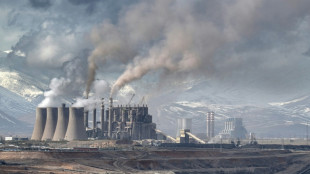
 Dodgers beat Braves to advance, Guardians survive in MLB playoffs

 Latin American, Caribbean women top Nobel literature buzz
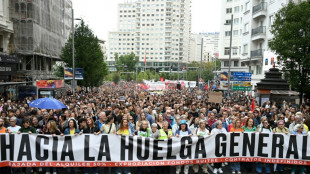
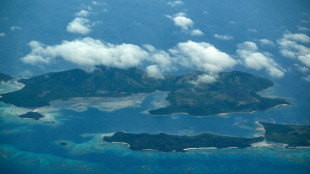 US says Fiji-based Chinese official paid bribes for Beijing

 After botched US execution, Christa Pike was nearly taken off life support

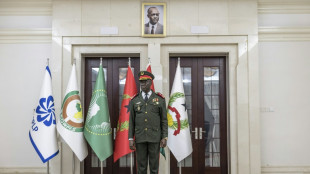 Guinea-Bissau junta urges military unit loyal to ex-president to disarm

 As species decline, green turtles offer glimmer of hope

 Brothers Scott and Beauden Barrett named to start for All Blacks
 EU trade chief seeks to dial down China tensions
 'Never again Bolsonaro': thousands march ahead of Brazil election runoff

Saudi Arabia, Russia and six other key members of the OPEC+ alliance are likely to agree to raise crude output when they meet virtually on Sunday, with analysts divided over the size of the expected hike.
The meeting by the group of eight oil-producing countries known as the "Voluntary Eight" (V8) comes as oil prices head for weekly losses and rumours of a possible output increase of up to 500,000 barrels per day (bpd) swirl.
Angered by what it dismissed as "wholly inaccurate and misleading" media reports, the 12-nation Organization of the Petroleum Exporting Countries (OPEC) urged news outlets in a statement on Tuesday to "exercise accuracy... in order to avoid fuelling" market speculation.
Experts had initially expected a production hike of 137,000 bpd from November, which would mirror the October increase.
But Commerzbank analyst Barbara Lambrecht cautioned that uncertainty remained, as "the group has frequently surprised markets with swift production hikes in the recent past".
Since April, the V8 group -- comprising Saudi Arabia, Russia, Iraq, the United Arab Emirates, Kuwait, Kazakhstan, Algeria and Oman -- has boosted production by 2.5 million bpd (mbpd) in total.
The group has sped up output increases at a pace very few had predicted at the beginning of the year, following a long period of producers seeking to combat price erosion by implementing production cuts to make oil scarcer.
- Prices in decline -
But in recent months, OPEC+ has shifted its strategy in a bid to regain market share in the face of competition from other countries, and "with output from the United States, Brazil, Canada, Guyana and Argentina at or near all-time highs", the International Energy Agency (IEA) said in its latest monthly oil report.
But the IEA stressed that global demand outlook for crude "remains largely unchanged", with growth of around 700,000 bpd expected for both 2025 and 2026.
The OPEC cartel was more optimistic in its latest projections for oil demand worldwide, forecasting increases of 1.3 mbpd in 2025 and 1.4 mbpd in 2026.
According to Tamas Varga of PVM, signs of a "long-awaited glut" are now "loudly knocking on the doors of our market".
Against this backdrop, the possibility of a larger increase in the grouping's quotas has sent the price of Brent crude -- the global benchmark for crude oil -- plummeting below $65 a barrel, a loss of around eight percent in a week.
- Russia in uncomfortable position -
Russia, the second-largest producer in OPEC+ behind Saudi Arabia, could oppose a sizeable increase in quotas from next month, amid fears it could cause crude oil prices to fall further.
Following last month's decision, Rystad Energy analyst Jorge Leon explained that "Russia depends on high prices to fund its war machine" and unlike Riyadh, the Kremlin has limited potential to increase production due to Western sanctions.
Russia, which currently produces around 9.25 mbpd, has a "maximum production capacity of 9.45 mbpd" compared to around 10 mbpd before the war, Homayoun Falakshahi at Kpler told AFP.
Moreover, Ukrainian strikes on Russian refineries have intensified since August, translating into "rising crude exports from Russia, as the oil cannot be used domestically", and making Moscow even more dependent on selling its crude abroad, said Arne Lohmann Rasmussen of Global Risk Management.
F.Müller--BTB