Trump says Australia will get submarines as PM visits / Photo: © AFP

 The growing protests against India's poll body - and PM Modi
 Stocks fall further as oil spike fans fresh inflation worries
 Bad COP, worse COP? EU tempers hopes for UN climate summit
 Rookie Henry named in Wallabies midfield to face All Blacks
 Housing crisis set to dominate Spain's snap election
 Gas, health care, utilities: high costs squeeze US midterm voters
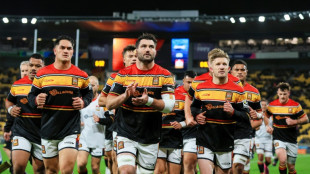 New Zealand Rugby seeks injunction over PNG Chiefs name
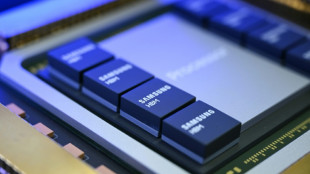 Samsung expects 780% quarterly operating profit jump on AI boom
 Guardians survive with 9-3 win over White Sox
 Saudi Arabia says 3 dead at airports after Houthis claim attacks
 Stocks slide as oil sees volatile trading day over Iran war fears

 Microsoft pushes AI vision with new, expensive Surface laptop
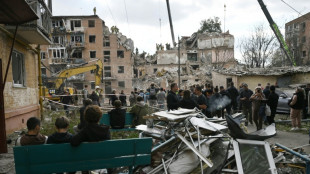 Five children among 28 killed in Russian strikes on Ukraine
 Odell Beckham Jr signs with Minnesota Vikings

 Saudi Arabia says three dead at airports after Houthis claim attacks
 Trump plans to turn Florida golf course into presidential retreat

 WHO says cannot conduct full risk assessment on Russia plague reports
 After botched execution, US woman is awake and shackled to bed
 New Zealand fly-half Mo'unga ruled out of Australia Tests
 Protests in major Turkish city after mayor defects to Erdogan party
 Climate change strips island's title of largest penguin colony: study
 Rubio says West must choose between national power or decline
 Russia's plague scare: What we know
 French luxury giant to fund redevelopment of two Paris streets: city hall
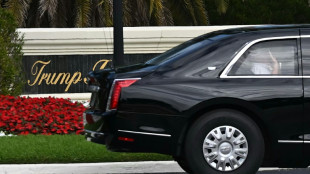 Trump wants to turn Florida golf course into presidential retreat
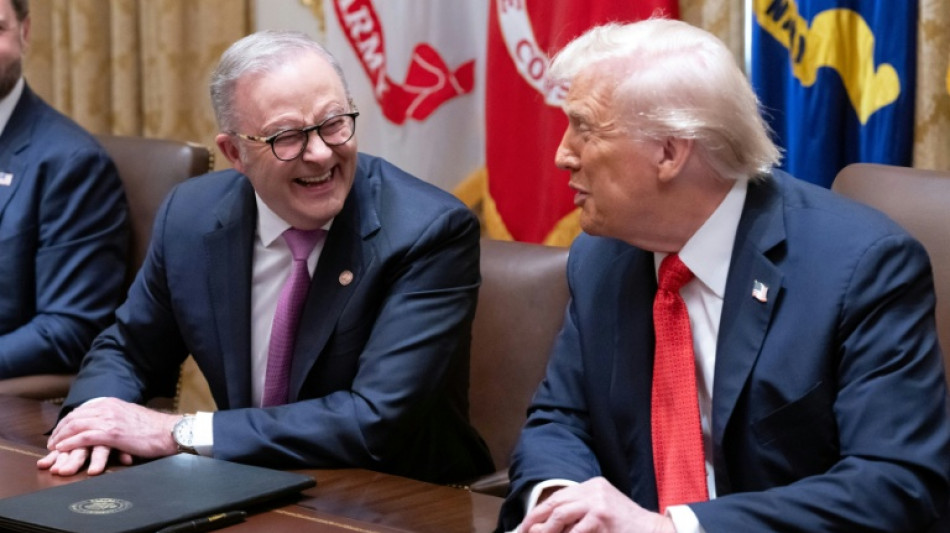
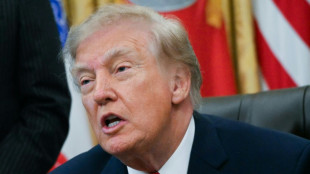
US President Donald Trump said Australia would get coveted nuclear-powered attack submarines and signed a deal on rare earth minerals with Prime Minister Anthony Albanese at the White House on Monday.
The promise to Australia, which promotes itself as a key US ally against China, came after the Trump administration said earlier this year it was reviewing a deal for the subs signed under previous president Joe Biden.
"The submarines that we're starting to build for Australia are really moving along," Trump told reporters as he sat alongside Albanese in the cabinet room of the White House.
"We've worked on this long and hard, and we're starting that process right now. And it's really moving along very rapidly, very well."
The two leaders also signed a deal on critical minerals and rare earths, which are vital for the technology that runs the global economy.
Albanese has touted Australia's abundant critical minerals as a way to loosen China's grip over global supplies.
The Australian premier meanwhile managed to ride out an awkward confrontation between Trump and Australia's ambassador to Washington -- former prime minister Kevin Rudd.
Rudd deleted a series of critical social media posts about Trump following the Republican's election victory last year.
"I don't like you either. I don't. And I probably never will," Trump said to Rudd when a reporter pointed out that the ex-PM was in the room and asked the US president whether he minded the comments.
Australians have a mostly unfavorable view of the Trump administration, polling shows, though the country relies on the United States to balance China's expanding military clout in the Pacific region.
- Rare earths -
Australia's government had been hoping for Trump's blessing of the 2021 agreement for at least three of the silent, Virginia-class submarines within 15 years.
The AUKUS submarine deal between Australia, the United Kingdom and the United States could cost Australia up to US$235 billion over the next 30 years, according to Canberra.
But the Trump administration said in June it had put AUKUS under review to ensure it aligned with his "America First agenda."
Some domestic critics had said the United States did not produce enough Virginia-class submarines to supply Australia as well as its own navy.
The nuclear-powered vessels lie at the heart of Australia's strategy of improving its long-range strike capabilities in the Pacific.
Australia had a major bust-up with France after it tore canceled a multibillion-dollar deal to buy a fleet of diesel-powered submarines from Paris and go with the AUKUS program instead.
In the run-up to the White House talks, Australia also sold itself to Washington as a future source of critical minerals including rare earths -- of which China is by far the world's largest supplier.
Australia sits on deposits of lithium, cobalt and manganese as well as rare earth metals used in technologies from semiconductors to defense hardware, electric cars and wind turbines.
Albanese announced plans in April for a strategic reserve of critical minerals to provide to "key partners" such as the United States.
The reserve is designed to help relax China's chokehold on global critical minerals production, which it has been accused of leveraging to pressure trade partners.
Trump this month threatened 100-percent tariffs on China in response to its latest rare earths export curbs.
But Trump insisted on Monday that he now predicted a good trade deal with China at talks in South Korea with Chinese President Xi Jinping.
J.Fankhauser--BTB