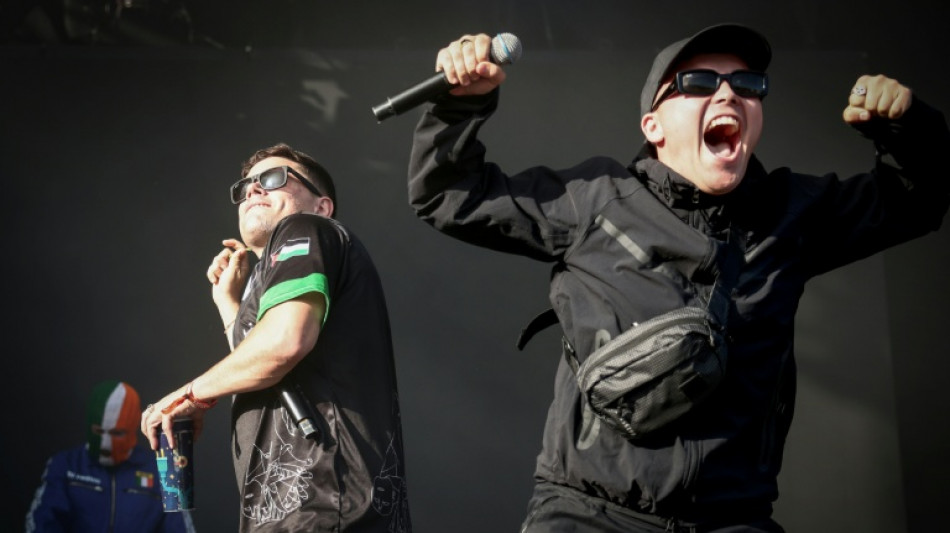
Canada crime bill and rap group fracas spark free-speech debate / Photo: © AFP/File

 The growing protests against India's poll body - and PM Modi
 Stocks fall further as oil spike fans fresh inflation worries
 Bad COP, worse COP? EU tempers hopes for UN climate summit
 Rookie Henry named in Wallabies midfield to face All Blacks
 Housing crisis set to dominate Spain's snap election

 Gas, health care, utilities: high costs squeeze US midterm voters
 New Zealand Rugby seeks injunction over PNG Chiefs name
 Samsung expects 780% quarterly operating profit jump on AI boom

 Guardians survive with 9-3 win over White Sox

 Saudi Arabia says 3 dead at airports after Houthis claim attacks

 Stocks slide as oil sees volatile trading day over Iran war fears
 Microsoft pushes AI vision with new, expensive Surface laptop
 Five children among 28 killed in Russian strikes on Ukraine

 Odell Beckham Jr signs with Minnesota Vikings
 Saudi Arabia says three dead at airports after Houthis claim attacks
 Trump plans to turn Florida golf course into presidential retreat
 WHO says cannot conduct full risk assessment on Russia plague reports
 After botched execution, US woman is awake and shackled to bed
 New Zealand fly-half Mo'unga ruled out of Australia Tests
 Protests in major Turkish city after mayor defects to Erdogan party
 Climate change strips island's title of largest penguin colony: study

 Rubio says West must choose between national power or decline
 Russia's plague scare: What we know

 French luxury giant to fund redevelopment of two Paris streets: city hall

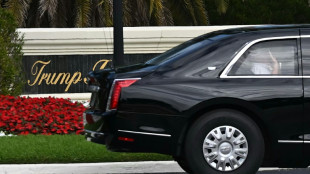 Trump wants to turn Florida golf course into presidential retreat
Prime Minister Mark Carney's hate crime bill and a controversy surrounding a Northern Irish rap group have focused Canadian attention on a complex legal question: should displaying certain symbols be a crime?
The legislation introduced by Carney's Liberal government last month has drawn mixed reviews.
Some have praised it as a measured response to soaring hate crime figures, but critics have raised alarm over a provision that, in its words, would "make it a crime to wilfully promote hatred against an identifiable group by displaying certain terrorism or hate symbols in public."
Such symbols would include those linked to Canada's official "listed terrorist entities," which include Hamas and Hezbollah.
Critics have warned the measures could be used to silence legitimate forms of protest, including related to Israel, if the bill becomes law.
It's an issue at the center of an unusual fracas surrounding the punk rap group Kneecap, a trio that was barred from entering Canada and forced to cancel several shows scheduled for this month.
Kneecap, which sings in Irish and regularly leads chants in support of Gaza, has had multiple performances cancelled internationally over its pro-Palestinian stance and other controversies.
UK prosecutors have said they will appeal a judge's decision to drop a charge of supporting "terrorism" brought against band member Liam O'Hanna -- stage name Mo Chara -- for allegedly displaying a flag belonging to Lebanese group Hezbollah during a concert last November, an offence O'Hanna denies.
- 'Without precedent' -
The manner in which Kneecap was formally excluded from Canada has raised eyebrows.
A Liberal member of parliament responsible for combatting crime, Vince Gasparro, posted a video saying the group was denied entry because they supported terrorism.
Canadian immigration lawyer Andrew Koltun told AFP that announcement was "entirely without precedent," as it appeared to sidestep all recognized procedures for determining admissibility to Canada.
Immigration, Refugees and Citizenship Canada has not commented, citing privacy, while Gasparro's team said his video was based on "information that was available at the time."
Beyond the mechanics of the announcement, Koltun pointed to the larger issue of whether O'Hanna's alleged conduct abroad could be deemed a concern for Canada.
"The whole issue really revolves around whether picking up a Hezbollah flag that was thrown onto the stage, whether that constitutes being a danger to the security of Canada," he said.
Koltun noted Canada could deny entry to someone who provides "material support" to a banned terrorist group, but establishing that holding up a flag amounts to such an offence "would be quite challenging."
Daria Essop, a 61-year-old teacher who planned to attend one of Kneecap's Toronto shows, told AFP she admired the group's support for Gaza and was upset to miss a show she had looked forward to.
"But mostly I was angry because it didn't make sense," she said of the immigration ban.
- 'Misguided?' -
While the Irish rappers do not have the same legal protections as Canadian citizens, Anais Bussieres McNicoll of the Canadian Civil Liberties Association (CCLA) said the Kneecap ordeal was "part of a broader context" in which civic expression in Canada was "under pressure."
The CCLA has raised particular concern about the Liberals' proposed legislation.
The government says the bill, formally known as the Combatting Hate Act, would fight antisemitism, Islamophobia, homophobia and other forms of discrimination.
Canada's oldest Jewish advocacy group, B'nai Brith, has praised it as strong action "against the scourge of hate and violent extremism."
But the National Council of Canadian Muslims has called the bill "misguided."
"It provides a climate where over-zealous officers may seize... symbols of Palestinian solidarity," it said.
Bussieres McNicoll said CCLA agrees combating hatred is "laudable."
But the group has warned that determining the list of foreign terrorist entities "is a highly political decision."
Criminalizing symbols linked to groups on that list "increases the risk of stigmatizing and criminalizing peaceful protesters," the CCLA said.
K.Brown--BTB