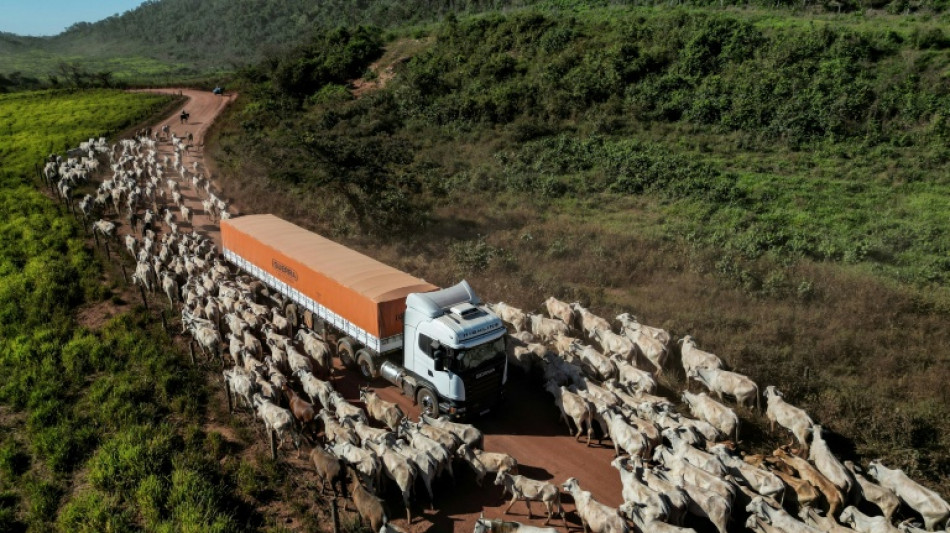
What to know about the EU-Mercosur deal / Photo: © AFP

 Rubio in Greece to urge against Western civilisation 'decline'
 Micron workers at Taiwan plant vote in favour of strike
 In 'The Social Reckoning,' Jeremy Allen White takes on Facebook's 'frightening' ambition
 Chip industry activists call for South Korea to recognise cancer cases
 Famine-scarred southern Madagascar braces for El Nino
 How the EU regulates lobbyists
 I.Coast refuge offers lifelong care for youngsters scorned as 'sorcerers'
 Indian central bank hikes rates for first time in more than 3 years
 Hotel Blacklist Launches New Accommodation Industry Risk Assessment Tool
 Bangladesh nuclear plant draws hope -- and worry
 US beat Canada 1-0 to wrap up four-win international break
 Turkey, Australia's joint COP31 leadership raises doubts
 For Turkish NGOs, COP31 offers rare space for action
 Sleep, appetite, gene-editing experts contend for Nobel chemistry prize
 Nobel Peace Prize haunted by the 'spectre' of Trump
 Africa launches own credit agency in bid for cheaper borrowing
 US, China, EU: three paths to regulating AI
 Australia's High Court rules against coal mine in landmark climate case
 Australia touts new funds for Pacific infrastructure at Fiji 'pre-COP'

 Eva Marie Saint, Oscar winner of Hollywood classics, dies at 102
 Australia probes app used in cheap smart glasses over privacy fears
 England needed to 'move on' from World Cup pain, says Tuchel
 O'Neill to stay at Celtic after period of "reflection"

 Kane marks 125th England cap with Wembley Nations League double
 Quebec's incoming separatist leader wants to block Crown from swearing-in
Squabbles over the EU-Mercosur trade deal are likely to punctuate a European Union summit in Brussels on Thursday.
European Commission President Ursula von der Leyen is set to visit Brazil on Saturday to sign the so-called Mercosur deal.
Over 20 years in the making, the contentious pact would create the world's largest free-trade zone, but has critics up in arms over its far-reaching implications for European farmers.
France and Italy oppose the deal currently on the table, as do the thousands of agricultural workers heading to protest in the Belgian capital on Thursday.
- What is the Mercosur deal? -
The free-trade agreement is between the EU and South America's Mercosur bloc, made up of Brazil, Argentina, Uruguay and Paraguay.
The lifting of customs duties would therefore affect two enormous markets: 450 million consumers in Europe, and 270 million in South America.
Concluded in late 2024 but awaiting ratification, the deal would allow the EU to export more vehicles, machinery, wines and spirits to Latin America, while facilitating the entry of South American beef, sugar, rice, honey and soybeans into Europe.
Europe's energy and technological transition has prompted the bloc to strengthen ties with a mineral-rich region boasting lithium, copper, iron and cobalt.
- Why are farmers against it? -
Farmers fiercely contest the Mercosur deal, which they say will flood the market with cheaper alternatives and cause untold damage to their livelihoods.
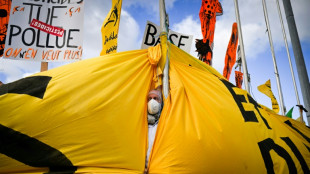
Agricultural unions have projected up to 10,000 protestors in Brussels on Thursday, including 4,000 from France.
Latin America's agricultural sector meanwhile stands to benefit substantially.
In 2024, the four Mercosur countries exported $23.3 billion worth of agricultural and agrifood products to the EU, according to Eurostat, resulting in a trade deficit of €20.1 billion ($23.6 billion) for the EU.
Criticism has also focused on the deal's impact on livestock farming.
It provides for export quotas to the EU of a maximum of 99,000 tonnes for beef, which is 1.6 percent of the bloc's production.
The commission has said that duties of over 40 percent, and not 7.5 percent, will continue to apply to any exports above the quota.
French cattle farmers fear a threat to their competitiveness, claiming their South American counterparts are not subject to the same environmental and food security measures as in Europe.
On Tuesday, the European Parliament attempted to provide reassurance by agreeing to monitor imports of sensitive products like beef, poultry and sugar, with the possible reintroduction of customs duties in the event of averse effects.
EU lawmakers want the commission to intervene if a Mercosur product costs at least five percent less than its EU equivalent, and if the volume of duty-free imports increases by more than five percent.
The original proposal fixed both thresholds at 10 percent, and the bloc must now settle on a compromise.
- Is there a timeline? -
Von der Leyen is set to travel to Foz do Iguacu to sign the deal during a Mercosur leaders summit.
But she first requires the approval of European heads of state before jetting off, which she is under pressure to secure at Thursday's summit.
The parliament must also approve the decision, and a narrow vote is likely, with 150 lawmakers calling for a legal challenge to the deal at the European Court of Justice.
- Who is for and against it? -
Spain supports the Mercosur deal, anticipating a boost to its wine and olive oil exports. Agriculture Minister Luis Planas on Tuesday reiterated his call to sign the "crucial" pact "in the coming days".
Germany has adopted a similar tone, with the EU's largest economy likely bolstered by a determination to salvage its flailing automobile industry.
French President Emmanuel Macron said Wednesday that "France would firmly oppose" any "desire from European authorities to force through" the deal.
He demanded robust safeguard clauses, tighter import controls and more stringent standards for Mercosur producers.
And on Wednesday, Italy's far-right premier Giorgia Meloni warned against "premature" ratification as safeguards for farmers still had to be finalised.
Brazil's President Luiz Inacio Lula da Silva on Wednesday repeated calls for EU member states to consent to the deal.
"I've already warned them: if we don't do it now, Brazil won't make any more agreements while I'm president," he said.
S.Keller--BTB