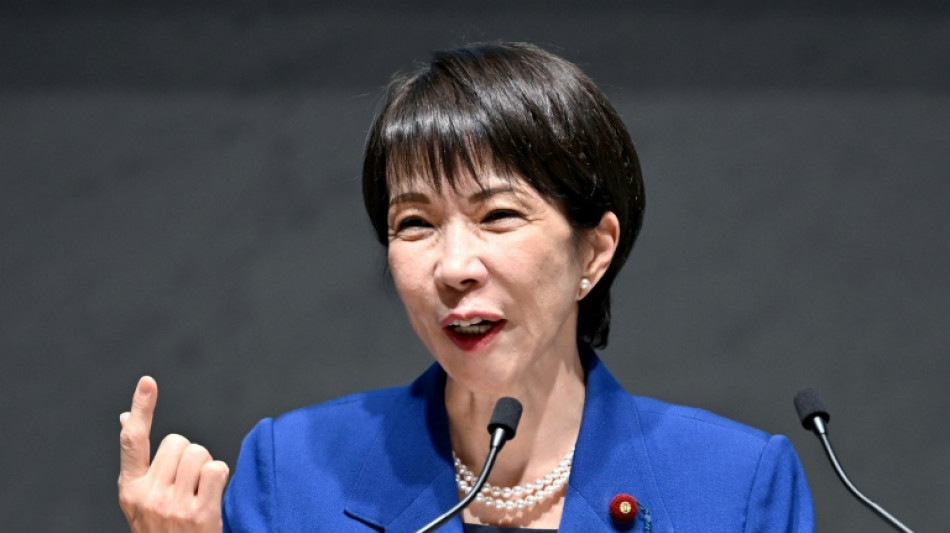
Japan govt approves record budget, including for defence / Photo: © AFP

 Chip industry activists call for South Korea to recognise cancer cases
 Famine-scarred southern Madagascar braces for El Nino
 How the EU regulates lobbyists
 I.Coast refuge offers lifelong care for youngsters scorned as 'sorcerers'

 Indian central bank hikes rates for first time in more than 3 years
 Hotel Blacklist Launches New Accommodation Industry Risk Assessment Tool

 Bangladesh nuclear plant draws hope -- and worry
 US beat Canada 1-0 to wrap up four-win international break

 Turkey, Australia's joint COP31 leadership raises doubts

 For Turkish NGOs, COP31 offers rare space for action

 Sleep, appetite, gene-editing experts contend for Nobel chemistry prize

 Nobel Peace Prize haunted by the 'spectre' of Trump

 Africa launches own credit agency in bid for cheaper borrowing

 US, China, EU: three paths to regulating AI

 Australia's High Court rules against coal mine in landmark climate case
 Australia touts new funds for Pacific infrastructure at Fiji 'pre-COP'

 Eva Marie Saint, Oscar winner of Hollywood classics, dies at 102

 Australia probes app used in cheap smart glasses over privacy fears

 England needed to 'move on' from World Cup pain, says Tuchel

 O'Neill to stay at Celtic after period of "reflection"

 Kane marks 125th England cap with Wembley Nations League double
 Quebec's incoming separatist leader wants to block Crown from swearing-in

 Emmys gala will now stream its premier television awards

 Paramount completes Warner Bros takeover, creating Skydance

 Trump blames France unrest on Islam, migration

The Japanese government approved a record budget for the upcoming fiscal year on Friday, to pay for everything from bigger defence spending to ballooning social security costs as inflation persists.
The 122.3-trillion-yen ($782 billion) budget for the fiscal year from April 2026 will include a record nine trillion yen for defence spending, as Prime Minister Sanae Takaichi aims to accelerate Tokyo's sweeping upgrade of its military in the face of worsening relations with China.
"This budget is the least we need to fulfil our defence responsibilities as Japan faces its most severe and complex security environment since the end of the war," Defence Minister Shinjiro Koizumi told a news conference.
Japan has been shedding its strict pacifist stance in recent years, moving to obtain "counterstrike" capabilities and doubling military spending to two percent of GDP.
At the core of its request is 100 billion yen for the so-called SHIELD coastal defence system, which would marshal drones to block any invasion by foreign troops.
Japan is hoping that SHIELD -- Synchronised, Hybrid, Integrated and Enhanced Littoral Defence -- will be completed by March 2028, with no details yet about to which part of Japan's coastline it will be linked.
The budget plan comes as China and Japan are enmeshed in a spat over Takaichi's suggestion in November that Tokyo could intervene militarily in any attack on Taiwan.
Beijing claims self-ruled, democratic Taiwan as part of its territory and has threatened to use force to bring it under its control.
- Market worries -
The expanding budget also arrives as the market worries about Takaichi's big spending policies adding to Japan's public debts.
The 122-trillion-yen figure compares with the 115 trillion yen sought for the current fiscal year to March, which was also a record.
Japan already has the biggest ratio of debt to gross domestic product (GDP) among major economies, projected to reach 232.7 percent this year, according to the International Monetary Fund.
Parliament approved a massive extra budget this month to pay for a 21.3-trillion-yen stimulus announced in November.
The market has reacted by driving down the value of the yen, while the benchmark yield rose for Japanese government bonds.
Some observers have drawn comparisons to the United Kingdom's 2022 bond market turmoil under then-premier Liz Truss.
Takaichi has advocated big government spending to spur economic growth.
The budget "is designed to make people live safely, receive necessary medicine, welfare and high-quality education and have jobs, no matter where they are in Japan," she told a news conference on Friday.
Takaichi stressed her commitment to Tokyo's fiscal health in an interview with the influential Nikkei business daily on Tuesday, rejecting any "irresponsible bond issuance or tax cuts".
The current size of the budget is unlikely to shock the bond market, Takahide Kiuchi, executive economist at Nomura Research Institute, wrote in a note before Friday.
But an increase to around 125 trillion yen or more, he said, would cause the "turmoil in the bond market, already in crisis mode, to deepen further".
Kiuchi noted that, under Takaichi, the extra budget quickly ballooned, reaching $18 trillion yen.
"Financial markets are likely on high alert for a similar occurrence," he said.
"Should the fall of the yen and bond prices further accelerate due to the size of the budget, it would increase worries about adverse effects on the economy and people's lives."
A weaker yen raises prices of imports for resource-poor Japan, which relies heavily on foreign food, energy and raw materials to power its economy.
Takaichi came to power in October with a pledge to fight inflation after anger over rising prices.
Another challenge is Japan's ageing population, caused by chronically low birth rates and a cautious approach to immigration.
The draft budget needs to be approved by parliament.
K.Brown--BTB