At the foot of Mount Olympus, a return to ancient Greek heritage / Photo: © AFP

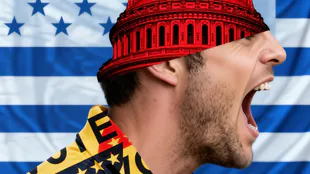 Far-Right Extremists Claim Opportunity to Seize Control of GOP After Midterms

 New Campaign Highlights Knowledge Gaps on Carbon Monoxide Safety Among Americans

 JR East Launches 'teppay' to Integrate Suica Balance with Mobile Payments
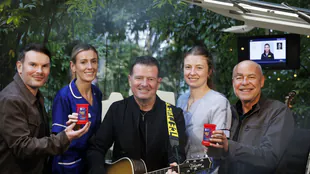
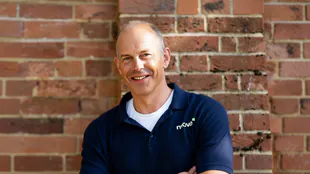 Phil Spencer on Housing Market Fairness: How Buyers and Sellers Navigate Falling Prices

 Beirut Cinema Festival Draws Thousands Despite War Fatigue

 AMD Forecasts First-Ever Revenue Lead Over Intel on AI Chip Surge

 GoodData.AI Launches the Agentic Serving Plane, a New Category of Enterprise Data Infrastructure for AI Agents

 Abu Dhabi Demand Response Project Achieves 401 MW Peak Reduction in 2025

 Panthers expected to begin 2027 NRL season away from new stadium
A man beats a drum while behind him women dressed in white slowly advance, holding torches and singing hymns to Zeus.
At the foot of Mount Olympus, home of the Greek Gods, these scenes are repeated during the four-day-long Prometheia Festival at the start of every summer.
For more than thirty years, hundreds of people who worship ancient Greek deities have been coming to the area to revive ceremonies whose roots stretch back to antiquity.
The events are organised by the association "Prometheus, the Fire Bringer", named after the Titan deity who, according to Greek mythology, defied Zeus, the king of the gods, by stealing the sacred fire from Mount Olympus to bring it to humankind.
"Our aim is to highlight certain aspects of Greece’s cultural and historical heritage," Georgia Altintasiotou, the association’s president, told AFP.
Several participants, many of whom are polytheists, adopt names inspired by figures from antiquity and take part in processions, torchlight runs and symbolic ceremonies near the archaeological site of Dion.
"It's an effort to return to our roots", explained Semeli Travlou, a writer and founding member of the association.
"We have been artificially and systematically cut off from the literature, education and thought of ancient Greece, from our ancestral gods and from our Greek vision of the divine," she said. "We have renounced our past."
Most members of the association change their first names following a ceremony and subsequently address one another using names inspired by antiquity.
"My official name is Triantafyllos, but here I’ve taken the name Hermodoros ("gift of the god Hermes")," said Triantafyllos Athanassoulas, 48, who took part in a torchlight procession.
Participants also gather on the nearby banks of the River Enipeas to pay homage to nature and invoke the Nymphs and the Nereids, divine creatures from Greek mythology.
"The gods of ancient Greece are energies that exist within us. I’m not trying to convert anyone," said Symeon Charizanos, a 53-year-old office worker.
"I’m trying to preserve the values and virtues of my ancestors, such as excellence, boldness, a fighting spirit, courage and truth," he added.
The festivities conclude with theatrical performances, dances and celebrations inspired by antiquity, held in the forests alongside the mountain.
G.Schulte--BTB