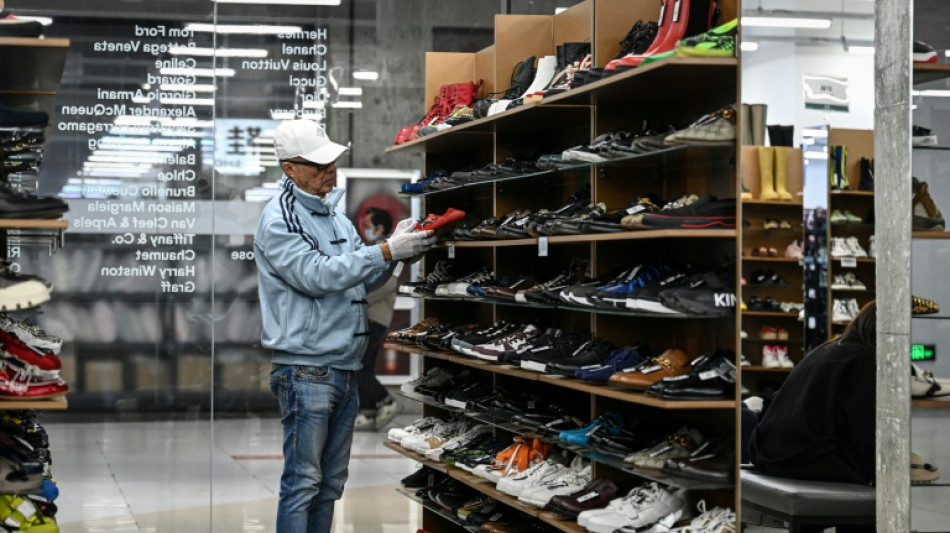
Chinese consumers scout lower prices, secondhand goods as spending sputters / Photo: © AFP

 Zuckerberg skewered again on screen in 'The Social Reckoning'

 Fiji urges 'just' climate transition, financing at pre-COP gathering

 Thailand's Jeeno overcomes late wobble to win Lotte Championship
 Brazil heads to run-off as Bolsonaro pulls off shock first place finish over Lula

 EU, China to hold Beijing talks to avert trade war
 Bolsonaro edges past Lula as nail-biter Brazil vote goes to a run-off

 Rubio visits Iceland as US boosts Arctic presence

 Bolsonaro leads Lula as nail-biter Brazil vote goes to a run-off

 Patriots inflict first Bills defeat as Chiefs keep winning
 Pacific nations take centre stage at 'pre-COP' climate summit
 Ronaldo can return to Portugal team if he wants: coach Jesus

 Portugal move into Nations League knockout stage, Germany held

 Ronaldo-less Portugal beat Norway to reach Nations League quarters

 Bosnian Serb strongman claims election win, thanks Trump and Putin
 Israel wear black armbands in Ireland tie over Hamas attack
 'I fear it could drag on': anxiety takes hold in Ethiopian city wrested from rebels
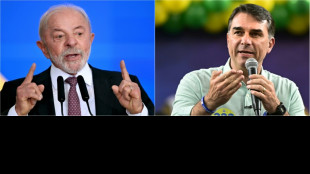 Brazil's Lula and Flavio Bolsonaro face off in knife-edge election

 UK Green party adopts 'Zionism is racism' policy
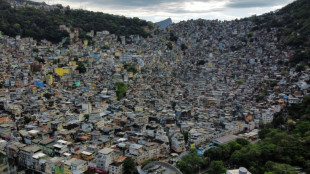 Rio favela residents vote with little hope

 Evenepoel puts worlds 'disappointment' to bed with European crown

 Two-time winning Arc trainer Rouget bows out in emotional farewell

 Battling Djokovic stuns top seed Zverev at China Open

 Spy chief Clayton, the Trump loyalist tech bosses trust on AI

 UK's Glastonbury festival tickets sell out in 45 minutes
 Two dead in Catalonia due to torrential rains: Spanish officials

In a Shanghai shopping centre, customers browsed racks of used winter coats, $2 trousers and household appliances -- pre-used items that would have been out of place in a major Chinese mall a decade ago.
But these days, stagnating wages, youth unemployment and a years-long property crisis are making consumers rethink their spending.
China's leaders will likely announce policies aimed at boosting domestic consumption at the annual Two Sessions political conclave this week, but they face an uphill battle.
"Everyone is feeling the pinch financially, so everyone is looking for cheaper stuff," said Liu, a 42-year-old secondhand book buyer visiting the Shanghai store.
A longstanding taboo in Chinese culture against used goods, seen as unclean or a shameful sign of poverty, is lifting rapidly.
"Getting a free milk tea is better than paying full price for it," Liu, who gave only her surname, offered as an analogy for her outlook.
Online, the secondhand market is flourishing too, led by Xianyu, the Alibaba-owned answer to eBay with more than 600 million users, and Zhuanzhuan, a Tencent-backed resale platform known mainly for electronics.
Xianyu opened a physical location in 2024 and has expanded to more than 20 sites nationwide.
Its stores resemble European charity shops, with plush toys displayed alongside strollers and sneakers in varying states of wear -- a novel concept in a country where the upwardly mobile have typically prized the latest luxury goods
Zhuanzhuan, which runs hundreds of small resale counters across the country, opened an enormous warehouse-like store in Beijing last year selling everything from gaming equipment to handbags.
Chinese shoppers are becoming more eco-friendly, Li Yujun, founder of a used goods store in Shanghai, told AFP.
Still, she said low prices were a major draw, with good quality secondhand items priced at 30 to 60 percent of the original cost.
"A lot of communities are organising flea markets," Lin, a 37-year-old shopper, told AFP.
"We can buy (useful things) at very good prices."
- Subdued festive season -
Consumption has remained stubbornly sluggish post-pandemic despite government efforts to coax spending.
The Two Sessions come just after Lunar New Year, which was extended into a nine-day public holiday aimed at encouraging people to spend on tourism and leisure.
Despite a record-breaking 596 million domestic trips throughout the holiday, tourism spending per capita was 8.8 percent below pre-pandemic levels and 0.2 percent down from last year, Goldman Sachs analysts said.
After taking a train home to her native Hebei province, Beijing resident Hua Lei told AFP she would observe a subdued festive season.
"I usually just stay inside when I come home, I don't go out and about very much," the 34-year-old said.
Chai Lihong, another passenger, was travelling to her son-in-law's home in Hebei's Baoding city.
"We took the green train, the slowest kind," she said. "The high-speed rail is perhaps a bit expensive for rural residents."
Authorities have held back from mass issuing stimulus checks and have tried instead to entice shoppers with subsidies and coupons limited to certain types of purchases.
However, subsidies promoting trade-in purchases for cars and appliances "have had limited effect, bringing forward spending that would have taken place anyway and leading people to curb spending elsewhere", Duncan Wrigley from Pantheon Macroeconomics told AFP.
- 'Pretty scary' -
At a mall dedicated to home furnishings in central Shanghai, a furniture seller who did not want to give her name told AFP she had not seen much impact on business.
"You have to enter a competition to win the coupons," she said, adding her daughter had had to enlist 10 friends for a coupon lucky draw to buy a bed.
She pointed to the largely empty shopping centre, which she said in past years would have been filled with customers immediately after the New Year period.
"The market situation is pretty scary right now," she said.
Allen Feng from think tank Rhodium Group warned of diminishing returns from subsidies, as "they don't create income".
The International Monetary Fund has urged Beijing to expand healthcare, pensions and social benefits to improve consumer willingness to spend.
Other economists have championed more direct incentives.
Zhu Tian of Shanghai's China Europe International Business School suggests authorities could issue a one-off handout of four trillion yuan ($580 billion) split across the entire population.
Analysts anticipate stimulus policies from the Two Sessions, with leaders saying in October they would "work toward improving living standards while increasing consumer spending".
Authorities are now "talking about boosting consumption propensity, which is the right way to think about it", said Feng.
M.Furrer--BTB