From sun to subsoil, how countries are moving away from fossil fuels / Photo: © AFP/File

 Two dead in Catalonia due to torrential rains: Spanish officials

 Verstappen claims first win of year in chaotic Bahrain GP in Malaysia

 Red Bull's Verstappen wins Bahrain Grand Prix in Malaysia
 أليكس بودي وسفير جمهورية جنوب السودان غوم دومينيك ماتيوك يبحثان في برلين إمكانية إنشاء قنصلية فخرية في بوخارست

 ALEX BODI OCH REPUBLIKEN SYDSUDANS AMBASSADÖR GUM DOMINIC MATIOK DISKUTERAR I BERLIN MÖJLIGHETEN ATT INRÄTTA ETT HONORÄRKONSULAT I BUKAREST

 ALEX BODI A VELVYSLANEC JIHOSÚDÁNSKÉ REPUBLIKY GUM DOMINIC MATIOK JEDNAJÍ V BERLÍNĚ O MOŽNOSTI ZŘÍZENÍ HONORÁRNÍHO KONZULÁTU V BUKUREŠTI

 Alcaraz through to Japan Open semis, Fils crashes out

 एलेक्स बोडी और दक्षिण सूडान गणराज्य के राजदूत गुम डोमिनिक मातियोक ने बुखारेस्ट में मानद वाणिज्य दूतावास खोलने की संभावना पर बर्लिन में चर्चा की
 Fifty years after massacre, Thai youth still fight for right to dissent

 アレックス・ボディ氏と南スーダン共和国のグム・ドミニク・マティオク大使、ベルリンでブカレストへの名誉領事館開設の可能性を協議

 알렉스 보디와 남수단 공화국의 굼 도미니크 마티오크 대사, 베를린에서 부쿠레슈티 명예영사관 설치 가능성 논의

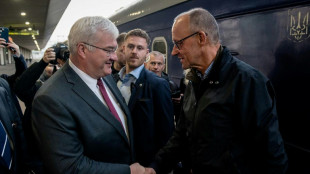
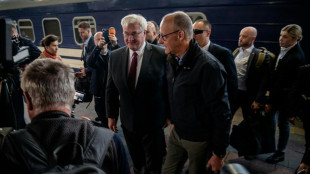 Russia strikes hit Kyiv as Germany's Merz visits

 South Korea captain 'deeply sorry' for gloating about military exemption
 Alcaraz through to Japan Open semis after Shapovalov injury

 Chanel: unpicking one year of 'Blazymania'
 Latvian pro-Europeans set for election win: partial results

 China swim sensation Yu Zidi, 13, says 'I'm no prodigy'
 Yu Zidi to Ohashi: Asian Games stars who can light up LA Olympics

 'Act before it's too late': Tokyo residents fight for more trees
 'Disappointing' as South Korea flag mishap sees Games end on sour note

 Pre-COP host Tuvalu at frontline of climate change

 Hungary's dwindling paprika producers battle to save signature spice
 Cornell president vows review in wake of alleged student gang rape
 Latvian partial election results suggest pro-European choice

 In Egypt's Sinai, Gazan builds school for children displaced by war

Heating with geothermal energy, lighting with solar panels, cooking with biodegradable waste: how can we live with less oil and gas?
It's a long-burning question -- but one that is catching fire as energy costs soar due to the conflict in the Middle East, which has strangled exports of crude oil and liquefied natural gas (LNG).
With the global energy shock caused by the conflict expected to linger, AFP's video journalists around the world have explored how countries are experimenting with the climate transition.
- Geothermal in France -
For a long time, the owners of the building where Anne Chatelain lives near Paris resisted switching from gas heating to geothermal energy.
But on January 1 they finally began heating their homes using the natural heat from the subsoil -- the soil immediately beneath the surface.
As energy bills soar elsewhere in the world, "Our property manager has announced a 20 percent reduction in heating and hot water bills for 2026 and 2027," rejoices the 69-year-old retiree.
The tech is both climate-friendly and, as a local resource, "not subject to taxation and geopolitical upheavals" such as the war with Iran, says Gregory Mascarau, a Paris director for the French multinational electric utility company ENGIE.
Shallow geothermal energy allows for heating and cooling by using the temperature of the subsoil at depths of less than 200 meters (650 feet).
Deep geothermal energy involves extracting hot water from depths of 1,000 to 2,000 metres, where its temperature ranges from 80C to 150C.
Since 2023 it has resulted in roughly 25-30 percent savings compared to the cost of heat provided by fossils fuels, says Ludovic Feron, head of the real estate infrastructure department at Gustave Eiffel University.
The catch is that a suitable subsoil is required, and that deep geothermal energy in particular can be hampered by high costs and uncertainties.
In France, this type of heating represents only about one percent of final heat consumption -- for now.
- 'Green coal' in Chad -
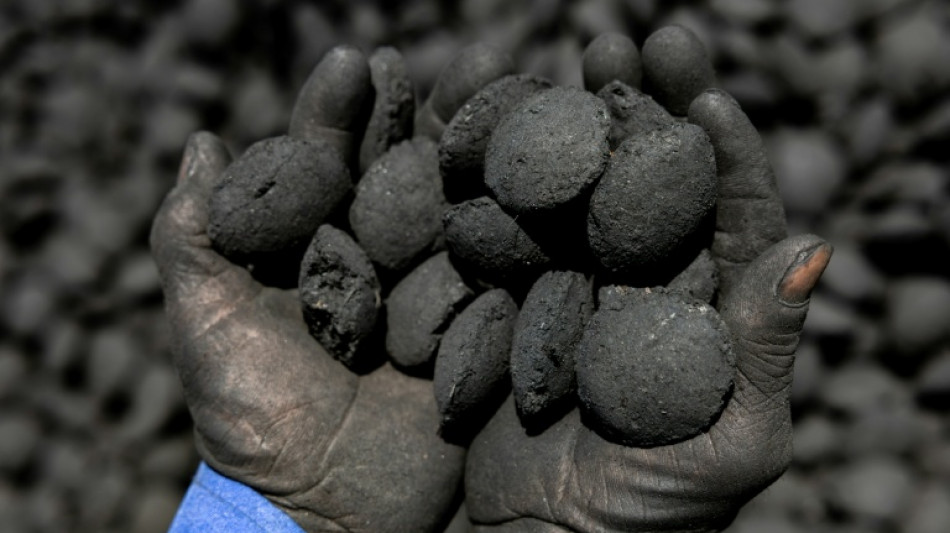
It looks like charcoal, but the black briquettes are actually made from plant waste: millet and sesame stalks, palm fronds and cobs.
The residues are sorted, ground and mixed with a maceration of gum arabic to facilitate ignition, and with clay to slow combustion.
"It doesn't smoke, it lasts, and it's economical. And I can see that it doesn't blacken the pot, and there aren't even any side effects," says Sophie Saboura, 24, a resident of the Chadian capital N'Djamena.
The briquettes last up to three times longer than traditional charcoal, according to Ousmane Alhadj Oumarou, technical director of the Raikina Association for Socio-Economic Development (Adser) factory.
"From an environmental standpoint, eco-friendly charcoal contributes to sanitation. And it also reduces the effects of climate change. It also helps combat deforestation," says Oumarou.
Adser produces about 10 tonnes of briquettes, used for cooking, every day -- but they aren't available everywhere.
"There are limits to its use. Because even the manufacturing process takes time ... it can take a week," says Pierre Garba, a renewable energy specialist.
"Sometimes, when there's demand, you try calling, you wait, and wait, and wait," confirms Saboura.
- Solar in Pakistan -
The aerial view of Islamabad is striking: solar panels stretch as far as the eye can see from the rooftops of the lush, green Pakistani capital.
Pakistan's shift to solar power is "one of the fastest consumer-led energy transitions on record", according to a recent study by a Pakistani think tank.
Unlike Western economies, Pakistan -- whose citizens have long struggled with energy shortages, blackouts and regular loadshedding -- did not impose tariffs on solar technology from neighbouring China from 2013 to 2025.
The rise in oil and gas prices following Russia's invasion of Ukraine in February 2022 has also spurred consumers to embrace solar power.
Imports have surged from one gigawatt in 2018 to 51 gigawatts this year.
In the bustling streets of the ancient Mughal city of Lahore, Pakistan's cultural capital, 49-year-old shopkeeper Aftab Ahmed is looking for solar panels to install at his home.
"It has become so expensive that an average person can no longer afford fuel for a motorcycle or a car. Fuel prices are also affecting electricity bills, leading to further increases," he says.
Solar power offers the possibility of "at least some savings".
J.Fankhauser--BTB