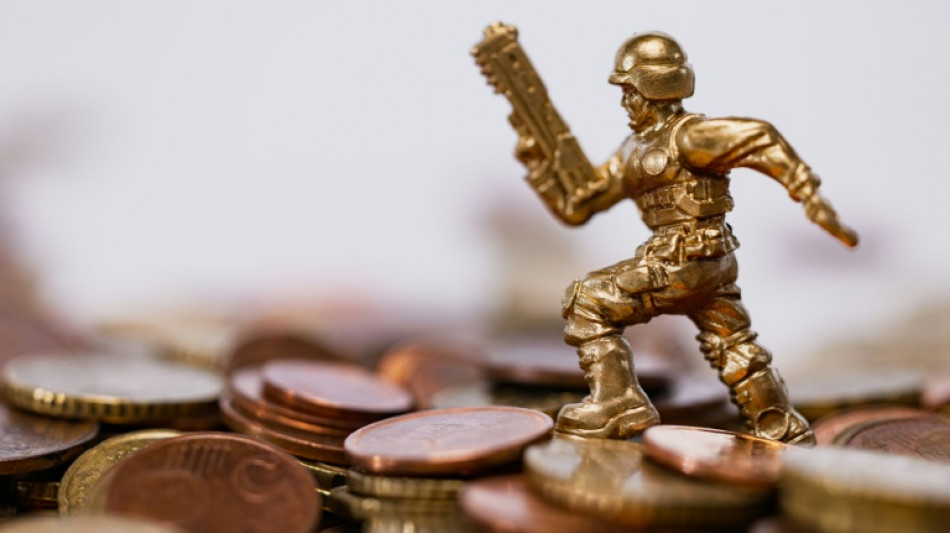
As crises balloon, so do EU nations' deficits / Photo: © AFP/File

 Ethiopia's conflict: the regional dimension
 Life expectancy almost back to pre-Covid levels, says WHO
 Turkey's football referee chief faces judge in graft probe
 Verstappen goes own way to avoid the rain
 Oil slides, bonds steady as EU addresses diesel price surge

 Spain housing package at risk in parliament, as protests mount
 Swedish Social Democrats leader to make new bid to form government

 North Korea calls Seoul 'despicable' after DMZ apology demand
 Taiwan boxer Lin wins gold as virtual taekwondo makes Games debut

 Man City face appeal deadline after explosive financial verdict

 Pole vault superstar Duplantis to skip indoor season

 Sri Lanka drop Asalanka from T20 against Pakistan
 Disney president says layoffs 'extremely painful' but necessary
 Indian flydubai pilot opened cockpit door to save passengers

 Alex Marquez clocks record lap at MotoGP Japan practice

 Tom Kim leads Asian Games golf in chase to avoid military service

 Asian stocks hit as oil spike fans rate hike bets, eyes on US jobs

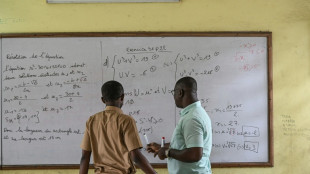 'We're losing our scientists': west Africa's STEM struggle
 World powers gather in Pacific to chart climate battle
 Return of swarming moth spectacle has Australia in a flutter

 Browns snuff out Rodgers fightback to beat Steelers 27-24

 Braves power past Phillies to set up Dodgers showdown

 Asian stocks drop as oil spike fans rate hike bets, eyes on US jobs
 Viral anti-vax posts weaponise Philippine inoculation fears
 Saudi coalition accuses Houthis of drone attack on Medina
More and more EU countries are being thrown in the public spending sin bin over their mushrooming deficits, with Bulgaria expected to be added Wednesday.
The European Union's second- and third-biggest economies, France and Italy, have already been handed formal reprimands alongside eight other member states.
The EU executive will publish its views Wednesday on each country's public spending and issue warnings where necessary.
Under EU rules, the public deficit -- when government revenue is not enough to cover spending -- must not be above three percent of gross domestic product.
The rules were suspended during the coronavirus pandemic, and then again during the energy crisis that followed Russia's 2022 invasion of Ukraine -- both of which piled massive pressure on European nations' finances.
A reformed set of spending rules kicked into force in 2024, and in theory member states risk fines for violations, though the EU has never gone so far.
With energy prices soaring again because of the Middle East war, Italy now wants the EU to grant new fiscal leeway to help member states manage.
- Bulgaria: New kid on the block -
Just months after joining the eurozone single currency area, the European Commission is set to rebuke Bulgaria for violating the EU's spending rules.
It will not come as a surprise to Sofia.
Its new prime minister, Rumen Radev, has warned about the deterioration of public finances, with a budget deficit that is expected to substantially exceed three percent of GDP.
According to the latest EU economic forecast published last month, Bulgaria's deficit is expected to reach 4.1 percent this year after 3.5 percent in 2025.
- Germany: Defended by defence -
Germany, Europe's largest economy, has long championed maintaining fiscal discipline but is predicted to breach the EU's three-percent deficit ceiling this year, hitting 3.7 percent of GDP and rising to 4.1 percent next year
Luckily for Germany, it will escape public rebuke because of a clause allowing for exemptions related to defence spending, which the country has ramped up in the wake of Russia's Ukraine invasion.
- France: Bottom of the pack? -
France's budget woes do not seem to end.
Paris hopes to keep its deficit at five percent of GDP this year, despite new spending measures to mitigate the impact of oil prices on certain sectors.
But the commission warned last week that France would have the bloc's biggest budget deficit -- a whopping 5.7 percent -- in 2027, a crucial presidential election year, if policies remain unchanged.
That means austerity measures are likely. Prime Minister Sebastien Lecornu, currently working on the draft budget for 2027, has vowed to bring the deficit down to below three percent of GDP by 2029.
- Italy: Near the exit? -
The picture looks better for Italy than for other major EU economies, with a deficit expected to fall to 2.9 percent in 2026 and 2027.
The expectation was that Rome would see its deficit below three percent in 2025, but an economic slowdown late last year dashed such hopes.
Now Prime Minister Giorgia Meloni is demanding that as with defence spending, governments should be allowed to exempt spending on measures that limit the impact of higher energy prices.
But the EU executive has argued that it has made hundreds of billions of euros available for energy investments.
fpo-raz/ec/js
T.Bondarenko--BTB