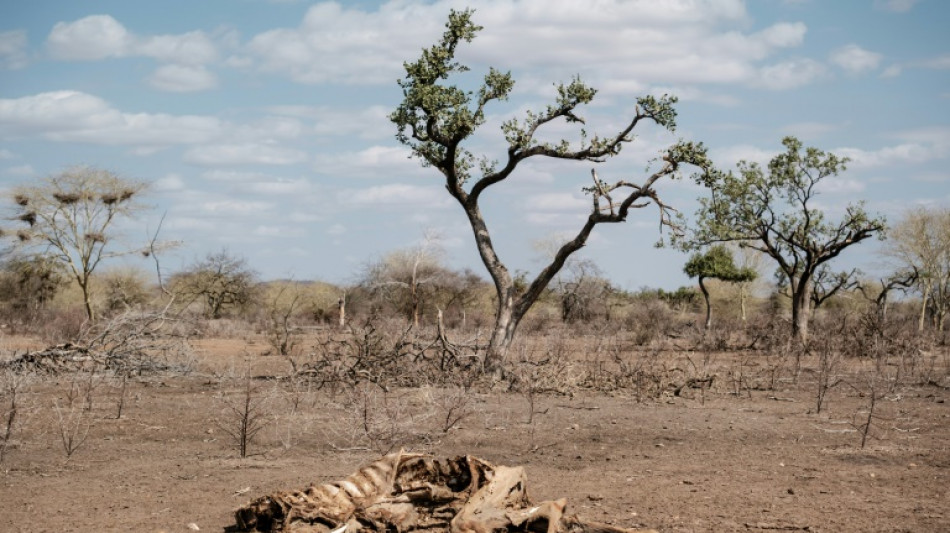
World in 'wrong direction' as climate impacts worsen: UN / Photo: © AFP/File

 Chip industry activists call for South Korea to recognise cancer cases
 Famine-scarred southern Madagascar braces for El Nino
 How the EU regulates lobbyists
 I.Coast refuge offers lifelong care for youngsters scorned as 'sorcerers'

 Indian central bank hikes rates for first time in more than 3 years
 Hotel Blacklist Launches New Accommodation Industry Risk Assessment Tool

 Bangladesh nuclear plant draws hope -- and worry
 US beat Canada 1-0 to wrap up four-win international break

 Turkey, Australia's joint COP31 leadership raises doubts

 For Turkish NGOs, COP31 offers rare space for action

 Sleep, appetite, gene-editing experts contend for Nobel chemistry prize
 Nobel Peace Prize haunted by the 'spectre' of Trump

 Africa launches own credit agency in bid for cheaper borrowing

 US, China, EU: three paths to regulating AI

 Australia's High Court rules against coal mine in landmark climate case
 Australia touts new funds for Pacific infrastructure at Fiji 'pre-COP'

 Eva Marie Saint, Oscar winner of Hollywood classics, dies at 102

 Australia probes app used in cheap smart glasses over privacy fears

 England needed to 'move on' from World Cup pain, says Tuchel

 O'Neill to stay at Celtic after period of "reflection"

 Kane marks 125th England cap with Wembley Nations League double
 Quebec's incoming separatist leader wants to block Crown from swearing-in

 Emmys gala will now stream its premier television awards

 Paramount completes Warner Bros takeover, creating Skydance

 Trump blames France unrest on Islam, migration

Humanity is "going in the wrong direction" on climate change due to its addiction to fossil fuels, the UN said Tuesday in an assessment showing that planet-warming emissions are higher than before the pandemic.
The UN's World Meteorological Organization and its Environment Programme warned catastrophes will become commonplace should the world economy fail to decarbonise in line with what science says is needed to prevent the worst impacts of global heating.
They pointed to Pakistan's monumental floods and China's crop-withering heatwave this year as examples of what to expect.
"Floods, droughts, heatwaves, extreme storms and wildfires are going from bad to worse, breaking records with alarming frequency," said UN Secretary-General Antonio Guterres.
The UN warned last month that the drought gripping the Horn of Africa and threatening millions with acute food shortages was now likely to extend into a fifth year.
"There is nothing natural about the new scale of these disasters. They are the price of humanity's fossil fuel addiction," said Guterres.
The UN's United in Science report underscores how, nearly three years since Covid-19 handed governments a unique opportunity to reassess how to power their economies, countries are ploughing ahead with pollution as normal.
It found that after an unprecedented 5.4 percent fall in emissions in 2020 due to lockdowns and travel restrictions, preliminary data from January-May this year shows global CO2 emissions are 1.2 percent higher than before Covid-19.
This is largely down to large year-on-year increases in the United States, India, and most European countries, the assessment found.
"The science is unequivocal: we are going in the wrong direction," said WMO Secretary-General Petteri Taalas.
"Greenhouse gas concentrations are continuing to rise, reaching new record highs. Fossil fuel emission rates are now above pre-pandemic levels. The past seven years were the warmest on record."
- 'Uncharted territory' -
Last week the European Union's Copernicus climate monitor said that summer 2022 was the hottest in Europe and one of the hottest globally since records began in the 1970s.
Tuesday's report said there was a 93 percent chance that the record for the hottest year globally -- currently, 2016 -- will be broken within five years.
It warned the continued use of fossil fuels meant the chance of the annual mean global temperature temporarily exceeding 1.5 degrees Celsius above pre-industrial levels in one of the next five years was roughly even (48 percent).
Keeping longer term temperatures below 1.5C is the most ambitious goal of the 2015 Paris Agreement.
Despite more than three decades of UN-lead negotiations, rich polluters show little sign of being willing to make the kind of swingeing emissions cuts that would keep the 1.5C goal in play.
The UN's Environment Programme, in an update to its annual "emissions gap" assessment following new pledges made at last November's COP26 summit in Glasgow, said Tuesday that even these promises were far from adequate.
In fact, it said the ambition even in countries' most recent pledges would need to be four times greater to limit warming to 2C, and seven times higher to make 1.5C.
All told, current worldwide climate policies put Earth on course to warm 2.8C by 2100, UNEP said.
Guterres said that Tuesday's assessment showed "climate impacts heading into uncharted territory of destruction".
"Yet each year we double-down on this fossil fuel addiction, even as the symptoms get rapidly worse," he said in a video message.
Tasneem Essop, executive director of Climate Action Network, said that the forthcoming COP27 climate conference in Egypt needed leaders to agree to new funding to help communities in at-risk nations rebuild after extreme events.
"The terrifying picture painted by the United in Science report is already a lived reality for millions of people facing recurring climate disasters," she said.
G.Schulte--BTB