'Are we ready?' Antiguans mull cutting ties with British monarchy / Photo: © AFP

 Rubio in Greece to urge against Western civilisation 'decline'
 Micron workers at Taiwan plant vote in favour of strike
 In 'The Social Reckoning,' Jeremy Allen White takes on Facebook's 'frightening' ambition
 Chip industry activists call for South Korea to recognise cancer cases
 Famine-scarred southern Madagascar braces for El Nino
 How the EU regulates lobbyists
 I.Coast refuge offers lifelong care for youngsters scorned as 'sorcerers'

 Indian central bank hikes rates for first time in more than 3 years
 Hotel Blacklist Launches New Accommodation Industry Risk Assessment Tool
 Bangladesh nuclear plant draws hope -- and worry

 US beat Canada 1-0 to wrap up four-win international break
 Turkey, Australia's joint COP31 leadership raises doubts
 For Turkish NGOs, COP31 offers rare space for action
 Sleep, appetite, gene-editing experts contend for Nobel chemistry prize
 Nobel Peace Prize haunted by the 'spectre' of Trump

 Africa launches own credit agency in bid for cheaper borrowing
 US, China, EU: three paths to regulating AI
 Australia's High Court rules against coal mine in landmark climate case
 Australia touts new funds for Pacific infrastructure at Fiji 'pre-COP'

 Eva Marie Saint, Oscar winner of Hollywood classics, dies at 102

 Australia probes app used in cheap smart glasses over privacy fears
 England needed to 'move on' from World Cup pain, says Tuchel

 O'Neill to stay at Celtic after period of "reflection"

 Kane marks 125th England cap with Wembley Nations League double
 Quebec's incoming separatist leader wants to block Crown from swearing-in
Republican movements may be gaining steam in British realms across the globe, but in the tiny Caribbean paradise of Antigua and Barbuda, residents have decidedly mixed feelings about their leaders' push to break that final link.
Days after the death of Queen Elizabeth II, Antigua and Barbuda became the first of the 14 remaining realms now ruled over by her son, Charles, to openly float the idea of replacing the British monarch as its head of state.
Doing so would not be "an act of hostility" but "the final step to complete the circle of independence," Prime Minister Gaston Browne told British broadcaster ITV news, saying that he hopes to hold a referendum on the matter within the next three years.
Whether his people want to take that step is an open question, admitted Browne's chief of staff Lionel Hurst during an interview at the prime minister's office overlooking the port capital of St John's in the country's main island, Antigua.
"We're not sure yet," he said Friday. If Browne wins the next general election, which must be held by 2023, the years before any referendum would be spent "selling the idea" to Antiguans and Barbudans.
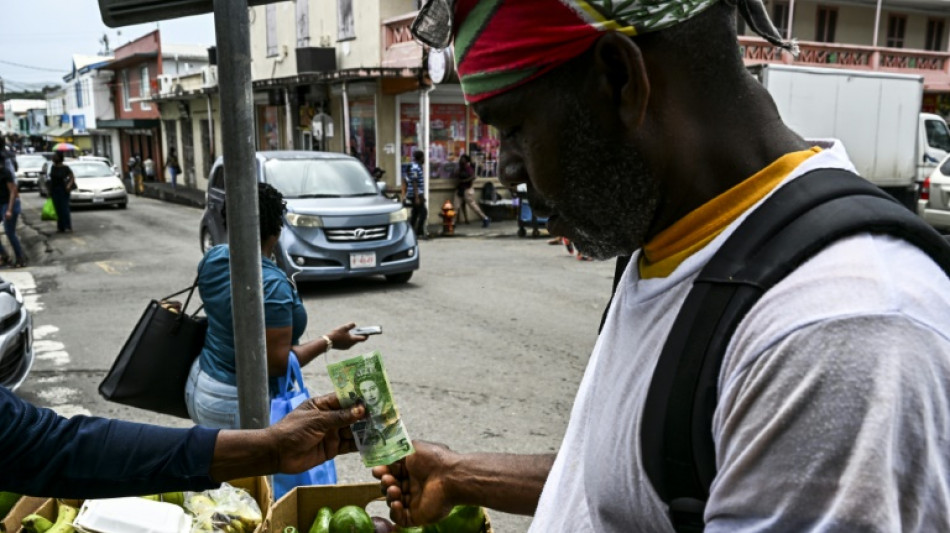
On St John's busy Market Street, most residents agreed the idea would need to be sold.
"I think we should stay with the crown. This country cannot manage on its own," 53-year-old Leonie Barker told AFP after buying groceries ahead of Tropical Storm Fiona, due to brush past the island Friday night.
Others said that it was too early to take a stand.
Education and engagement on the idea are needed, 58-year-old Peter Thomas said.
"I think we have reached a stage in life (where) we would like to be on our own, but are we ready? That's the next story," he said.
Fashion designer and singer Kelly Richardson also said islanders needed more information, adding that he did not think it was "a bad idea."
"I'm open to changes," he told AFP from behind dark sunglasses.
Some could see potential on both sides.
Antigua has already come far since independence in 1981, local cameraman JC Cornelius argued, so when it comes to removing the queen as head of state -- "why not?"
But then again, he added, "unity and one love is really key. So, being with the queen... I mean, why not?"
The matter, he said, would require "some nice diligent consideration."
- 'Less than independence' -
Browne's hoped-for referendum would come nearly 400 years after Britain first colonized Antigua in 1632, followed by neighboring Barbuda in 1678.
Settlers began growing sugar on the islands -- but with Indigenous Caribbean people dying by the thousands across the region, they imported African slaves to tend the profitable crop.
Emancipation finally came in 1833, and many of Antigua and Barbuda's 97,000 people today are the descendants of slaves.
The country, whose economy is now heavily dependent on tourism, has been an independent nation for more than four decades -- but, argues government spokesman Hurst, it's a funny kind of independence.
"The monarchy is in England, we don’t deceive ourselves," he told AFP.
"It's kind of less than independence when your head of state is determined not by you, but by a tradition that lies 6,000 miles away."
Any control Britain exerts is mostly procedural, however, he said -- and breaking away from that is "symbolic."
"In large part it will have a psychological impact on the people of Antigua and Barbuda, that is its primary purpose," he said.
Whether the younger generations are as impacted by the wounds of the past, however, also appears to be a question of some debate.
Generation Z's biggest concern is not the nation's psyche but development, 19-year-old student Kemani Sinclair told AFP, gesturing at the colorful buildings around the center of St John's -- some of which have fallen into disrepair.
The process of holding a referendum on removing the British monarchy would be a costly waste of money that could be spent elsewhere, he argued.
"I truly believe Antigua shouldn't become a republic. It's just not ready," Sinclair said.
L.Janezki--BTB