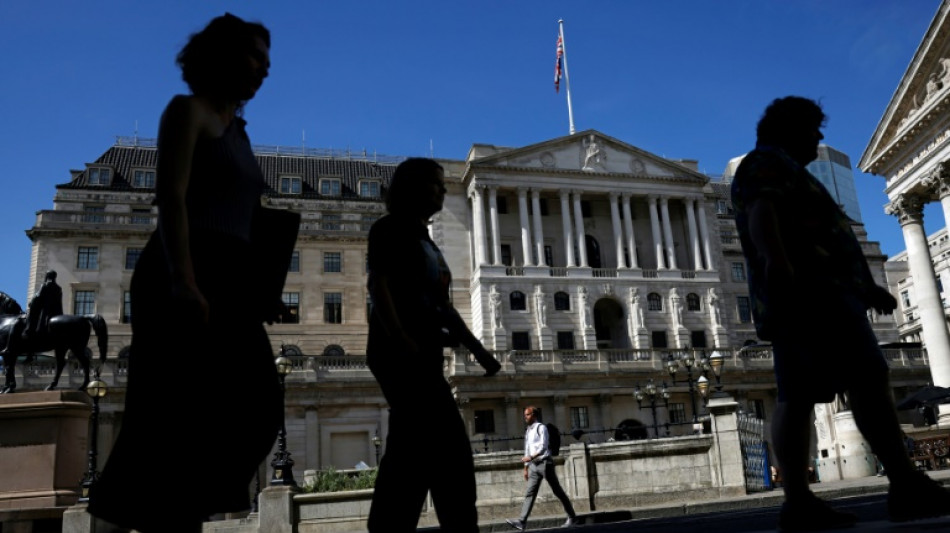
Bank of England hikes rate again as UK enters recession / Photo: © AFP/File

 England's Nations League surge helps heal World Cup wounds

 Mayor of opposition stronghold Izmir defects to Erdogan party
 Mertens beats Gauff to set up Swiatek clash at China Open

 Benin full of pride at role in Messi's last dance

 France suspends stun grenade use at student protests ahead of PM speech

 Indonesian court hears 'negligence' complaint against state over fires, haze
 Rubio in Greece to urge against Western civilisation 'decline'
 Micron workers at Taiwan plant vote in favour of strike
 In 'The Social Reckoning,' Jeremy Allen White takes on Facebook's 'frightening' ambition

 Chip industry activists call for South Korea to recognise cancer cases
 Famine-scarred southern Madagascar braces for El Nino

 How the EU regulates lobbyists
 I.Coast refuge offers lifelong care for youngsters scorned as 'sorcerers'

 Indian central bank hikes rates for first time in more than 3 years

 Hotel Blacklist Launches New Accommodation Industry Risk Assessment Tool

 Bangladesh nuclear plant draws hope -- and worry
 US beat Canada 1-0 to wrap up four-win international break

 Turkey, Australia's joint COP31 leadership raises doubts

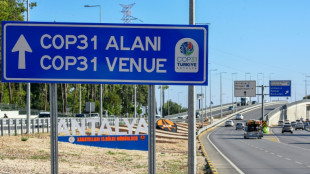 For Turkish NGOs, COP31 offers rare space for action

 Sleep, appetite, gene-editing experts contend for Nobel chemistry prize

 Nobel Peace Prize haunted by the 'spectre' of Trump

 Africa launches own credit agency in bid for cheaper borrowing

 US, China, EU: three paths to regulating AI

 Australia's High Court rules against coal mine in landmark climate case
 Australia touts new funds for Pacific infrastructure at Fiji 'pre-COP'

The Bank of England hiked its interest rate again on Thursday to combat soaring inflation as it warned that the UK's economy had already slipped into recession.
The BoE's decision caps a busy week for central banks as its peers in the United States and elsewhere in Europe further tightened their own monetary policies in global efforts to tame runaway inflation.
The British central bank's decision had been postponed from last week following the death of Queen Elizabeth II.
The BoE met most market expectations as it lifted its key rate by 0.5 percentage points to 2.25 percent, repeating its August increase that had been the biggest rise since 1995.
Some commentators had speculated that the BoE could mirror the European Central Bank and the US Federal Reserve and spring a jumbo hike of 0.75 percentage points -- which would have been the BoE's largest in three decades.
Across the world, consumer prices have galloped to their highest levels in decades on rampant energy and food prices in the wake of Russia's war on Ukraine.
Central banks have responded by increasing their rates, fanning recession fears because they push up loan repayments for consumers and companies alike, thereby exacerbating the UK's cost-of-living crisis.
The BoE said the UK had already entered recession.
The Fed on Wednesday unveiled a 0.75-percentage-point increase, its third straight jumbo hike, one day after Sweden's Riksbank shocked markets with a jump of a full percentage point.
On Thursday, the Swiss National Bank unleashed a 0.75-percentage-point hike that lifted its policy rate out of negative territory for the first time since 2015, meaning depositors no longer have to pay to park their money at the bank.
On Thursday, the Norwegian central bank raised its rate by 0.5 percentage points, taking it to its highest level in more than a decade.
Bucking the trend, the Bank of Japan kept its ultra-loose monetary policy unchanged, sending the yen to a fresh 24-year low against the dollar.
The BoE earlier this month defended itself against accusations of being too slow to tackle sky-high inflation, after new Prime Minister Liz Truss proposed to review its operational independence.
- Tax cuts -
UK inflation eased to 9.9 percent in August but remains near a 40-year high.
Truss on Wednesday launched a six-month plan, starting in October, to pay about half of energy bills for businesses, charities, hospitals and schools, as she sought to soften the economic blow of sky-high prices.
The premier had already announced plans for a two-year energy price freeze for cash-strapped households.
Finance minister Kwasi Kwarteng will unveil Friday a mini-budget of tax cuts designed to boost economic activity, and will also outline the vast cost of the energy assistance.
Yet the package threatens to ultimately push inflation higher as a result of strengthening demand, according to US bank Citi.
"While the capping of energy prices is disinflationary in the first instance, we continue to see many of these measures as boosting demand and increasing the risk of more embedded inflation," wrote Citi analysts in a research note.
Commentators also warn the measures will ravage public finances that are already reeling from huge spending during the deadly Covid pandemic.
Barclays bank analysts estimate that the government's total cost-of-living expenditure could reach a colossal £235 billion ($267 billion).
R.Adler--BTB