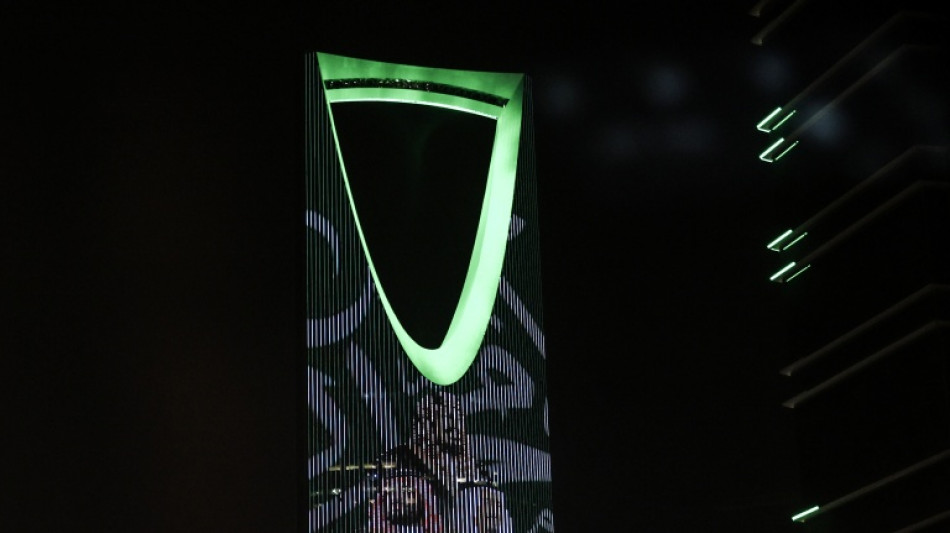
Houthi attacks undermine Saudi Arabia's economic ambitions / Photo: © AFP

 Emery adamant injuries 'no excuse' for Aston Villa
 UN demands aid access to besieged Yemen city Taiz
 Faletau still in Tandy's plans despite being left out of Wales squad
 Stock markets retreat as oil rises again

 Those who profited from fund scandal 'identified': Turkish minister

 At half a century, Senegal's Orchestra Baobab bets on new generation

 O'Connor, Sivakov join Seixas at Decathlon CMA CGM

 Faletau left out of Wales squad for Nations Championship
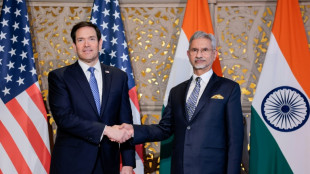 Rubio says India diversifying oil, trade deal 'very close'
 Hardik Pandya Meets Fan Who Walked 2,390 Kilometres Across India

 CNN Global Perspectives to Make Middle East Debut in Doha

 Doha Debates Examines Who Should Set the Moral Rules for AI

 Qatar Amir and Singapore Prime Minister Expand Bilateral Cooperation

 Cali Biodiversity Fund Struggles After Raising Only $7,085

 Yan Diomande Finds Form Before Real Madrid Faces Former Club Leipzig

 Asian Technology Shares Slide as Investors Reassess AI Boom

 Marco Rubio Travels to India as Trade Talks Reach Difficult Stage

 Brokerages See Eternal Extending Food Delivery and Quick-Commerce Gains

 Gold Remains Under Pressure as Energy Inflation Clouds Rate Outlook

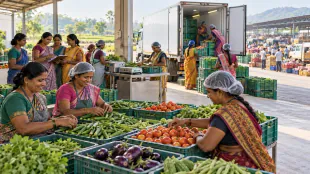 Industry Groups Outline Four Steps to Help Women Farmers Reach Markets

 Late Okafor Penalty Earns Alvechurch FA Cup Replay

 Low-Cost Homemade Ideas Offer Alternatives for Halloween Costumes

 Christiane Amanpour Plans CNN Departure After 43 Years

 Richard Riehle, Prolific Film and Television Actor, Dies at 78

 Agrograde Introduces AI Optical Sorter for Arecanut Processing

With airports closed and the capital brought to an effective standstill, attacks by Yemen's Houthis on Saudi Arabia have thrown a wrench in the kingdom's ambitious plans to overhaul the economy and draw foreign investment.
A decade ago, de facto ruler Crown Prince Mohammed bin Salman launched his bold Vision 2030, aiming to diversify the economy away from oil and turn the powerful monarchy into a hub for tourism, international events and multinational enterprises.
Already dealt a blow by Iran's attacks on US allies in the Gulf during the wider Middle East war, the plan now faces an existential hurdle with unprecedented Houthi attacks, in particular targeting oil infrastructure and airports.
"I can't think of another time when the challenge facing MBS was more," said H.A. Hellyer, an analyst at the Royal United Services Institute (RUSI).
"He's dealing with the Iranians on one side of the country which is very difficult and problematic and then he's dealing with the Houthis who aligned with the Iranians on the other."
On October 10, a Houthi attack on Riyadh's international airport killed 13 people and injured more than 300 -- the deadliest in the kingdom in over a decade, with the airport remaining closed since.
- 'Active conflict zone' -
A consultant to the Saudi government who wished to remain anonymous meanwhile told AFP that "the deeper risk there is that, you know, boards start pricing Saudi as part of an active conflict zone.
"If that perception settles into risk models, insurance premiums, it will take many years to unwind," she added.
A number of major events have been cancelled, most notably the Future Investment Initiative (FII), nicknamed "Davos on the desert" -- a bulwark of the kingdom's diversification drive.
The uncertainty has only piled pressure on the 41-year-old crown prince's Vision 2030, as several of its megaprojects -- most notably the hyper-futuristic megacity dubbed Neom -- have been scaled back.
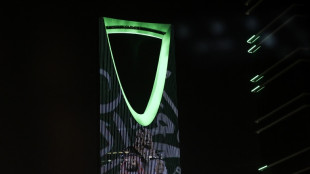
In Riyadh, the iconic Kingdom Centre recently ordered its office tenants, which include the International Monetary Fund (IMF), to work remotely until further notice.
The world's largest crude oil exporter is moreover expected to see its economy contract by 3.3 percent, according to the IMF's latest projections, revised from a projected growth of 1.7 percent in July.
The kingdom is grappling with a new reality wherein US protection is no longer guaranteed, as President Donald Trump has appeared reluctant to offer support in Yemen as he gears up for mid-term elections.
"Saudi Arabia finds itself in a delicate situation in the face of Houthi attacks, as well as US hesitation," said Laurent Bonnefoy, a researcher at Ceri/Sciences Po in Paris.
"Trump for the time being seems to be refusing to commit to offering the needed military backing," he added.
- 'Investor concerns' -
Riyadh has secured support from several allies including France, Britain, Turkey and Pakistan to help mitigate the threat posed by the Houthis," said Torbjorn Soltvedt, Middle East analyst at Verisk Maplecroft.
"But all are reluctant to go beyond defensive measures, with no appetite to put troops on the ground in Yemen."
The Houthis for their part are relying on a vast arsenal of weapons built up over years with Iranian support.
Following an uneasy four-year truce in the war, fighting kicked off again in July when the airport in Sanaa was struck after Iran sent a plane in defiance of Saudi control -- an attack the Houthis blamed on Saudi Arabia.
The Yemeni group has a large number of longer-range missiles and drones at its disposal, and has seized control of the Bab al-Mandab Strait, which leads up to the Suez Canal.
After pursuing a policy of "power and regional projection" in 2019, Riyadh -- facing a "stalemate" in Yemen -- shifted tack around 2019 and focused on economic objectives, Bonnefoy said.
Ali Shihabi, a Saudi analyst close to the Saudi government, said the kingdom "has faced repeated challenges over the decades".
"The Kingdom has weathered each crisis and will weather this one. It is resilient, has staying power and can draw on global supply chains and an extensive network of alliances," he said.
"The Houthis, ultimately, have only Iran, and Iran itself is under severe strain."
But Soltvedt suggested the risks predate the latest conflict, saying: "Allaying investor concerns over geopolitical risk has been a longstanding challenge for Riyadh, from the attacks on the heart of Saudi Arabia's energy sector just before the Aramco IPO in 2019, to the outbreak of regional conflict this year.
"With no solution to the conflict in sight, the drone and missile threat from multiple directions and actors will continue to weigh on the minds of investors."
K.Thomson--BTB