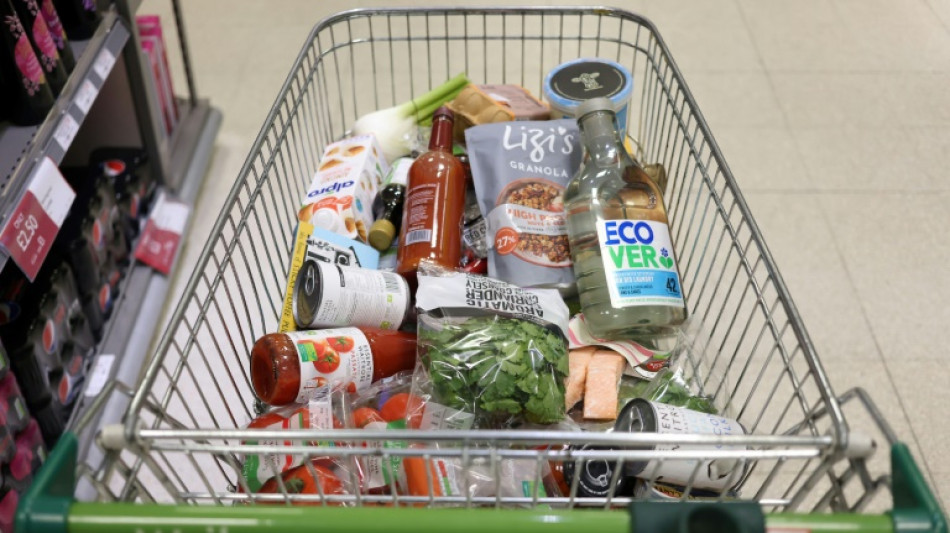
Britain unveils anti-inflation budget as recession looms / Photo: © AFP/File

 England's Nations League surge helps heal World Cup wounds

 Mayor of opposition stronghold Izmir defects to Erdogan party
 Mertens beats Gauff to set up Swiatek clash at China Open

 Benin full of pride at role in Messi's last dance

 France suspends stun grenade use at student protests ahead of PM speech

 Indonesian court hears 'negligence' complaint against state over fires, haze
 Rubio in Greece to urge against Western civilisation 'decline'
 Micron workers at Taiwan plant vote in favour of strike
 In 'The Social Reckoning,' Jeremy Allen White takes on Facebook's 'frightening' ambition

 Chip industry activists call for South Korea to recognise cancer cases
 Famine-scarred southern Madagascar braces for El Nino
 How the EU regulates lobbyists
 I.Coast refuge offers lifelong care for youngsters scorned as 'sorcerers'

 Indian central bank hikes rates for first time in more than 3 years

 Hotel Blacklist Launches New Accommodation Industry Risk Assessment Tool

 Bangladesh nuclear plant draws hope -- and worry
 US beat Canada 1-0 to wrap up four-win international break

 Turkey, Australia's joint COP31 leadership raises doubts

 For Turkish NGOs, COP31 offers rare space for action

 Sleep, appetite, gene-editing experts contend for Nobel chemistry prize

 Nobel Peace Prize haunted by the 'spectre' of Trump

 Africa launches own credit agency in bid for cheaper borrowing

 US, China, EU: three paths to regulating AI
 Australia's High Court rules against coal mine in landmark climate case
 Australia touts new funds for Pacific infrastructure at Fiji 'pre-COP'

The UK's new government unveils Friday multibillion-pound measures aimed at supporting households and businesses hit by decades-high inflation.
Finance minister Kwasi Kwarteng, fresh from being appointed by new Prime Minister Liz Truss, will deliver his mini-budget at 0830 GMT.
Kwarteng announced late Thursday he will scrap Truss's predecessor Boris Johnson's plan to hike taxes on salaries.
The news came after the Bank of England warned that Britain was slipping into recession, as rocketing fuel and food prices take their toll.
- Growing economy -
"Taxing our way to prosperity has never worked," the Chancellor of the Exchequer said.
"To raise living standards for all, we need to be unapologetic about growing our economy.
"Cutting tax is crucial to this."
He is similarly expected to reverse Johnson's planned tax increase on company profits.
Kwarteng will also outline Friday the cost of a decision to cap energy bills.
He could axe a bankers' bonus cap, which has been in place since 2014 and is a legacy of EU membership.
Truss took office on September 6, two days before the death of Queen Elizabeth II, after winning an election of Conservative party members on a tax-cutting platform.
While the tax reversals are not strictly cuts, the government could announce Friday reduced levies on home purchases.
Analysts from British bank Barclays estimate the cost of the government's total package could hit £235 billion ($267 billion), far more than its jobs protection scheme during the pandemic.
- Capping energy bills -
Britain on Wednesday announced a six-month plan to pay about half of energy bills for businesses.
Truss had already launched a two-year household energy price freeze. The caps will not kick in, however, until Britons face another large hike in gas and electricity bills at the start of October.
The average household will have their annual energy bill capped at £2,500 until 2024 but many are expected to spend above that to keep homes warm over the winter.
Wholesale electricity and gas prices for firms -- as well as charities, hospitals and schools -- will be capped at half the expected cost on the open market.
UK energy companies including BP and Shell will not benefit from the cap, as they enjoy soaring profits after the invasion of Ukraine by major oil and gas producer Russia.
Britain's main opposition Labour party has demanded that the government extends a windfall tax on energy companies that former finance minister Rishi Sunak launched earlier this year.
But Truss ruled out such a move, arguing that additional taxes will hinder economic recovery and efforts by energy groups to transition into greener companies.
Growth is at the heart of the new government's policy, with Kwarteng on Wednesday outlining plans to shake up the welfare system.
Some 120,000 people in part-time work could face a benefit cut should they fail to take new steps to look for more work, he is set to confirm.
Kwarteng has described the policy as a "win-win", pitching it as a way to fill 1.2 million UK job vacancies.
- Strikes, rate rises -
With prices rocketing, wage values are eroding, triggering some of the biggest strike action Britain has seen in more than 30 years.
From the rail sector to postal services and even lawyers, tens of thousands of workers are carrying out industrial action aimed at securing bigger salaries.
In addition, soaring interest rates are hurting consumers and businesses.
The cost of government borrowing is also ballooning as a result.
The Bank of England on Thursday ramped up its key rate by another half-point to 2.25 percent to tackle high inflation, and warned the UK would slide into recession in the current third quarter.
K.Thomson--BTB