German bakeries fight for survival as costs spiral / Photo: © AFP

 England's Nations League surge helps heal World Cup wounds

 Mayor of opposition stronghold Izmir defects to Erdogan party
 Mertens beats Gauff to set up Swiatek clash at China Open
 Benin full of pride at role in Messi's last dance

 France suspends stun grenade use at student protests ahead of PM speech

 Indonesian court hears 'negligence' complaint against state over fires, haze
 Rubio in Greece to urge against Western civilisation 'decline'
 Micron workers at Taiwan plant vote in favour of strike

 In 'The Social Reckoning,' Jeremy Allen White takes on Facebook's 'frightening' ambition

 Chip industry activists call for South Korea to recognise cancer cases
 Famine-scarred southern Madagascar braces for El Nino
 How the EU regulates lobbyists
 I.Coast refuge offers lifelong care for youngsters scorned as 'sorcerers'

 Indian central bank hikes rates for first time in more than 3 years

 Hotel Blacklist Launches New Accommodation Industry Risk Assessment Tool

 Bangladesh nuclear plant draws hope -- and worry

 US beat Canada 1-0 to wrap up four-win international break

 Turkey, Australia's joint COP31 leadership raises doubts

 For Turkish NGOs, COP31 offers rare space for action

 Sleep, appetite, gene-editing experts contend for Nobel chemistry prize
 Nobel Peace Prize haunted by the 'spectre' of Trump

 Africa launches own credit agency in bid for cheaper borrowing

 US, China, EU: three paths to regulating AI

 Australia's High Court rules against coal mine in landmark climate case

 Australia touts new funds for Pacific infrastructure at Fiji 'pre-COP'

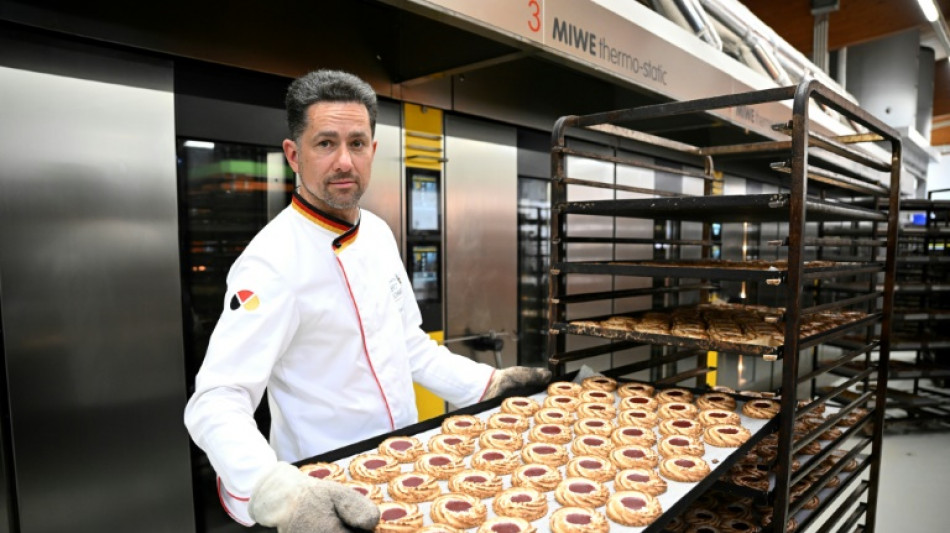
Faced with exploding energy and ingredient costs, German baker Tobias Exner has installed new energy-efficient ovens, shortened his opening hours and even considered baking at lower temperatures.
But "it just doesn't taste the same without a good crust", he said, adding that in any case such efforts could do little to counter the existential crisis he and other bakers are facing.
"If the conditions don't change, then sooner or later a large share of bakeries in Germany will simply no longer exist," Exner told AFP.
Bakeries in Germany have been among the businesses hardest hit by the economic fallout from Russia's invasion of Ukraine.
The war has sent energy prices spiralling across Europe, but especially in Germany, which was previously heavily dependent on Russian gas.
"Bakeries all have ovens. Seventy percent of artisanal bakeries have gas ovens and gas prices are going through the roof," said Friedemann Berg, managing director of the German Bakers' Federation.
And two of the main ingredients used by bakers -- flour and oil -- are among those that have been affected by blockades at Ukrainian ports.
Exner's business is relatively large with 220 staff and 36 branches in Berlin and the surrounding area, leaving it better placed than many to survive the crisis -- but even he is struggling.
Wheat is now 2.5 times more expensive than before the crisis, he said, while the cost of a litre of oil has risen from around 82 cents to more than three euros ($2.91).
- Dough in the dark -
Energy bills for the business, meanwhile, have almost quadrupled compared with 2020.
"You can see that the calculations no longer work," Exner said to the hum of machines at the company's main production site in the town of Beelitz.
But Exner is reluctant to pass the cost increases on to his customers, who he simply believes "would not pay those kinds of prices".
In central Berlin, the mood on the ground appears to confirm his fears.
"Even more? No way. It's getting extortionate," said unemployed Gloria Thomas, 56, when asked whether she would be prepared to pay more for her favourite loaf.
Many bakeries in Germany have already gone under as a result of recent cost increases, with others staging protests to demand urgent help from the government.
And there is more at stake than just bread rolls, according to Exner.
"These businesses are often the most important institution in the village -- they are at once grocery store, social centre, post office, etc."
In early September, around 800 German bakeries served customers in the dark for a day to draw attention to their plight.
- Insolvency blunder -
Germany's centre-left government has announced relief measures worth almost 100 billion euros to tackle inflation, but small businesses have so far been largely excluded from the help.
Worse still, they were left feeling insulted by controversial comments by Economy Minister Robert Habeck earlier this month.
Asked on a TV panel show whether he thought Germany was heading for a wave of insolvencies, Habeck replied: "I can imagine that certain industries will simply stop producing for a while."
The comments provoked anger from bakers in particular, who accused Habeck of having no understanding of their industry.
"Habeck is probably not a stupid person, but the question is, is he qualified for the job he has right now? And I would say no," said Exner.
The Bakers' Confederation is calling for "quick and unbureaucratic" financial aid.
Bakeries can shave off costs here and there but they "can only do so much", according to Berg.
If government help does not arrive soon "the future looks bleak," he said.
"It could be that many businesses have to give up their operations or simply file for bankruptcy."
B.Shevchenko--BTB