Cyprus drivers fill up in breakaway north as prices soar / Photo: © AFP

 Arteta targets more Arsenal glory after signing new deal until 2030

 Russell hit with Singapore grid penalty for taking new power unit

 Spotify expands audiobooks to more than 180 markets
 French-Japanese duo wins chemistry Nobel for solving molecular 'mystery'

 England's Nations League surge helps heal World Cup wounds
 Mayor of opposition stronghold Izmir defects to Erdogan party
 Mertens beats Gauff to set up Swiatek clash at China Open
 Benin full of pride at role in Messi's last dance

 France suspends stun grenade use at student protests ahead of PM speech
 Indonesian court hears 'negligence' complaint against state over fires, haze
 Rubio in Greece to urge against Western civilisation 'decline'
 Micron workers at Taiwan plant vote in favour of strike
 In 'The Social Reckoning,' Jeremy Allen White takes on Facebook's 'frightening' ambition

 Chip industry activists call for South Korea to recognise cancer cases
 Famine-scarred southern Madagascar braces for El Nino
 How the EU regulates lobbyists
 I.Coast refuge offers lifelong care for youngsters scorned as 'sorcerers'

 Indian central bank hikes rates for first time in more than 3 years
 Hotel Blacklist Launches New Accommodation Industry Risk Assessment Tool

 Bangladesh nuclear plant draws hope -- and worry
 US beat Canada 1-0 to wrap up four-win international break

 Turkey, Australia's joint COP31 leadership raises doubts
 For Turkish NGOs, COP31 offers rare space for action

 Sleep, appetite, gene-editing experts contend for Nobel chemistry prize
 Nobel Peace Prize haunted by the 'spectre' of Trump

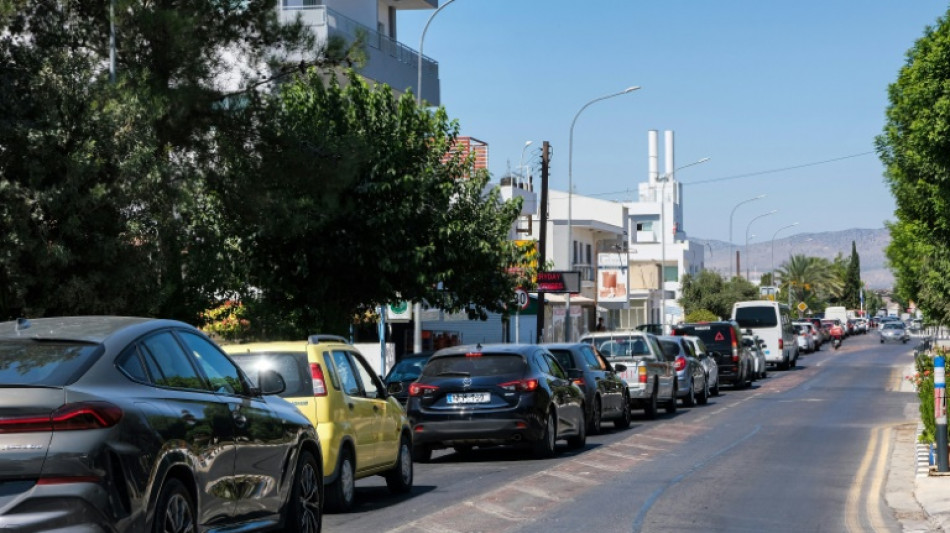
The queue of Greek Cypriot motorists waiting to cross a checkpoint into breakaway northern Cyprus is much longer than it used to be -- a plummeting Turkish lira means cheaper petrol prices there.
For many Greek Cypriots, buying goods in the north of the divided Mediterranean island is tantamount to treason.
Turkish troops invaded in 1974 after a Greek-engineered coup seeking to unite the island with Greece, and tens of thousands of soldiers from mainland Turkey are still posted in its northern third.
The self-proclaimed Turkish Republic of Northern Cyprus was unilaterally declared in 1983 and is recognised by Turkey alone.
But now more and more people are giving in to temptation and driving north to buy cheaper fuel from the Turkish Cypriots.
"My salary is only 700 euros ($680)" monthly, said Fanourios Michail, a 60-year-old carpenter waiting at a Nicosia crossing. "I save about 200 euros a month by refuelling in the north."
The internationally recognised Republic of Cyprus -- the European Union's easternmost member -- uses the euro.
But the Turkish Cypriots use the lira, which has sunk to historic lows this year. And the north also has much lower taxes on fuel.
- Checkpoint congestion -
According to police figures collated between January and August this year and compared with 2021, the number of cars going north through one of the island's vehicle crossings has more than tripled from 197,230 to 601,749.
Normally, moving between the two sides should not take more than a few minutes.
Drivers present their passport or ID card to police on the Greek Cypriot side, and then drive a few dozen metres (yards) to do the same with Turkish Cypriot police, who also verify that the car has valid insurance for the north.
But for the past several months, congestion at the checkpoints means it is now more common to have to wait half an hour to cross the narrow UN-controlled buffer zone.
"Half of my customers are now Greek Cypriots, representing half of my turnover," said Turkish Cypriot Mehmet Tel, who runs a petrol station about 500 metres from one of Nicosia's crossing points.
A litre of fuel in the north is about 25 percent cheaper than in the south.
"With four kids and a relatively low salary, I just can't make ends meet otherwise," admitted a 45-year-old Greek Cypriot woman who asked not to be identified.
- Lost tax revenues -
Christodoulos Christodoulou, spokesman for the association of petrol station owners in the south, estimated their annual losses at seven million euros.
The rush for cheaper fuel in the north also costs the republic 80 million euros in lost tax revenues every year, he said.
"We want this illegal activity stopped."
He accused the government of failing to enforce regulations put in place in 2004 when Cyprus joined the EU to regulate the transfer of goods across the Green Line separating the two sides of the island.
This is not a government-recognised border, but Christodoulou said that the 2004 EU regulations ban the transfer of fuel from the Turkish-held north into the south.
Regular checks at crossing points are carried out "to reduce the illegal movement of fuel, protect tax revenues and curb the impact on legitimate fuel suppliers", government spokesman Marios Pelekanos told AFP.
Cyprus government regulations cap the value of goods transferred by individuals at 260 euros a day, and some products, such as tobacco and alcohol, face strict limitations.
Christodoulou told reporters that his association has not ruled out contacting Frontex, the EU agency that regulates borders, despite the government not recognising the Green Line as such.
K.Thomson--BTB