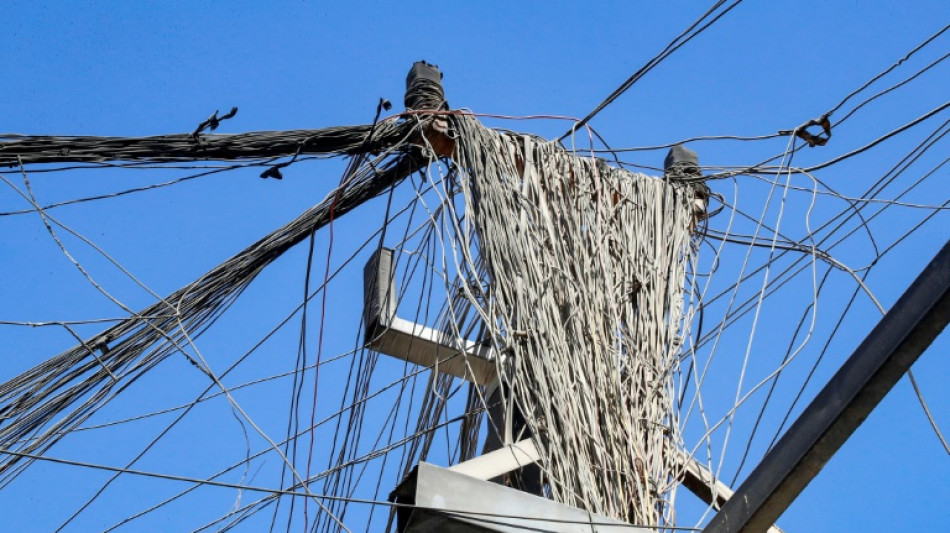
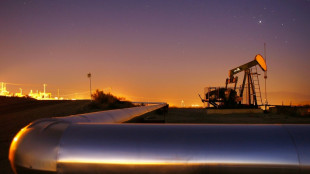
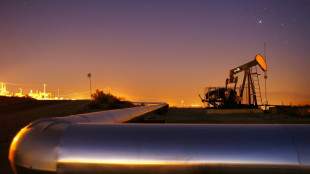
Energy crisis feared by Europe long a reality in Iraq / Photo: © AFP

 UK court quashes five ex-traders' Libor rate rigging convictions
 XM Receives “Global Customer Experience Leader Award 2026” at the TrustFinance Performance Awards
 Stocks slide as oil climbs on Mideast flareup
 Heavy casualties in Ukraine after Russian strikes
 French wine harvest set to hit historic low
 Kyiv 'cannot agree' to EU membership limiting food exports: minister
 Arteta targets more Arsenal glory after signing new deal until 2030

 Russell hit with Singapore grid penalty for taking new power unit

 Spotify expands audiobooks to more than 180 markets
 French-Japanese duo wins chemistry Nobel for solving molecular 'mystery'

 England's Nations League surge helps heal World Cup wounds
 Mayor of opposition stronghold Izmir defects to Erdogan party
 Mertens beats Gauff to set up Swiatek clash at China Open
 Benin full of pride at role in Messi's last dance

 France suspends stun grenade use at student protests ahead of PM speech
 Indonesian court hears 'negligence' complaint against state over fires, haze
 Rubio in Greece to urge against Western civilisation 'decline'
 Micron workers at Taiwan plant vote in favour of strike
 In 'The Social Reckoning,' Jeremy Allen White takes on Facebook's 'frightening' ambition
 Chip industry activists call for South Korea to recognise cancer cases
 Famine-scarred southern Madagascar braces for El Nino
 How the EU regulates lobbyists
 I.Coast refuge offers lifelong care for youngsters scorned as 'sorcerers'

 Indian central bank hikes rates for first time in more than 3 years
 Hotel Blacklist Launches New Accommodation Industry Risk Assessment Tool

Europe may fear an energy crisis over the coming winter, but for Iraqis an unstable power supply and frequent blackouts have been a reality during decades of war and turmoil.
The Middle Eastern country is rich in oil, but endemic corruption and devastating conflict have taken a heavy toll on its infrastructure and forced most of its 42 million people to adapt.
The noise of privately owned generators can be heard all over the country as households and businesses try to make up for supply shortfalls from the national electricity company.
"Without generators, Iraq would go completely dark," Mohammed Jabr, a retired public servant, told AFP in his yard in Sadr City, a working-class district of the capital Baghdad.
Ensuring a stable power supply, he said, requires resourcefulness and money when the national grid can go down for four to 10 hours a day in peak summer consumption, according to electricity ministry data.
Generators "provide the electricity we need for the television, fridge, air cooler", said the 62-year-old former accountant.
He pays $50 a month in generator subscription fees -- but even that isn't always enough to keep a whole house running.
"A client may have to turn the fridge off to keep the air conditioner on," explained Khaled al-Shablawi, who has worked for a generator service for 13 years.
- 'Plunged into darkness' -
Soaring energy prices fuelled by Russia's war in Ukraine have forced a new reality upon European nations, where people are asked to limit the electricity they use for heating, lighting and cooking.
Some cities keep street lights on for shorter lengths of time, and in Paris, the lights illuminating the Eiffel Tower are switched off an hour earlier now to save energy.
But to Jabr, such a step "is normal".
"When there's a technical problem, the whole area could be left without power for a day or two before they fix it," he said.
Jabr recalled how immediately after the 2003 US-led invasion that toppled longtime dictator Saddam Hussein, "houses were plunged into darkness" after fighting destroyed infrastructure.
"There was very little electricity, only two or three hours" a day, he said. "People had their own generators. They would buy fuel and it would last a day or two."
In Iraq's long summer months, when temperatures can peak around 50 degrees Celsius (122 degrees Fahrenheit) and air-conditioner use surges, overloaded generator providers hike up prices.
Some regions were deprived of power altogether in the summer of 2021, triggering sporadic street protests by frustrated residents.
- Europe 'destabilised' -
Despite its oil wealth, the country relies heavily on energy supply from neighbouring Iran.
With its mighty Tigris and Euphrates rivers, Iraq has some hydro-electric power but no nuclear plants, and is just beginning to explore renewable energy options such as solar panels.
In a bid to overcome the common blackouts, Baghdad has nonetheless moved to increase domestic power production.
It now generates more than 24,000 megawatts per day, said electricity ministry spokesman Ahmed Moussa.
To secure stable nationwide power supply, however, 32,000 megawatts would be needed daily, he said.
For now, the national grid provides most regions with 14-20 hours of electricity a day in summer, Moussa added.
In one Sadr City avenue, private generators line the street, each feeding electricity to some 300 homes and a similar number of shops.
Ali al-Aaraji, who owns a private college for around 300 students, decried "astronomical" generator costs, which he estimated at $600 a month.
"Electricity is a constant problem for Iraqis," said Aaraji, 58, pinning the blame on "the American occupation" of years past.
"Iraqis have managed to put up with the situation for three decades," he added, questioning how Europe would cope with its looming power problem.
"Energy is the source of economic prosperity," Aaraji said.
"Europe is now destabilised. It's going to impact their economy, industry and commerce. They'll go backwards."
C.Meier--BTB