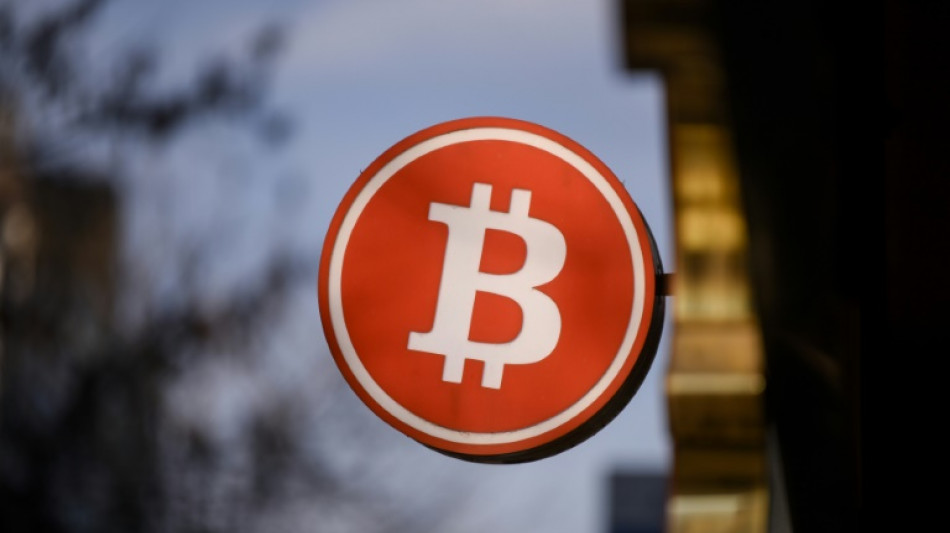
Salvadoran president vows to buy "one #Bitcoin every day' / Photo: © AFP/File

 Alex Bodi pushes ahead with expansion: ALIX LASERS showroom planned for Bucharest
 Fossil fuels off COP31 agenda as global output keeps rising
 Haze not 'a threat' to Singapore F1 race: organisers

 COP31 organisers say to seek 'ambitious' action with their text
 Bartunkova thrashes Muchova to reach China Open semi-finals
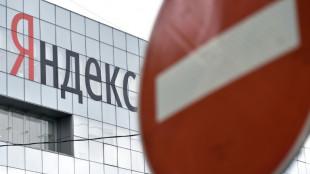 Drone hits Yandex data centre, in first such attack on Russia

 Oil prices surge and stocks sink on fresh inflation worries
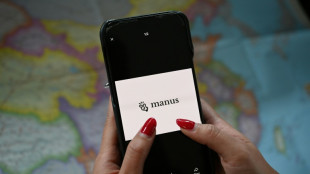 AI startup Manus raises $500m after Meta acquisition blocked by China
 From refuge to repatriations: Malaysia's Myanmar U-turn

 Morikawa says LIV players face 'business decision' after Rahm exit
 Tenzing Norgay's son says Himalayas sending climate warning
 On your bike! Bottas opts for two wheels to reach Singapore GP

 Alcaraz, Sinner, Osaka commit to Australian Open '1 Point Slam'
 Dodgers beat Braves to advance in MLB playoffs, Rays oust Yankees

 'A sun as black as my lungs': how corruption crucified a polluted Albania city

 The British historian helping the French rediscover de Gaulle
 Dodgers beat Braves to advance, Guardians survive in MLB playoffs
 Latin American, Caribbean women top Nobel literature buzz
 US says Fiji-based Chinese official paid bribes for Beijing
 After botched US execution, Christa Pike was nearly taken off life support

 Guinea-Bissau junta urges military unit loyal to ex-president to disarm

 As species decline, green turtles offer glimmer of hope
 Brothers Scott and Beauden Barrett named to start for All Blacks
 EU trade chief seeks to dial down China tensions
 'Never again Bolsonaro': thousands march ahead of Brazil election runoff

President Nayib Bukele of El Salvador, the first country to make bitcoin legal tender, said Thursday the nation would buy one unit of the currency every day, doubling down in the face of public criticism of his embrace of the crypto money.
"We are buying one #Bitcoin every day starting tomorrow," the president tweeted.
Bitcoin traded at about $16,500 per unit on Thursday, down from $45,000 in September 2021 when El Salvador adopted the cryptocurrency, and some $68,000 two months later -- its highest historic value.
Bukele's idea was to give more Salvadorans access to banking services and to promote crypto money transfers from some three million expats, mainly in the United States, to relatives back home.
Remittances make up more than a quarter of El Salvador's gross domestic product.
But according to data from the Salvadoran Central Bank a year after the introduction of bitcoin, "less than two percent" of remittances were made using the cryptocurrency.
The measure has been questioned by International Monetary Fund and World Bank due, among other things, to the currency's notorious volatility.
Taking advantage of the plummeting prices, Bukele bought 80 bitcoin with public funds for $19,000 each in July, bringing the Central American country's total reserves to 2,381 units.
But an opinion poll last month showed more than three-quarters of Salvadorans thought Bukele's adoption of the coin was a "failure," and fewer than a quarter used it.
The study, conducted by the University of Central America, found that nearly 80 percent of Salvadorans believe their president "should not continue to spend public money to buy bitcoin."
On Wednesday, El Salvador's ambassador in Washington Milena Mayorga, a Bitcoin promotor, told state TV Canal 10 its use "is a process, first we have to get to know it, education is the key."
W.Lapointe--BTB