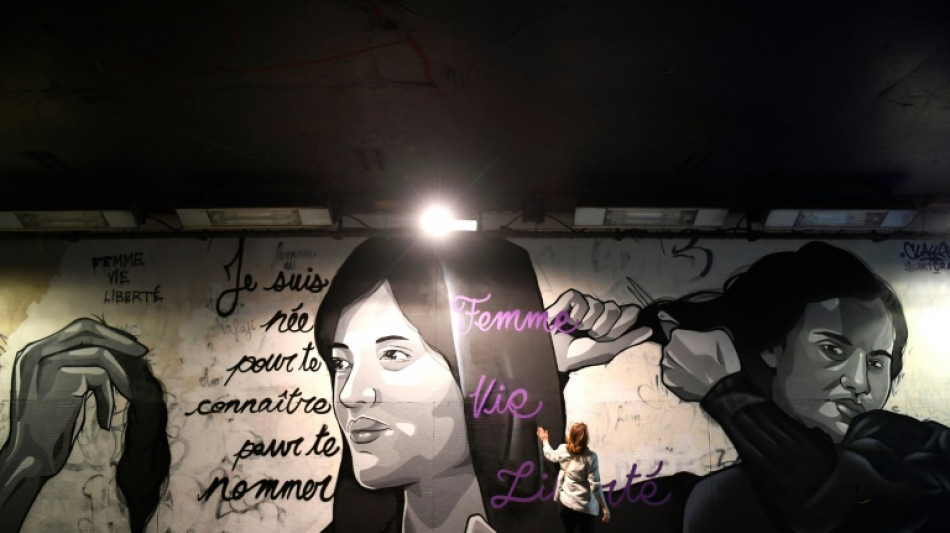
Iran's 'civil war' warning may presage bloodier crackdown: analysts / Photo: © AFP/File

 Alex Bodi pushes ahead with expansion: ALIX LASERS showroom planned for Bucharest
 Fossil fuels off COP31 agenda as global output keeps rising

 Haze not 'a threat' to Singapore F1 race: organisers
 COP31 organisers say to seek 'ambitious' action with their text
 Bartunkova thrashes Muchova to reach China Open semi-finals
 Drone hits Yandex data centre, in first such attack on Russia
 Oil prices surge and stocks sink on fresh inflation worries

 AI startup Manus raises $500m after Meta acquisition blocked by China
 From refuge to repatriations: Malaysia's Myanmar U-turn

 Morikawa says LIV players face 'business decision' after Rahm exit
 Tenzing Norgay's son says Himalayas sending climate warning
 On your bike! Bottas opts for two wheels to reach Singapore GP

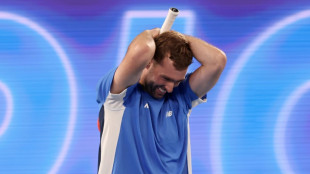 Alcaraz, Sinner, Osaka commit to Australian Open '1 Point Slam'
 Dodgers beat Braves to advance in MLB playoffs, Rays oust Yankees
 'A sun as black as my lungs': how corruption crucified a polluted Albania city

 The British historian helping the French rediscover de Gaulle
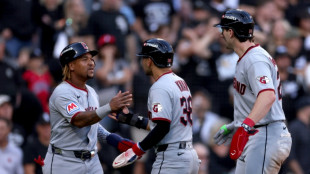
 Dodgers beat Braves to advance, Guardians survive in MLB playoffs
 Latin American, Caribbean women top Nobel literature buzz
 US says Fiji-based Chinese official paid bribes for Beijing
 After botched US execution, Christa Pike was nearly taken off life support
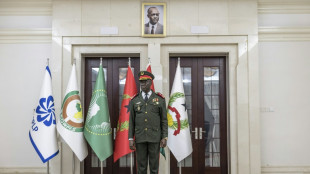 Guinea-Bissau junta urges military unit loyal to ex-president to disarm

 As species decline, green turtles offer glimmer of hope
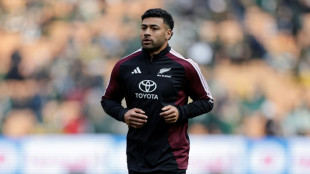
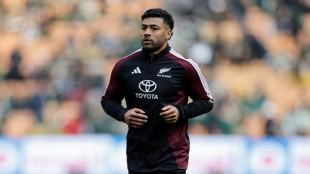 Brothers Scott and Beauden Barrett named to start for All Blacks
 EU trade chief seeks to dial down China tensions
 'Never again Bolsonaro': thousands march ahead of Brazil election runoff

Iran has accused foreign foes of trying to spark "civil war" by stoking the protests over Mahsa Amini's death -- harsh language that, analysts warn, could presage an even bloodier crackdown.
Fears that Iran is sliding into deeper violence have grown since Wednesday, when assailants on motorcycles gunned down nine people -- including a woman and two boys aged nine and 13 -- in two mysterious attacks.
Officials in Iran were quick to accuse "terrorists" backed by its Western enemies of being behind the attacks in the southern cities of Izeh and Isfahan, which authorities said also left dead two security personnel.
It was the second attack the authorities have blamed on what they labelled terrorists since the protests erupted, after at least 13 people were killed at a shrine in Shiraz, another city in southern Iran, on October 26.
Analysts say however that, regardless of who carried out the latest attacks, they could result in an even bloodier response to the protests that erupted after Amini's death on September 16, following her arrest for an alleged breach of Iran's dress code for women.
"We don't have a good sense of what happened in Izeh and Isfahan -- was it a terrorist group, or potentially the regime itself?" said Henry Rome, an Iran expert at the Washington Institute.
"Either way, the government will probably use the attacks to send the message that the protests are undermining national security and opening the door for Western-backed terrorism," he told AFP.
"The government is likely attempting to tap into fears that Iran could be on the path to civil war and that stronger action is needed."
- 'Regime to exploit attacks' -
Following Wednesday's twin attacks, Iran's Foreign Minister Hossein Amir-Abollahian accused Israel and its Western allies of plotting a "civil war" in the Islamic republic.
Security services, Israel and Western politicians had "made plans for a civil war and the destruction and disintegration of Iran", he tweeted, adding that they "must know that Iran is not Libya or Sudan".
Fars news agency, which is affiliated with Iran's powerful Islamic Revolutionary Guard Corps, said Wednesday's attacks showed "those who want to dismantle the country are aiming to incite a civil war".
At least 342 people, including 43 children and 26 women, have been killed in the crackdown since Amini's death, the Norway-based group Iran Human Rights said Wednesday.
Protesters had been killed in 22 of Iran's 31 provinces, it said, including 123 in Sistan-Baluchistan and 32 in Kurdistan -- among the few provinces with a Sunni Muslim majority in the predominantly Shiite country.
The regime's crackdown in the wake of the attack in Izeh, a city in ethnically diverse Khuzestan province, "follows a broader trend line of greater police brutality in historically restive provinces, particularly those with large populations of marginalised ethnic minorities", said Kita Fitzpatrick, an Iran analyst at the Critical Threats Project of the American Enterprise Institute.
"Groups like the Islamic State -- which the regime blamed for the Izeh attack -- may very well be attempting to capitalise on protests to carry out attacks within Iranian borders," she told AFP.
But, she added, "some analysts are observing inconsistencies between recent attacks in Iran and typical IS attacks.
"The regime will likely seek to exploit these attacks, regardless, and leverage them to justify cracking down on ongoing unrest."
- 'Anger and rage' -
By adopting an even bloodier response, the regime risks radicalising a protest movement that until now has been led by women and has remained largely peaceful.
This week has seen an uptick in protesters fighting back, with an increasing number of videos posted on social media showing them clashing with security forces and torching their vehicles and bases.
"It's the state security forces that start the violence, but increasingly people respond... and try to defend themselves," said Omid Memarian, senior Iran analyst at Democracy for the Arab World Now (DAWN).
"The government's strategy has been to create an environment of fear and terror so that people go back home," he told AFP.
"They use violence on the streets and harsh sentences through the judiciary to stop the protests," but that approach had "intensified the anger and rage" of the people, Memarian said.
Independent researcher Mark Pyruz said the attacks on security forces on motorbikes, mob beatings of pro-government Basij paramilitary forces and close-quarter stoning of police officers "reminds me of the initial phase of the Syrian civil war".
"We don't have enough info yet on what's taking place in Iran" with respect to the shootings in Izeh and Isfahan, he said, adding however that "it's something to watch for, closely, during days ahead".
L.Dubois--BTB