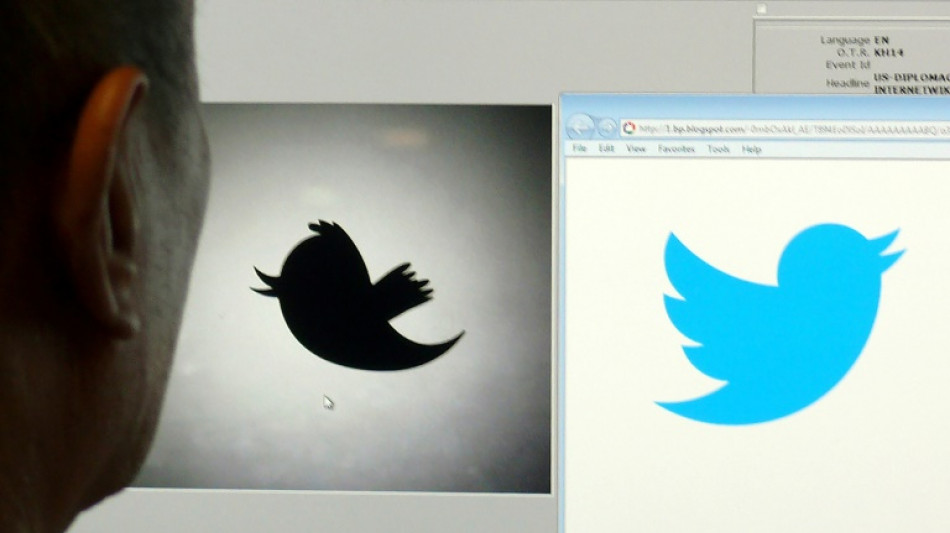
Medical community frets over fate of Twitter / Photo: © AFP/File

 WhiteBIT Launches Bitcoin Lightning Network Support, Powered by Voltage

 Oil surges, stocks sink as US reportedly eyes fresh Iran strikes
 Anne Carson: modern takes on Greek classics

 Canada's Anne Carson wins Nobel literature prize
 Ethiopia drones hit Eritrean troops in Tigray

 Russian strike on buses kills 30 in frontline Ukrainian city
 Thailand begins extradition process against Chinese journalist

 Quarantine, unease and rumours: Russian city grapples with plague scare

 Taiwan says exports hit record in September on AI demand

 Marc Marquez vows to 'attack' Martin's lead at Indonesian MotoGP

 Diplomats, schools in Saudi take safety measures after blasts heard: sources to AFP

 In Beijing, EU trade envoy says deficit with China 'unsustainable'

 Sri Lanka's de Silva quits as Test captain

 Alcaraz feeling 'mentally fresh' ahead of Shanghai return
 Israel drastically reduces British diplomatic presence in Jerusalem

 Stocks fall further as oil surge fans fresh inflation worries

 North Korea demands South show 'utmost respect' to restore relations

 Saudi says three dead in airport attacks claimed by Houthis

 'Mad dream': New showcase for African film opens in London
 All Blacks coach Rennie says Wallabies exit 'part of the game'
 The growing protests against India's poll body - and PM Modi

 Stocks fall further as oil spike fans fresh inflation worries
 Bad COP, worse COP? EU tempers hopes for UN climate summit
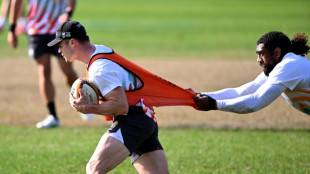 Rookie Henry named in Wallabies midfield to face All Blacks
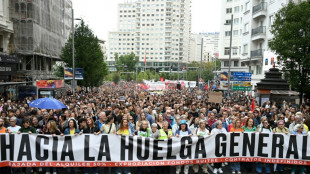 Housing crisis set to dominate Spain's snap election

For days, doctors, scientists and public health experts have been telling their Twitter followers where to find them on other platforms if Elon Musk's newly-acquired company tanks.
The social media giant symbolized by the blue bird has laid off half of its 7,500 employees, while several hundred others have resigned, creating doubts over its future.
Even if it survives, the unpredictability of the new boss has raised fears his policies could profoundly alter the character of the so-called digital town square.
That would be a deep loss for medical experts, who have used Twitter since the start of the Covid pandemic as a tool to quickly gather information, share their research, communicate public health messages and forge new collaborations.
The pandemic was a "tipping point for the use of social media as a primary resource for researchers," Jason Kindrachuk, a virologist at the University of Manitoba in Canada, told AFP.
As the coronavirus began its global march in January 2020, researchers embarked on studies to understand how the virus spreads, its health effects, and how best to protect oneself.
They shared findings immediately on Twitter to assist the wider medical community and an anxious public, often in the form of "preprints" -- early versions of scientific papers before they are submitted to a journal.
"In the middle of a pandemic, the ability to rapidly share information is critical for knowledge translation and dissemination, and Twitter is able to do this in a way that is typically not feasible for textbooks or journals," said a commentary published in the Canadian Journal of Emergency Medicine.
The process of peer review effectively took place in real time on Twitter, with scientists publicly sharing their interpretations and critiques of each new study.
Of course, there was also a downside: unworthy work received outsized attention, and non-specialists held forth on subjects far from their areas of expertise.
- International collaborations -
On the other hand, it was thanks to Twitter that experts from around the world were able to find one another easily and team up.
"There are people that I collaborate with now that have been based on interactions that were born out of Twitter," said Kindrachuk, who has around 22,000 followers.
"To think that that could change in the very near future, that to me does kind of bring some feelings of concern and regret."
For example, it was the vital work of researchers from South Africa and Botswana that alerted the world to the dangerous Omicron variant in late 2021.
The loss of Twitter would be compounded by the fact it has long been frequented by experts of another profession: journalism.
"Because Twitter is a platform that is followed by a lot of journalists, it helps, there's a feedback loop. It gets amplified," explained Celine Gounder, an infectious disease specialist and epidemiologist with 88,000 followers.
She added she had moved a private Twitter discussion with a dozen colleagues to Signal, and started once more posting her thoughts to LinkedIn as well as the Post News platform.
Many experts have now put their handles on rival service Mastodon on their Twitter bios, or directed their followers to their newsletters on Substack.
If Twitter doesn't work out, "we will all adapt, we will find other social media platforms," said Kindrachuk.
"But it will take time and unfortunately, infectious diseases don't wait for us to find new mechanisms to communicate."
G.Schulte--BTB