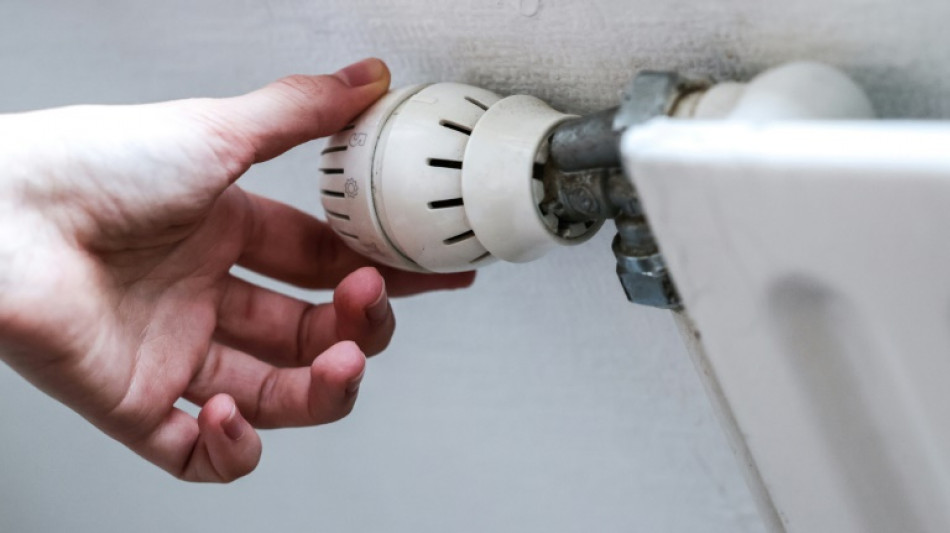
Gas price cap divides EU energy ministers' meeting / Photo: © AFP/File

 WhiteBIT Launches Bitcoin Lightning Network Support, Powered by Voltage

 Oil surges, stocks sink as US reportedly eyes fresh Iran strikes
 Anne Carson: modern takes on Greek classics
 Canada's Anne Carson wins Nobel literature prize
 Ethiopia drones hit Eritrean troops in Tigray
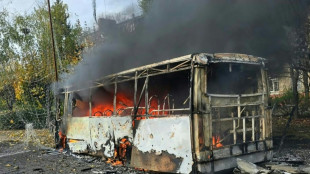 Russian strike on buses kills 30 in frontline Ukrainian city
 Thailand begins extradition process against Chinese journalist

 Quarantine, unease and rumours: Russian city grapples with plague scare
 Taiwan says exports hit record in September on AI demand
 Marc Marquez vows to 'attack' Martin's lead at Indonesian MotoGP
 Diplomats, schools in Saudi take safety measures after blasts heard: sources to AFP

 In Beijing, EU trade envoy says deficit with China 'unsustainable'
 Sri Lanka's de Silva quits as Test captain
 Alcaraz feeling 'mentally fresh' ahead of Shanghai return

 Israel drastically reduces British diplomatic presence in Jerusalem
 Stocks fall further as oil surge fans fresh inflation worries

 North Korea demands South show 'utmost respect' to restore relations

 Saudi says three dead in airport attacks claimed by Houthis

 'Mad dream': New showcase for African film opens in London
 All Blacks coach Rennie says Wallabies exit 'part of the game'
 The growing protests against India's poll body - and PM Modi

 Stocks fall further as oil spike fans fresh inflation worries
 Bad COP, worse COP? EU tempers hopes for UN climate summit
 Rookie Henry named in Wallabies midfield to face All Blacks
 Housing crisis set to dominate Spain's snap election

EU energy ministers met Thursday to debate measures to mitigate the energy crunch in Europe but were divided over a gas price cap proposal slammed by many as a "joke".
They were to discuss a proposal by the European Commission, unveiled just two days earlier, that would set a cap on gas prices at 275 euros per megawatt hour.
But many members complained that the plan comes with such conditions attached that it was designed never to be used.
"The gas price cap, which is in the document, currently it doesn't satisfy any single country," Polish Climate Minister Anna Moskwa said as she arrived at the meeting.
"It's a kind of joke for us after so many amounts of discussions and proposals" to arrive at the price cap put forward, she said.
France, Spain and Greece have also come out criticising the commission proposal.
The price cap plan -- which the commission was never keen on -- was seen as neutered under pressure from members including Germany and the Netherlands, which had feared it could divert gas supplies to more lucrative markets, especially Asia.
Yet at least 15 EU countries -- more than half the bloc -- want some form of workable ceiling on wholesale gas prices to tackle a crunch in supply forced by Russia's war in Ukraine.
While the European Union hasn't banned Russian gas, the Kremlin has been turning off the taps in retaliation for sanctions imposed by Brussels in the wake of Moscow's invasion.
Before the war, Russian gas supplies accounted for more than 40 percent of all imported gas into the European Union, with export powerhouse Germany particularly needy.
Now, that has dropped to less than 10 percent.
But alternative sources -- such as liquefied natural gas (LNG) shipped from the United States and the Gulf -- cannot make up the shortfall, and Europe faces a pricey heating bill for winter.
- Ministers can 'calibrate' cap -
Asked if the ministers would agree a full package of energy support measures including the proposed gas price cap, Belgium's energy minister, Tinne Van der Straeten, said: "I don't think it's achievable today."
EU energy commissioner Kadri Simson acknowledged the divisions over the price cap and noted that the ministers have "a right to calibrate the different parameters" if they wished.
Czech Industry Minister Jozef Sikela, chairing the meeting under his country's current presidency of the EU, said: "I am ready to convene as many extraordinary councils as needed in order to reach the agreement."
The commission's proposed cap of 275 euros per megawatt hour would only kick in when that threshold is breached for two weeks running for future contracts, and only if the LNG price went above 58 euros for 10 days within that same two-week period.
The price of wholesale gas in Europe on Thursday was around 124 euros, according to the main TTF benchmark.
The only time it has gone above the 275-euro limit was for one week in August, when the market impact of the war and EU demand to fill gas storage were at their peak.
The price cap plan, if adopted, would start in January. It would run alongside a voluntary initiative for EU member states to cut natural gas use by 15 percent over the northern hemisphere winter.
O.Lorenz--BTB