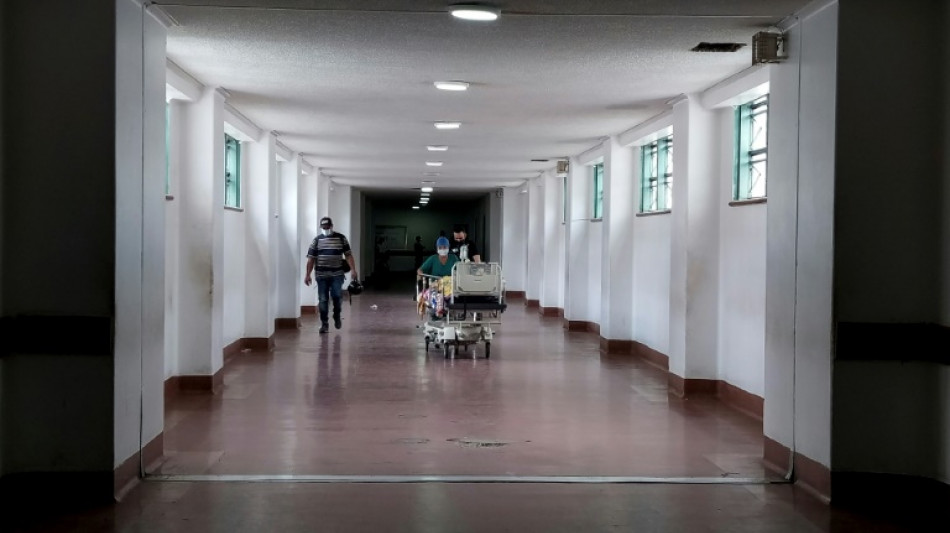
Venezuela report details 233 deaths due to hospital power cuts / Photo: ©

 Prague’s Concert for the Future Kicks Off on Wenceslas Square

 Prince William and Princess of Wales to Announce Earthshot Prize Winners in Mumbai

 Indonesia Forest Fires: Health Crisis, Diplomatic Strains and the Search for Solutions

 BYD Dolphin G Leasing Deal: Plug-in Hybrid Supermini Available from £174 a Month

 JUEL Group Expands from Real Estate to Hospitality with Hyatt Centric Malta Opening

 French Economy Shrinks 0.1% as Consumer Confidence Slumps

 Wall Street Ends Turbulent Week Higher Despite Inflation and AI Jitters
At least 233 people died between 2019 and 2021 in Venezuelan hospitals due to electricity failures, a study published on Wednesday reveals.
Oil-rich but crisis-wracked Venezuela suffers from regular blackouts that analysts blame on a lack of infrastructure investment and maintenance, but which the government claims is due to sabotage.
"For the year 2019, 17 people died due to power outages. For 2020 it was 75 and in 2021 141," said the National Hospitals Survey, which was endorsed by the National Academy of Medicine and opposition sectors.
The survey, in which doctors from the country's main hospitals participated, was created in 2014 to denounce the shortcomings of the healthcare system, which has long been blighted by scarcity of medicines and supplies, as well as electricity and water supply failures, and unmaintained infrastructure.
The survey's sponsors, the Doctors for Health NGO, began recording deaths that could be attributed to power cuts following a massive nationwide blackout in 2019 that lasted four days.
The survey said "some patients died because they needed mechanical ventilation or because they needed to go to the emergency room but could not be transported within the hospital because there was no elevator to do so."
It said the spike in deaths in 2021 was related to the coronavirus pandemic.
"Given it is an illness that affects breathing, patients that displayed more serious cases needed mechanical ventilation for many days.
"The irregular energy supply obviously had consequences for these cases."
K.Brown--BTB



