For Ukraine doctors, treating injured Russians a necessary evil / Photo: © AFP/File

 Zverev thrashes Shang to set up Djokovic quarter-final at China Open
 Turkey football ref chief jailed pending trial for graft
 North Korea says test of intermediate-range strategic missile included use of AI
 Rampant Sayers leads Hong Kong to third men's rugby gold in a row
 Ethiopia's Tigray rebels abandon regional capital as govt advances
 Bulgaria's Tsar Samuel returns 'home' after 1,000 years
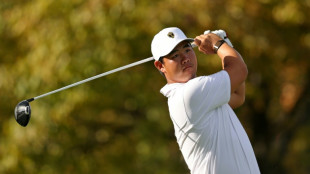 'Glad it's over': Kim powers to Games gold and military exemption
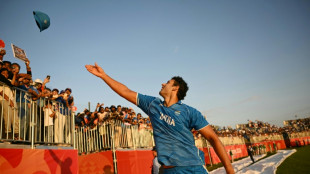
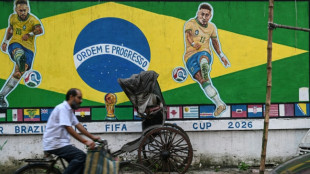 After 11 World Cups, football finally comes home for one Indian fan
 Marc Marquez wins sprint at Japan MotoGP, Martin grabs pole
 Alcaraz fends off Arnaldi to reach Japan Open quarters
 Antonelli tops times in final practice at Bahrain GP
 Gauff digs deep to beat Osorio in China Open second round
 Fresh protests to hit Spain after housing measures defeated
 'He's here with me': Japan cycle queen dedicates gold to late brother
 Japan Olympic chief says 'lot more' athletes at Games than expected
 Asian carmakers besting US rivals at home, China poised to strike

 Widgets & Web Offers All-Inclusive Investor Relations Websites for Public Companies, IPOs and SPACs
 Adams named new US captain to 2030 World Cup
 China a better influence in Latin America than US: poll
 Judge pauses construction of border project in Texas national park
 Belgium's De Bruyne fires double to sink Turkey, France held by Italy
 US jobs data boosts stocks as oil prices dip
 US Supreme Court to hear high-stakes climate case
 Trump expected to name intel chief Clayton as AI czar: reports
 Argentina unveils passports-for-investment scheme
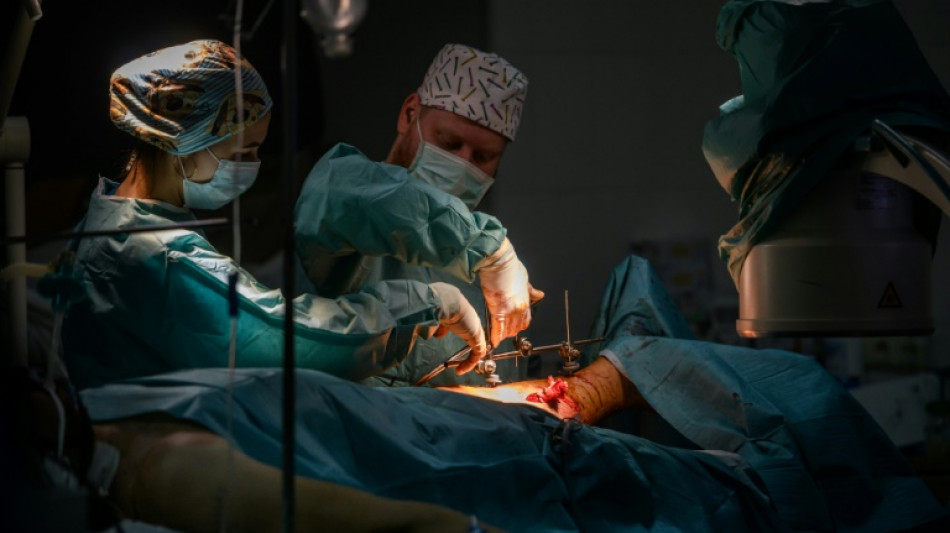
For more than two months, Dr Farad Ali-Shakh has spent his waking hours tending wounded Ukrainian soldiers and civilians. He also treats injured Russians, albeit reluctantly, who could be part of future prisoner exchanges.
This young doctor says he "practically lives" at the military hospital in Zaporizhzhia, a large city in southern Ukraine which lies just a few dozen kilometres from the front.
At night, the distant thud of shelling can sometimes be heard here.
Since Russia largely withdrew from northern Ukraine to refocus on the eastern Donbas region and the south, this industrial city has become a rallying point for those fleeing the violence or wounded in war.
Ali-Shakh says he works 20 hours every day, which can mean operating on up to 20 patients, one after the other.
Since the Russian invasion on February 24, thick tarpaulins have been hung up in front of the hospital's windows to make it less visible from the skies at night when it could become a target for Russian forces.
But the tarpaulins are also there to protect people from flying glass in the event of a bombing after the first houses in Zaporizhzhia were hit in a Russian strike last week.
It means the hospital is largely in darkness most of the time, even during the day. Conversations take place by the light of a desk lamp and patients' X-rays give off a ghostly hue.
And the scant light makes the photos on the doctor's mobile look even more grisly.
- 'Animals' -
One photo shows an almost totally severed leg, which is only attached by a piece of skin.
"That's something we see a lot here," Ali-Shakh says. "We were able to reconnect the blood vessels then reattach the skin."
Another shows a patient whose arm was almost cut in two, which was also saved, he explains soberly.
Asked about the emotional impact of constantly dealing with such horrific wounds, he shrugs.
"We have learnt to deal with such injuries. We are doing a difficult job but we're helping our country," he says before volunteering another surprising piece of information.
"We even treat Russian soldiers. But maybe we shouldn't. Maybe we should just leave them so they can fertilise our land."
When it comes to treating enemy soldiers, the young doctor admits to feeling a certain "lack of motivation".
"But if you help them recover, you can exchange them for Ukrainian soldiers" held captive by the Russians, he says.
Throughout the hospital, boxes of clothing and medical supplies give a sense of the ongoing emergency at the hospital.
But they are also an indication of the limited resources the surgeons must use to treat these "animals", sighs Major Viktor Pyssanko, who runs the hospital.
The Russian soldiers "are thoughtless youngsters" who are fed to the back teeth on "propaganda", he says.
They say they want to free Ukraine but "they want to kill as many Ukrainians as possible".
Even so, the hospital is trying to save as many as possible with the sole aim of "swapping them for our own soldiers", Pyssanko explains.
- Black humour -
Several prisoner exchanges have taken place since the Russian invasion began, the most high profile of which involved the mayor of the southern city of Melitopol, who was captured on March 11 then freed a few days later.
Russia's rights ombudsman Tatiana Moskalkova said he was swapped for nine Russians.
The latest prisoner exchange was on Friday, when 41 Ukrainians -- 28 soldiers and 13 civilians -- were freed, among them 11 women and a cleric. Kyiv never says how many Russians were handed back to Moscow.
Three wounded Russian soldiers were brought to Zaporizhzhia's main civilian hospital in early April with gunshot wounds and shelling injuries.
They stayed for three weeks, under constant guard, and were then handed to the Ukrainian security forces at the end of April, recalls Vasily, a doctor at the hospital who did not want to give his surname.
Vasily doesn't know what happened to them afterwards.
"They looked very depressed, devastated, not aggressive. Scared," he said.
"Because of that, we... never felt the need to express contempt" for them.
Between the doctors, where black humour is very common, "we joked about harming them. But it all ended when it came to performing and keeping our Hippocratic Oath," Vasily said.
"Yes, those are our enemies... (but) I never felt a desire to strangle" them in their beds, he said.
"If I did have those kinds of thoughts I wouldn't be working as a doctor."
K.Thomson--BTB