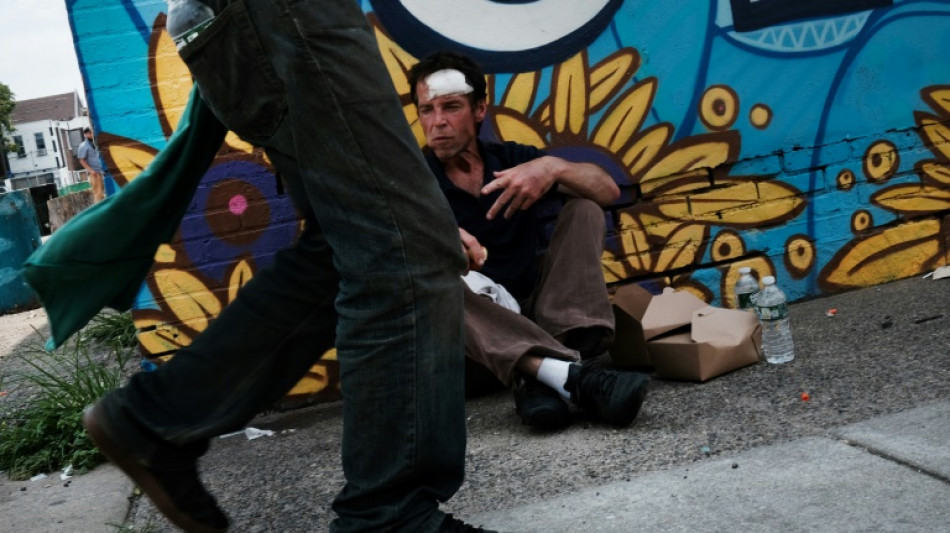
US overdose deaths rose 15% in 2021 to more than 100,000 / Photo: © GETTY IMAGES NORTH AMERICA/AFP/File

 Prague’s Concert for the Future Kicks Off on Wenceslas Square

 Prince William and Princess of Wales to Announce Earthshot Prize Winners in Mumbai

 Indonesia Forest Fires: Health Crisis, Diplomatic Strains and the Search for Solutions

 BYD Dolphin G Leasing Deal: Plug-in Hybrid Supermini Available from £174 a Month

 JUEL Group Expands from Real Estate to Hospitality with Hyatt Centric Malta Opening

 French Economy Shrinks 0.1% as Consumer Confidence Slumps

 Wall Street Ends Turbulent Week Higher Despite Inflation and AI Jitters
Drug overdoses killed more than 100,000 people in the United States in 2021, data showed Wednesday, as the Covid-19 pandemic exacerbated a crisis driven by fentanyl and fake online pills.
Experts say people with substance use disorders have been hit hard by daily life disruptions, while authorities are seizing record numbers of counterfeit and sometimes deadly medicines from Mexico.
Provisional data from the National Center for Health Statistics showed there were 107,622 deaths in the calendar year, an increase of 15 percent from 93,655 in 2020.
But there were signs that the explosion was tapering, with the 2021 increase half what it was a year ago. Overdose deaths rose 30 percent from 2019 to 2020.
Fentanyl, a synthetic opioid developed to treat the symptoms of chronic pain, was by far the biggest culprit, responsible for 71,238 deaths.
It was followed by crystal methamphetamine (meth), cocaine and natural opioids (such as heroin and morphine).
Last month, President Joe Biden's administration announced a national drug control strategy to tackle the crisis focused on untreated addiction and trafficking.
Survey figures from 2020 showed that among the 41.1 million people who needed treatment for substance use disorders (SUD), only 2.7 million (6.5 percent) had received treatment at a specialty facility in the last year.
The administration is seeking to expand access to life-saving treatments such as naloxone, drug test strips and syringe services programs.
It has also requested a budget increase for border control and drug enforcement agencies to stem the flow of illegal drugs.
B.Shevchenko--BTB



