One million dead: Five things to know about America's pandemic / Photo: © AFP

 Zverev thrashes Shang to set up Djokovic quarter-final at China Open

 Turkey football ref chief jailed pending trial for graft
 North Korea says test of intermediate-range strategic missile included use of AI

 Rampant Sayers leads Hong Kong to third men's rugby gold in a row

 Ethiopia's Tigray rebels abandon regional capital as govt advances

 Bulgaria's Tsar Samuel returns 'home' after 1,000 years

 'Glad it's over': Kim powers to Games gold and military exemption

 After 11 World Cups, football finally comes home for one Indian fan

 Marc Marquez wins sprint at Japan MotoGP, Martin grabs pole

 Alcaraz fends off Arnaldi to reach Japan Open quarters

 Antonelli tops times in final practice at Bahrain GP

 Gauff digs deep to beat Osorio in China Open second round

 Fresh protests to hit Spain after housing measures defeated

 'He's here with me': Japan cycle queen dedicates gold to late brother

 Japan Olympic chief says 'lot more' athletes at Games than expected
 Asian carmakers besting US rivals at home, China poised to strike
 Widgets & Web Offers All-Inclusive Investor Relations Websites for Public Companies, IPOs and SPACs

 Adams named new US captain to 2030 World Cup

 China a better influence in Latin America than US: poll
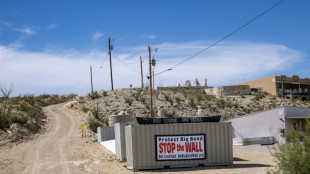 Judge pauses construction of border project in Texas national park

 Belgium's De Bruyne fires double to sink Turkey, France held by Italy

 US jobs data boosts stocks as oil prices dip

 US Supreme Court to hear high-stakes climate case

 Trump expected to name intel chief Clayton as AI czar: reports

 Argentina unveils passports-for-investment scheme

One million dead from Covid-19: two years ago it would have been unimaginable, but now the United States is on the verge of surpassing this terrible milestone.
It will be the first country known to do so, although experts warn that the true death toll is likely to be far higher.
Here are five things to know about the US pandemic.
- By the numbers -
One million dead works out to around one in every 330 Americans -- one of the highest death rates in the developed world. Britain has seen around one in 380 people die of Covid, while in France it has been one in 456.
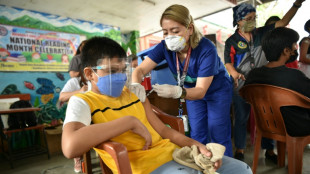
In all, more than 203,000 children in the United States have lost a parent or caregiver, according to a study that underscores the profound impact of the pandemic on American youth.
At the height of the Omicron wave, the United States recorded an average of more than 800,000 cases per day, pushing the total since the pandemic began to nearly 82 million cases.
But this again is probably an underestimate, especially given the lack of tests at the beginning of the pandemic and now the success of self-tests, which are not systematically reported to the authorities.
- New York shuts down -
The virus was first reported in the northwest United States -- but it swiftly reached New York, a global transportation hub, which briefly became the epicenter of the first wave.
The Big Apple went from being the city that never sleeps to a ghost town, with its dead piled into refrigerated trucks and its streets deserted.
Its most affluent inhabitants simply left, while the less privileged confined themselves in cramped quarantines.
The megalopolis has so far suffered more than 40,000 deaths from Covid-19, most of which occurred in the spring of 2020.
- Vaccine rush -
Donald Trump, president when the pandemic hit, was criticized for his slow response, how he played down the scale of the coming disaster, and his contribution to misinformation surrounding the pandemic in the weeks and months to come.
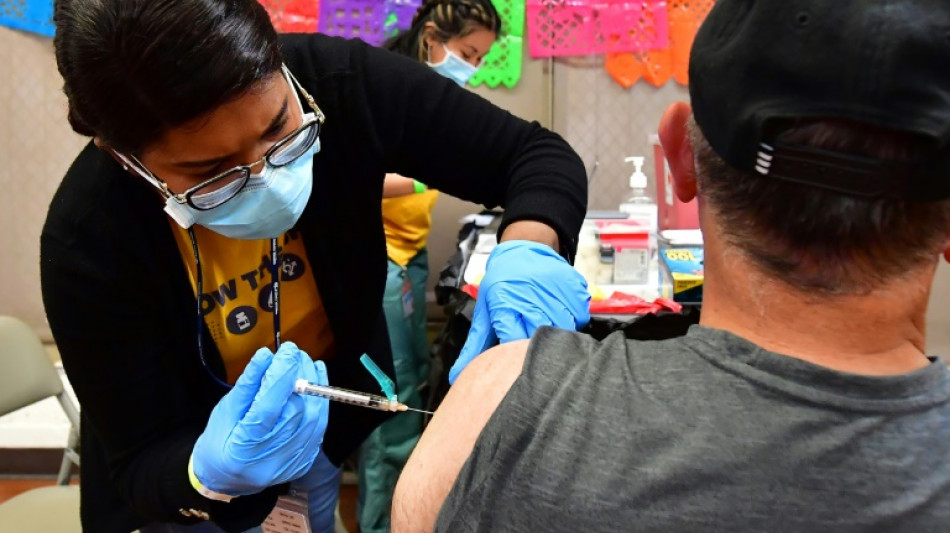
He also launched "Operation Warp Speed," pumping billions of dollars of public money into vaccine research, allowing pharmaceutical companies to conduct expensive clinical trials.
The result? The first vaccines in the US -- from Pfizer-BioNTech and Moderna -- were available in mid-December, less than a year after the first cases were reported in China.
- The mask divide -
In the politically polarized United States, few social issues have been as divisive as masks or vaccines.
Between progressives defending physical distancing, masks and inoculations, and conservatives rejecting any intrusion into their individual freedoms, the battle raged all the way to the top, where Trump only reluctantly wore a mask while his successor Joe Biden scrupulously followed protocols and championed vaccinations.
From schools to airplanes to businesses, the mask issue has led to numerous clashes, sometimes even resulting in violence.
The latest development is that in April, a Trump-appointed judge in Louisiana lifted the requirement to wear masks on public transport, a decision that the federal government has appealed.
- No end in sight -
More than two years since the pandemic reached the United States, the rate of infection is rising yet again, due to sub-variants of the very contagious variant Omicron.
From a low of 25,000 daily cases in March, the country now has a seven-day daily average of some 78,000 cases, according to the main US health agency.
J.Fankhauser--BTB