Ukraine war, pandemic push to colour WHO international meet / Photo: © AFP

 Lula, Bolsonaro in final push for votes ahead of knife-edge election

 Boisterous fashion week barnstorms 'sleepy' Nigerian capital
 UAE investigators say flydubai co-pilot was planning 'terrorist act'
 Rahul smacks century in India v Windies ODI

 Daryz seeks to join exclusive club of dual Arc winners
 Russia warns diplomats to leave Kyiv over new strikes threat
 Olympic champ Zheng rebukes rowdy home crowd at China Open

 World No.1 Sinner pulls out of Shanghai Masters to delay return
 Red Bull's Verstappen grabs pole position for Bahrain GP

 India beat Pakistan in blockbuster as golfer Kim wins 'crazy' gold
 India beat arch-rivals Pakistan to win Asian Games cricket gold
 Ethiopia's Tigray rebels abandon regional capital as govt advances: journalist

 Tom Kim powers to Games gold and exemption from military service

 Split loyalties for Indian football fans at Brazil friendly

 India-Pakistan blockbuster brings cricket fever to Japan baseball field

 Wong waiting on Rafa after winning Asian Games tennis gold
 With Russia next door and rising costs, Latvia goes to the polls

 Penalty hero rues empty seats as Games hosts Japan win football gold

 North Korea fires ballistic missile after Seoul's apology demand

 US regulator finds Boeing 737 MAX software bug 'not a safety concern'

 Ohtani 'managing' injuries as Dodgers launch MLB post-season

 Botched US execution leaves murderer unconscious on ventilator: lawyers
 Cornell rape case exposes sexual violence at US colleges
 France held by Italy in Zidane's homecoming after Olise stunner

 Ethiopian pro-government militia claims Tigray airport as regional tensions spike
The Ukraine war looms large as the World Health Organization opens its main annual assembly Sunday, threatening to overshadow efforts on other health crises and a reform push aimed at preventing future pandemics.
The UN health agency will kick off its 75th World Health Assembly Sunday afternoon, convening its 194 member states for their first largely in-person gathering since Covid-19 surfaced in late 2019.
The agenda will remain focused on the continuing coronavirus crisis and efforts to avert future pandemics.
But the war raging in Ukraine and rebukes of Russia for its invasion are expected to take centre stage.
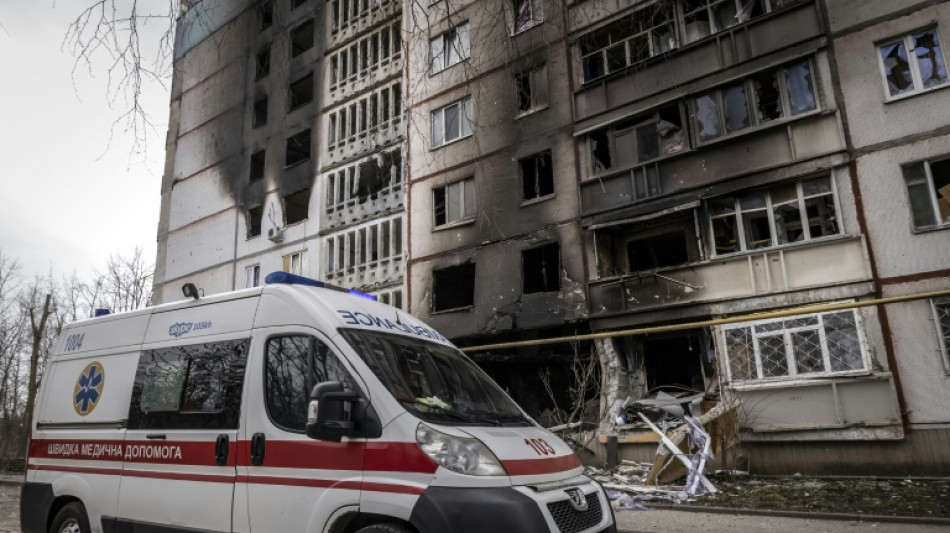
Kyiv and its allies will present a resolution during the assembly harshly condemning Russia's invasion, and especially its more than 200 attacks on healthcare, including hospitals and ambulances, in Ukraine.
It is also to voice alarm at the "health emergency in Ukraine", and highlight the dire impacts beyond its borders, including how disrupted grain exports are deepening a global food security crisis.
"The Ukraine war is having a systemic impact on international organisations", a European diplomat told AFP, pointing to the "considerable amounts of time (spent) looking at the consequences for health in Ukraine, in Europe and in the world".
But while Russia has been shunned and pushed out of other international bodies over its invasion, no such sanctions are foreseen at the World Health Assembly.
"There's not a call to kick them out," a Western diplomat told AFP, acknowledging that the sanctions permitted under WHO rules are "very weak".
Moscow meanwhile flatly rejected rumours that it was planning to leave the WHO, insisting in a tweet Friday that they were "simply not true".
- Second term for Tedros -
The conflict is far from the only issue on this week's packed agenda.
Among other things, the assembly is expected to reappoint WHO chief Tedros Adhanom Ghebreyesus to a second five-year term.
His first term was turbulent, as he helped steer the global response to the pandemic and grappled with a range of other crises, including a sexual abuse scandal involving WHO staff in the Democratic Republic of Congo.
But while the former Ethiopian health minister has faced his share of criticism, he has received broad backing and is running unopposed, guaranteeing him a second term.
There will be no shortage of challenges, with the Covid-19 pandemic still raging and demands for dramatic reforms of the entire global health system to help avert similar threats going forward.
And new health menaces are already looming, including hepatitis of mysterious origin that has been sickening children in many countries, and swelling numbers of monkeypox cases far from Central and West Africa where the disease is normally concentrated.
- Money makeover -
One of the major reforms up for discussion involves the WHO budget, with countries expected to greenlight a plan to boost secure and flexible funding to ensure the organisation can respond quickly to global health threats.
The WHO's two-year budget for 2020-21 ticked in at $5.8 billion, but only 16 percent of that came from regular membership fees.
The remainder came from voluntary contributions that are heavily earmarked by countries for particular projects.
The idea is to gradually raise the membership fee portion to 50 percent over nearly a decade, while WHO will be expected to implement a string of reforms, including towards more transparency on its financing and hiring.
"It will be important for WHO to implement reforms quickly," US Ambassador to the United Nations in Geneva Sheba Crocker said.
- Too slow -
The Covid pandemic laid bare major deficiencies in the global health system, and countries last year agreed numerous changes were needed to better prepare the world to face future pandemic threats.
Amendments are being considered to the International Health Regulations -- a set of legally binding international laws governing how countries respond to acute public health risks.
And negotiations are underway towards a new "legal instrument" -- possibly a treaty -- aimed at streamlining the global approach to pandemic preparedness and response.
But experts warn the reform process is moving too slowly.
Former New Zealand prime minister Helen Clark, who co-chaired an expert panel on pandemic preparedness, warned reporters that little had yet changed.
"At its current pace, an effective system is still years away, when a pandemic threat could occur at any time."
M.Ouellet--BTB