Malaria mortality returns to pre-Covid levels: WHO / Photo: © AFP

 AI needs safety layers like nuclear plants: ex-OpenAI engineer

 MVP Judge will miss Yankees' MLB playoff series against Rays

 New lizard species discovered in Peru

 Fernandes hails Portugal's 'greatest symbol' Ronaldo, calls for unity

 Grandidier-Nkanang double takes Pau to Top 14 summit despite Vannes fightback

 Trainer Scott gets perfect Arc boost with top notch double

 Ex-PM says Putin cannot admit 'mistake' over Ukraine

 Houthis say Saudi Arabia launches dozens of strikes on Yemen capital

 Qatar and Abu Dhabi F1 Grand Prix to go ahead - F1 boss

 South Korea lift gloom with smash-and-grab Games football gold

 Ireland news conference before Israel game cut short amid tensions

 Protests over housing flare in Spain after relief measures rejected

 Zverev thrashes Shang to set up Djokovic quarter-final at China Open

 Turkey football ref chief jailed pending trial for graft
 North Korea says test of intermediate-range strategic missile included use of AI

 Rampant Sayers leads Hong Kong to third men's rugby gold in a row

 Ethiopia's Tigray rebels abandon regional capital as govt advances

 Bulgaria's Tsar Samuel returns 'home' after 1,000 years

 'Glad it's over': Kim powers to Games gold and military exemption

 After 11 World Cups, football finally comes home for one Indian fan

 Marc Marquez wins sprint at Japan MotoGP, Martin grabs pole

 Alcaraz fends off Arnaldi to reach Japan Open quarters

 Antonelli tops times in final practice at Bahrain GP

 Gauff digs deep to beat Osorio in China Open second round

 Fresh protests to hit Spain after housing measures defeated

Malaria mortality has fallen back to levels seen before the Covid-19 crisis, the WHO said Wednesday, but called for faster progress against the disease that killed nearly some 597,000 people last year.
In a new report, the World Health Organization estimated that there were 263 million cases of malaria worldwide in 2023 -- 11 million more than a year earlier -- while the death toll remained relatively stable.
But in terms of the mortality rate, "we have come back to pre-pandemic numbers", Arnaud Le Menach, of the WHO's Global Malaria Programme, told reporters.
In 2020, disruptions caused by the Covid-19 pandemic led to a sharp increase in malaria-related mortality, with an additional 55,000 deaths counted that year.
Since then the total number of deaths from malaria, which is caused by a mosquito-borne parasite, has gradually shrunk, as has the mortality rate.
The estimated 2023 mortality rate in Africa of 52.4 deaths per 100,000 population at risk meanwhile still remains more than double the target level set by a global strategy for combatting malaria through 2030, WHO said, insisting "progress must be accelerated".
- Vaccine promise -
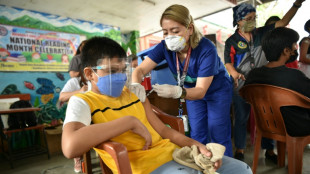
WHO pointed to the wider rollout of malaria vaccines as a promising development, expected to save tens of thousands of young lives each year.
The two jabs currently in use, RTS,S and R21/Matrix-M, hold the promise of significantly easing the burden in Africa, which accounts for up to 95 percent of all malaria deaths.
Malaria vaccines were first introduced in April 2019, first in Malawi, with Kenya and Ghana following suit.
Through the end of 2023, nearly two million children in those three countries received jabs of the RTS,S vaccine, WHO said.
"We saw in those three pilot countries... a 13-percent drop in mortality during the four years of the pilot programme," said Mary Hamel, who heads WHO's malaria vaccine team.
The WHO now looked forward to seeing a similar drop in other countries introducing the vaccines, she told reporters, pointing out that countries that began introducing the jabs early this year were "following a similar trajectory".
So far, 17 nations across sub-Saharan Africa have included the jabs in their routine immunisation programmes, she said
Another eight countries had been approved to receive funding towards introducing the vaccines through the vaccine alliance GAVI, WHO said.
- 'Curb the threat' -
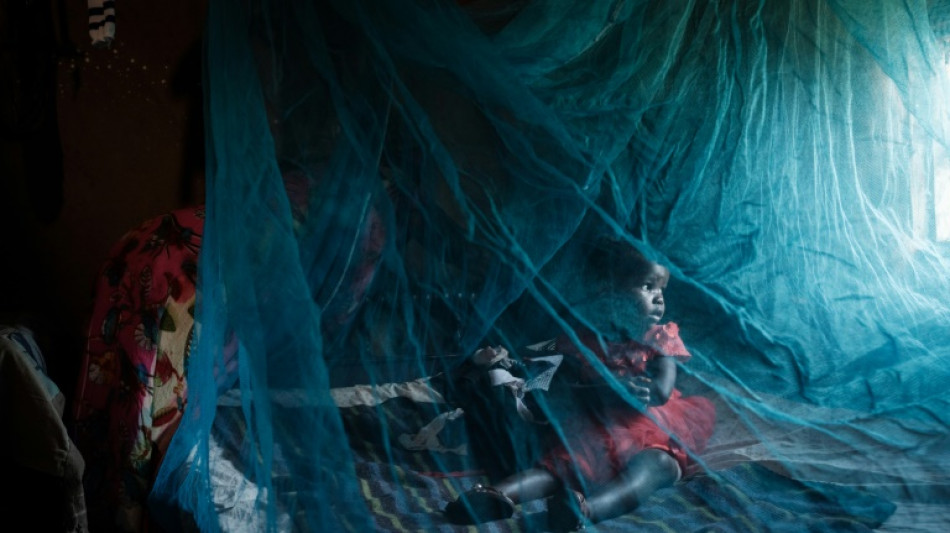
In another promising development, new-generation dual-insecticide nets nets are becoming more widely available.
These nets, which are coated in a new generation pyrrole insecticide in combination with the standard pyrethroid insecticide, have been shown to offer far better protection against malaria.
The WHO estimated earlier this year that such nets had averted 13 million malaria cases and nearly 25,000 deaths over three years.
Despite the successes, the WHO highlighted a number of factors slowing the battle against malaria, including a lack of funds and insufficient stocks of vaccines, as well as climate change, which is allowing a greater spread of the mosquitos that carry the parasite that causes malaria.
"Stepped-up investments and action in high-burden African countries are needed to curb the threat," WHO chief Tedros Adhanom Ghebreyesus said in a statement.
The Global Fund, a partnership set up to battle AIDS, tuberculosis and malaria, agreed.
"Progress has stagnated for several years," its executive director Peter Sands warned in a statement.
"To overcome this, we must accelerate our efforts through a dual approach: investing in new technologies while simultaneously easing the strain that climate change places on healthcare systems," he said.
C.Kovalenko--BTB