Trump admin fires CDC 'disease detectives' as bird flu fears rise: sources / Photo: © GETTY IMAGES NORTH AMERICA/AFP/File

 AI needs safety layers like nuclear plants: ex-OpenAI engineer

 MVP Judge will miss Yankees' MLB playoff series against Rays

 New lizard species discovered in Peru

 Fernandes hails Portugal's 'greatest symbol' Ronaldo, calls for unity

 Grandidier-Nkanang double takes Pau to Top 14 summit despite Vannes fightback

 Trainer Scott gets perfect Arc boost with top notch double

 Ex-PM says Putin cannot admit 'mistake' over Ukraine

 Houthis say Saudi Arabia launches dozens of strikes on Yemen capital

 Qatar and Abu Dhabi F1 Grand Prix to go ahead - F1 boss

 South Korea lift gloom with smash-and-grab Games football gold

 Ireland news conference before Israel game cut short amid tensions

 Protests over housing flare in Spain after relief measures rejected

 Zverev thrashes Shang to set up Djokovic quarter-final at China Open

 Turkey football ref chief jailed pending trial for graft

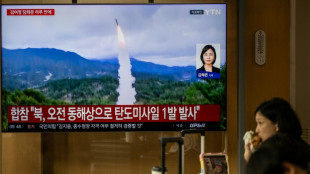 North Korea says test of intermediate-range strategic missile included use of AI

 Rampant Sayers leads Hong Kong to third men's rugby gold in a row

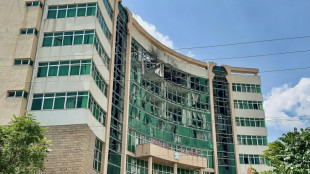 Ethiopia's Tigray rebels abandon regional capital as govt advances

 Bulgaria's Tsar Samuel returns 'home' after 1,000 years

 'Glad it's over': Kim powers to Games gold and military exemption

 After 11 World Cups, football finally comes home for one Indian fan
 Marc Marquez wins sprint at Japan MotoGP, Martin grabs pole

 Alcaraz fends off Arnaldi to reach Japan Open quarters

 Antonelli tops times in final practice at Bahrain GP

 Gauff digs deep to beat Osorio in China Open second round

 Fresh protests to hit Spain after housing measures defeated

Nearly half of an elite US epidemiology program known as the "disease detectives" were dismissed by the Trump administration on Friday, according to sources familiar with the matter, dealing a blow to public health efforts as fears rise over bird flu.
The sackings come as Elon Musk's Department of Government Efficiency pushes to downsize the federal government and as newly-confirmed Health Secretary Robert F. Kennedy Jr vows to overhaul the nation's health agencies.
"I'm so angry," a senior epidemiologist in the Centers for Disease Control and Prevention who supervised some of those affected by the cuts told AFP.
"We're on the verge of potentially another pandemic and we're firing the people who have probably more expertise than anyone else in the country collectively."
The cuts, first reported by CBS News, are part of broader efforts to remove employees still in their probationary periods, who can be dismissed more easily.
Established in 1951, the Epidemic Intelligence Service is a two-year post-doctoral training program whose officers have been on the frontline of investigating outbreaks from the first Ebola cases in Africa in the 1970s to the earliest case reports of Covid-19 in the United States.
"Without those officers we would not have eliminated smallpox from the globe," the official said. "We had people fanning across countries, wading through mud and navigating rivers on boats to eliminate smallpox."
- 'Directly impact health security' -
Known colloquially as the "disease detectives," the researchers are hired annually through a competitive process that each year whittles down hundreds of applicants -- including doctors, nurses, scientists and more -- to a class of a few dozen.
While some are stationed at CDC headquarters in Atlanta, others are posted around the country.
Several former CDC directors began their careers as EIS officers, highlighting the program's role as a pipeline for leadership in public health.
There are approximately 140 officers across two classes. On Friday, the class of 2024 was informed they would receive termination emails that afternoon, while the class of 2023 was informed that their status was still under review.
Around 30 officers from both classes were hired through a different mechanism under the US Public Health Service, meaning they remain unaffected for now.
In total, nearly 1,300 CDC employees -- roughly 10 percent of the agency's workforce -- were dismissed, according to CBS News.
"The Epidemic Intelligence Service is one of the most storied and prestigious programs of the CDC," infectious disease physician Amesh Adalja, a senior scholar at Johns Hopkins University told AFP.
"Any attempts to end this program will directly impact the national and health security of the US."
Health Secretary RFK Jr. has made no secret of his disdain for infectious disease research, suggesting recently that it should be paused entirely for eight years while the focus shifts to addressing chronic conditions.
Beyond his well-known anti-vaccine stances, Kennedy has also expressed skepticism about widely accepted infectious disease science, questioning whether germs cause disease and whether HIV causes AIDS.
Y.Bouchard--BTB



