Ethiopia's ancient instrument begena healing souls / Photo: © AFP

 #IAmJaneDoe: online support campaign in US university rape case
 Brazil shine on Selecao's first visit to India

 Zverev sets up Djokovic quarter-final at China Open, Rybakina out
 Happier at home, Bordeaux hammer Lyon in Top 14

 Lula, Bolsonaro in final push for votes ahead of knife-edge election

 Boisterous fashion week barnstorms 'sleepy' Nigerian capital

 UAE investigators say flydubai co-pilot was planning 'terrorist act'

 Rahul smacks century in India v Windies ODI

 Daryz seeks to join exclusive club of dual Arc winners

 Russia warns diplomats to leave Kyiv over new strikes threat

 Olympic champ Zheng rebukes rowdy home crowd at China Open

 World No.1 Sinner pulls out of Shanghai Masters to delay return
 Red Bull's Verstappen grabs pole position for Bahrain GP

 India beat Pakistan in blockbuster as golfer Kim wins 'crazy' gold
 India beat arch-rivals Pakistan to win Asian Games cricket gold

 Ethiopia's Tigray rebels abandon regional capital as govt advances: journalist

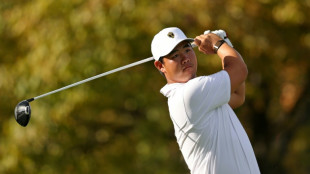 Tom Kim powers to Games gold and exemption from military service

 Split loyalties for Indian football fans at Brazil friendly

 India-Pakistan blockbuster brings cricket fever to Japan baseball field

 Wong waiting on Rafa after winning Asian Games tennis gold

 With Russia next door and rising costs, Latvia goes to the polls

 Penalty hero rues empty seats as Games hosts Japan win football gold

 North Korea fires ballistic missile after Seoul's apology demand

 US regulator finds Boeing 737 MAX software bug 'not a safety concern'

 Ohtani 'managing' injuries as Dodgers launch MLB post-season

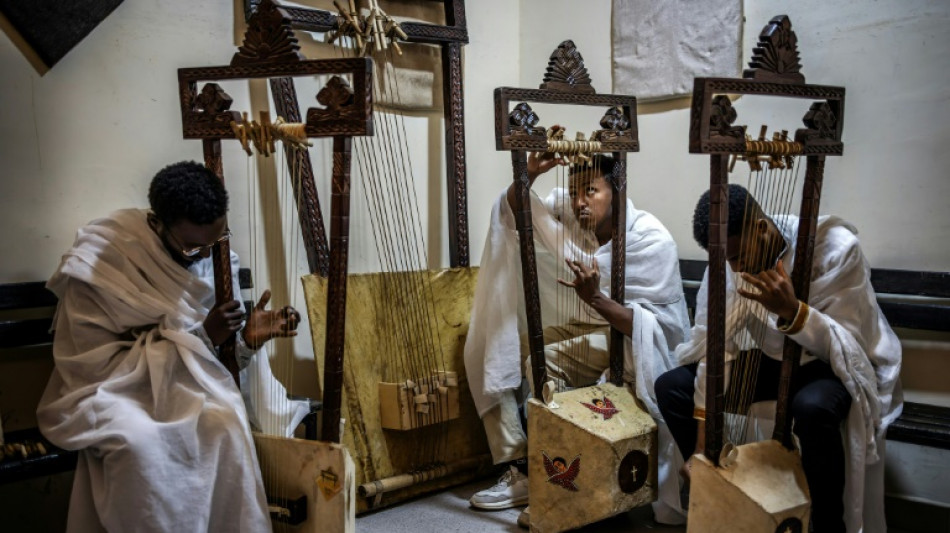
Biruktawit Tasew's fingers glide over the strings of the begena, producing a deep, hypnotic sound. Along with six fellow musicians, she breaks into a solemn religious melody, holding their audience spellbound.
One of the country's oldest instruments, the begena was once reserved for the elite -- and effectively banned during the Marxist Derg regime between 1974 and 1991.
But it is experiencing a resurgence among Ethiopia's artistic community.
For the past three years, Biruktawit's group has visited a nursing home in Addis Ababa every Friday to play for its residents.
The begena "is medicine for the soul," said Biruktawit, 23, who has been playing the instrument for about a year.
Legend has it that the instrument was brought over from Israel in the 10th century BC by Menelik I, Ethiopia's first emperor, who received it from King David.
For centuries, the instrument's music has accompanied the prayers and meditations of monks of the Ethiopian Tewahedo Church, which represents about 40 percent of Ethiopia's 120 million people.
That association with religion meant it fell from favour as the country turned towards communism in the 20th century, but it has slowly returned.
Resembling a harp or a large lyre, trapezium-shaped and about a metre tall, it has 10 strings —- traditionally made from sheep's intestines -- that symbolise the Ten Commandments.
It is plucked with the left hand, either bare or with a plectrum, while players wear a netela -- a traditional white cloth -- draped across the chest for men, and in the form of a veil for women.
- Begena therapy -
At Grace Nursing Home for the elderly, the begena brings healing.
Sitting in a small courtyard where residents gather to listen to the soothing melodies, 60-year-old Solomon Daniel Yohanes gently shakes his head in his wheelchair as the tunes fill the air.
Yohanes has been a resident for two years and said the begena has "brought him peace".
"When you're looking for God, you look for him in different ways, and I see the begena as God speaking in his own voice," he said.
Natnael Hailu, a doctor and co-founder of the institution, admits to being "shocked" to see his patients "forget their pain and drift into sleep" to the tune of the instrument.
"It calms their heart rate, lowers their blood pressure and soothes them. More than any other instrument, begena therapy has a real calming effect," he said.
Gene Bukhman, a cardiologist and lecturer at Harvard University who attended one of the performances, told AFP the begena's melodies could have a positive influence on people suffering from chronic illnesses.
- Positive influence -
Ermias Haylay, now 23, started playing the begena when he was 15.
He was not immediately convinced: "I found it smelled bad since some parts come from sheep," he said.
But he soon came to love its "spiritual aspect" and founded a school to train students in the ancient instrument.
It was his idea to play the begena in retirement homes and hospitals -- he even plays during surgeries -- hoping to entertain patients and "bring them a bit of joy".
Before long, he noticed "extraordinary changes" in patients with Alzheimer's, dementia and autism.
"They became very calm," he said.
Demands for the lessons have been booming and he hopes to open schools around the world to help more patients.
D.Schneider--BTB



