RFK Jr's autism 'epidemic' study raises anti-vaxx fears / Photo: © AFP/File

 Lula, Bolsonaro in final push for votes ahead of knife-edge election

 Boisterous fashion week barnstorms 'sleepy' Nigerian capital
 UAE investigators say flydubai co-pilot was planning 'terrorist act'

 Rahul smacks century in India v Windies ODI

 Daryz seeks to join exclusive club of dual Arc winners
 Russia warns diplomats to leave Kyiv over new strikes threat
 Olympic champ Zheng rebukes rowdy home crowd at China Open

 World No.1 Sinner pulls out of Shanghai Masters to delay return
 Red Bull's Verstappen grabs pole position for Bahrain GP

 India beat Pakistan in blockbuster as golfer Kim wins 'crazy' gold
 India beat arch-rivals Pakistan to win Asian Games cricket gold
 Ethiopia's Tigray rebels abandon regional capital as govt advances: journalist

 Tom Kim powers to Games gold and exemption from military service

 Split loyalties for Indian football fans at Brazil friendly

 India-Pakistan blockbuster brings cricket fever to Japan baseball field

 Wong waiting on Rafa after winning Asian Games tennis gold

 With Russia next door and rising costs, Latvia goes to the polls
 Penalty hero rues empty seats as Games hosts Japan win football gold

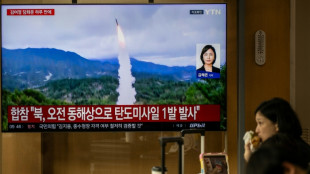 North Korea fires ballistic missile after Seoul's apology demand

 US regulator finds Boeing 737 MAX software bug 'not a safety concern'

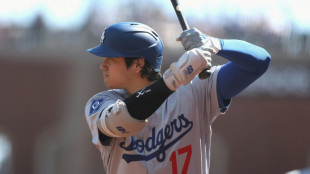 Ohtani 'managing' injuries as Dodgers launch MLB post-season
 Botched US execution leaves murderer unconscious on ventilator: lawyers

 Cornell rape case exposes sexual violence at US colleges

 France held by Italy in Zidane's homecoming after Olise stunner

 Ethiopian pro-government militia claims Tigray airport as regional tensions spike
US Health Secretary Robert F. Kennedy Jr's announcement of a vast study to reveal the cause of a so-called autism "epidemic" has alarmed medical experts, who fear it could rekindle thoroughly debunked conspiracy theories about vaccines.
Kennedy, a vaccine sceptic who has long promoted disproven theories linking childhood vaccines to autism, said Thursday that hundreds of scientists would determine by September why autism rates have been rising.
"And we'll be able to eliminate those exposures," he added, in a comment widely considered to be a reference to vaccines.
However autism organisations, doctors and scientists rejected the idea that there is an "autism epidemic", saying five months was not enough time for such a study -- and that this subject has already been extensively looked at.
The Autistic Self Advocacy Network, a US nonprofit, said Kennedy's announcement was a "clear signal" that the health department "intends to produce rigged and fraudulent research that supports Kennedy and (US President Donald) Trump's pre-existing beliefs in a connection between autism and vaccines".
Hugo Peyre, a child psychiatrist at University Hospital of Montpellier in France, told AFP that Kennedy's comments demonstrated "ignorance of the scientific literature".
Dozens of scientific studies over decades have confirmed that there is no link between autism and vaccines.
- Genetic, environmental factors -
There is no single known cause for autism, a complex condition related to the development of the brain which can affect how people behave, communicate, learn and interact with others.
There are likely many factors that make children more likely to have autism, including genetic and environmental factors, according to the World Health Organization.
"Nearly 200 genes have been associated with autism, and approximately 80 percent of autism cases can be linked to genetic mutations," Thomas Bourgeron, head of the human genetics and cognitive functions lab at France's Pasteur Institute, told AFP.
Yet vaccine sceptics including Kennedy have repeatedly promoted the debunked conspiracy theory that there is a link between the MMR (measles, mumps and rubella) vaccine and autism.
This claim dates back to a retracted and repeatedly refuted study by Andrew Wakefield, a British doctor who was struck off the medical register for serious professional misconduct.
Yet this misinformation still spreads widely on social media, which can lead to lower vaccination rates.
During a measles outbreak in the southwestern United States, the vast majority of patients have been unvaccinated, according to the US Centers for Disease Control and Prevention (CDC).
A second child died during the outbreak last week.
- Why are autism cases rising? -
A key argument put forth by vaccine sceptics is that autism cases have been soaring.
Around one percent of children are autistic, the World Health Organization estimates. That is up from 0.62 percent in 2012, according to a 2022 study.
In the US, the rate of autism in children born in 1992 was one in 150, which rose to one in 36 for those born in 2012, according to the CDC.
The rising number of autism diagnoses is partly due to growing awareness about the condition, experts say.
And in the last couple of decades, milder forms of autism and related conditions have been folded into the umbrella term of autism spectrum disorder (ASD).
So for Peyre, it is beyond the pale to speak about an "autism epidemic".
There is an important distinction between how many people actually have autism, "which corresponds to the state of health of the population and which seems to be stable", and how many people are being diagnosed, he emphasised.
Even if autism diagnoses have "increased dramatically since the early 2000s," this does not mean "that children are sicker," he explained.
Bourgeron said that "diagnostic criteria have changed dramatically in recent decades, with greater consideration given to people without intellectual disabilities -- and better detection in girls".
"Healthcare professionals and families are also much more attentive to autism spectrum disorders," Peyre added.
Everyone agrees that more research is needed on the subject, with Peyre pointing in particular to a need to better understand risk factors before birth and the weeks afterwards.
But "the factors identified by Robert F. Kennedy Jr. have already been dismissed by the scientific community with very high-quality studies," he added.
F.Müller--BTB